


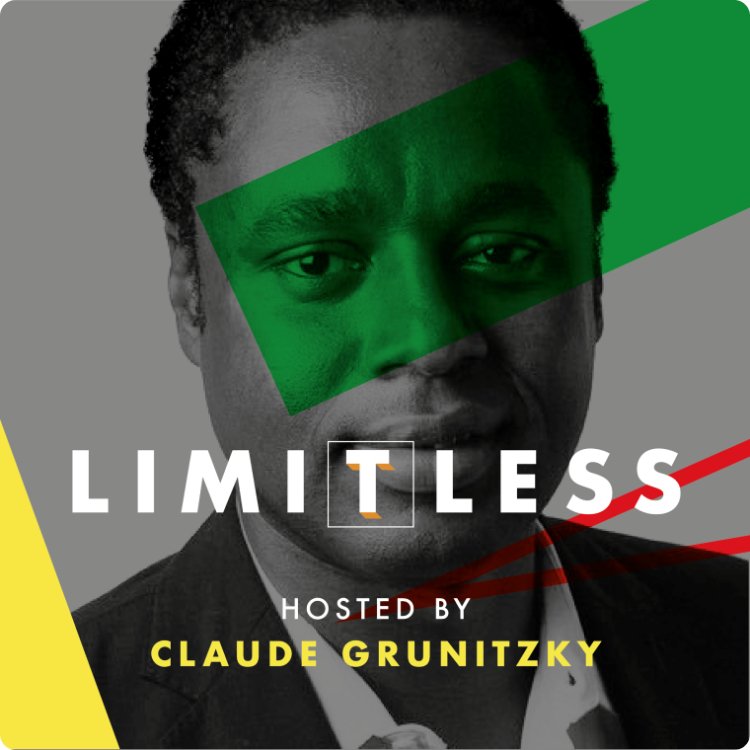
From the earliest days of founding the influential media platform TRACE, a single vision has guided Claude Grunitzky’s career: showcasing African talent and accelerating the continent’s development.
The veteran entrepreneur and venture capitalist of Equity Alliance Fund is using the power of audio storytelling to realize his latest project: creating a dialogue between the United States and Africa.
That project is called Limitless Africa Podcast.
Its mission is to show “How Africans and Americans can work together for shared prosperity.”
Supported by a partnership with the U.S. Department of State and the Seenfire Foundation, Grunitzky has high praise for the collaboration, which grants him freedom “to amplify African voices.”
The concept for Limitless was born from his journey from growing up in Togo to mastering the entrepreneurial spirit in America.
“The American mindset taught me how to become an entrepreneur,” he explains.
“But the people also showed me the synergy there should be between the States and the African continent, particularly given our shared history.”
Hidden Potential of Soft Skills
Limitless Africa is not trying to be just another business podcast. It dives into the granular, human elements of success, particularly the transformative power of “soft skills.”
The inspiration for this focus came from a revealing moment tied to Grunitzky’s own work: a study referenced by organizational psychologist Adam Grant on an entrepreneurial program the founder established in Togo.

The study on 1,500 West African entrepreneurs found that founders trained in character skills like proactivity, discipline, and determination were three times more successful than those who focused on technical skills like finance and marketing.
“Many of these soft skills are intrinsic to the American mindset, one which prizes risk-taking, self-reliance and optimism,” Grunitzky observes. “There is so much talent in both America and Africa, and we all have a lot to learn from each other.”
A Gateway Through Business
Grunitzky believes that business offers the most authentic lens through which to view the continent’s complex reality, aiming to fill the many gaps he sees in Africa’s current storytelling landscape.
“There’s nothing quite like starting a business to truly understand a place and how things get done,” he states. “That’s why Limitless Africa offers the perfect gateway into the diversity and opportunities that exist on the continent.”
Episodes from the show tackle issues that matter to Africans from a business perspective.
For instance, an episode on the NBA examines how the continent can build a self-sustaining basketball industry locally, ensuring African athletes don’t need to leave the continent to capture the financial value of their talent.
The show also dives into the world of the African podcasting industry, with Grunitzky interviewing Terser Adamu of Unlocking Africa, Justin Norman of The Flip, and Molly Jensen, CEO of Africa’s largest podcasting platform.
Africa’s Limitless Resource
While tackling finance and infrastructure, some of the most resonant episodes focus on the booming creative economy—a topic deeply personal to Grunitzky, who made millions selling TRACE in 2003.
For him, creativity is “the greatest resource we have.” Yet, he warns, artists must know their worth to avoid exploitation.

Episodes featuring intellectual property lawyer Liz Lenjo and novelist Taiye Selasi underscore the podcast’s commitment to empowering this sector.
The podcast also does its job of dispelling stereotypes about Africa.
“Africa is a vibrant place where our greatest resource is human: the entrepreneurs, the artists, the thinkers, the technologists. We are letting them have their say.”
Scaling in a Diverse Landscape
The current team behind the podcast reflects the pan-African ambition of the show. With a co-host based in Johannesburg, a social media team in Ghana, and producers in Kenya, the podcast tackles the continent’s immense diversity by producing content in English, French, and Portuguese.
Despite operating in an environment where reliable Wi-Fi and data can be a hurdle, the podcast has managed to scale its impact dramatically.
Its core audience includes the 15 million or so Africans who listen via partnerships with local and national radio stations across the continent.
The ultimate measure of success, however, is not downloads but engagement.
Grunitzky points to one listener, Dishon Babito in Kenya, whose LinkedIn newsletter expanded on the themes of African creativity and intellectual property discussed on the show.
“These are exactly the kinds of conversations we’re hoping to spur,” he says.
His ultimate hope is that listeners walk away realizing there is strength in unity.
“I want people to realise that we are stronger when we work together and the incredible business models and ecosystems that have been developed in America can also work on the continent.”



Follow