Story Highlights
- Ghana has set a 10% renewable energy target that is due in 2030. Currently, solar accounts for just 1–2% of the national energy mix.
- Africa’s largest rooftop solar plant was inaugurated at the Tema Free Zone Enclave, a 16.82 MW facility financed by the IFC
- President Mahama has announced a new Renewable Energy and Green Transition Fund, but no clear roadmap has yet been published
- Development finance institutions committed over $400 million to Ghanaian solar deals between 2024 and early 2025
- Ghana added 92 megawatts of solar capacity in 2025, but the sector remains overwhelmingly dominated by fossil fuels
ACCRA, GHANA — For more than two decades, successive Ghanaian governments have stood before the nation and spoken of solar energy as salvation. The promises have been ambitious, the timelines firm, the language urgent.
And yet, as power outages — the infamous dumsor — have continued to ripple through homes and businesses, the gap between what has been pledged and what has been delivered remains wide and consequential.
Ghana is a sun-drenched country. Its solar irradiance averages between 4.5 and 5.5 kilowatt-hours per square metre per day — enough to power entire communities if harnessed at scale.
The question is why, with so much sun and so many plans, the country still struggles to keep the lights on?
Moving Targets
Ghana’s Renewable Energy Act of 2011, as amended in 2020, set a goal of achieving 10% renewable energy in the electricity generation mix by 2030.
Renewable energy today contributes a smaller portion — around 2–3% — of Ghana’s energy mix, with the country’s generation still dominated by hydropower and thermal plants.
When President Nana Akufo-Addo took office in 2017, he inherited a sector groaning under a $2.4 billion debt. He announced that his government would support private sector investment in utility-scale solar and wind projects and accelerate the development of mini-grid solutions in off-grid communities.
That year’s budget included ambitious plans for renewables to provide 2–3% of supply to the national grid, alongside the development of 38,000 solar-powered homes in off-grid communities.
Momentum on the ground told a different story: a 500-watt solar panel scheme initiated under the previous Mahama administration in 2015, aimed at 200,000 installations, had attracted just 470 takers since its launch — largely because, though the panels were free, applicants still faced start-up costs of around $1,500.
By the time Akufo-Addo left office in early 2025, the energy sector debt had swelled to approximately $2.5 billion, with independent power producers owed over $1.5 billion, and the Electricity Company of Ghana (ECG) was basically declared financially insolvent by the Public Utilities Regulatory Commission (PURC).
The Rooftop Revolution — Finally Taking Shape?
Against this backdrop of slow progress, some notable physical progress has been made — particularly in the industrial rooftop space.
The LMI Mega Warehouse Rooftop Solar PV Project, located within the Tema Free Zone Enclave, stands as one of the most significant milestones in Ghana’s renewable energy story.
With a capacity of 16.82 MW, it provides reliable, clean electricity to businesses operating in this industrial hub.
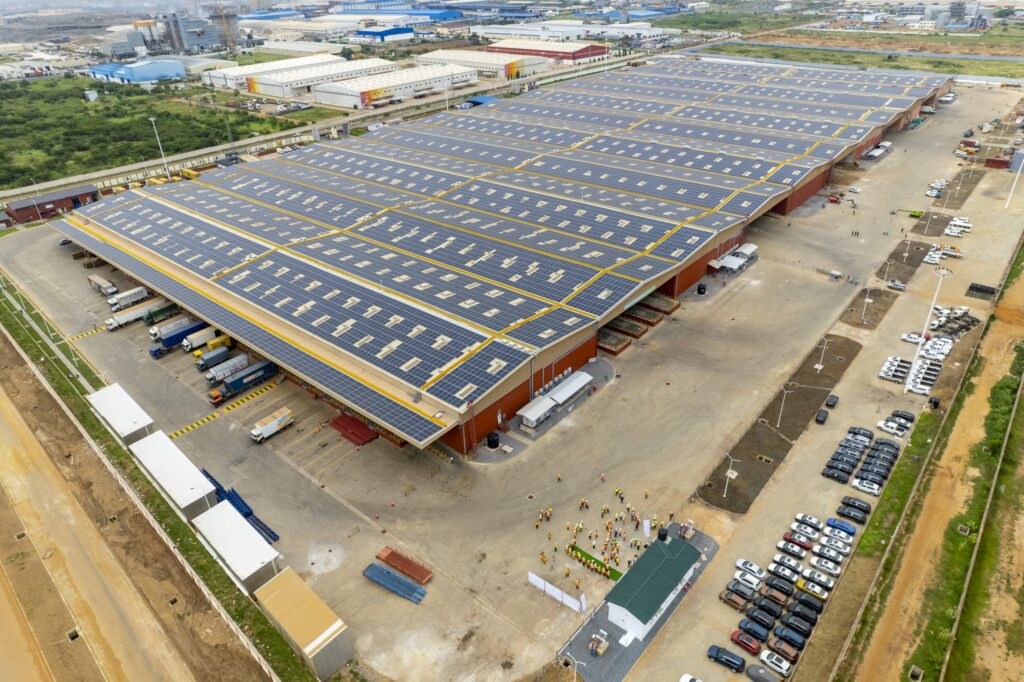
Spanning 95,745 square metres — roughly the equivalent of 20 football fields — it is projected to generate 24.7 gigawatt-hours of clean energy per year, and was financed by the International Finance Corporation.
Beyond flagship projects, Ghana has also maintained a Solar Rooftop Programme since 2018, encouraging businesses and households to install solar PV systems, alongside public institution installations in schools, hospitals, and government buildings since 2021.
Progress on these programmes, however, has been incremental rather than transformational.
In October 2025, Ghana moved further. Accra launched a $200 million rooftop solar initiative in partnership with Switzerland, marking one of the largest bilateral clean energy projects implemented under Article 6 of the Paris Agreement.
Finance Pours In — But Gaps Remain
The international financing picture has improved considerably. Development finance institutions committed over $400 million to Ghanaian solar deals between 2024 and early 2025.
These include a $130 million IFC facility for the 200 MW Dawa Solar Park and a $250 million World Bank energy-sector efficiency loan bundling transmission upgrades.
The African Development Bank’s $85 million Scaling-up Renewable Energy Program is underwriting 35 mini-grids and 12,000 net-metered systems.
Global module prices dropping to $0.10–$0.12 per watt in 2024 — down 60% from 2022 — combined with Ghana’s import duty exemptions under the Exemptions Act of 2022, have reduced payback periods for commercial and industrial rooftop arrays in Tema and Kumasi from seven years to under five.
The economics of solar, in other words, are finally working in Ghana’s favour.
Ghana added 92 megawatts of solar capacity in 2025, and the solar PV market is projected to grow at a compound annual rate of 37.42% through 2031, with commercial and industrial arrays advancing at an even faster pace.
Mahama’s New Bet
The Mahama administration, which returned to power in January 2025, has staked out an ambitious energy agenda.
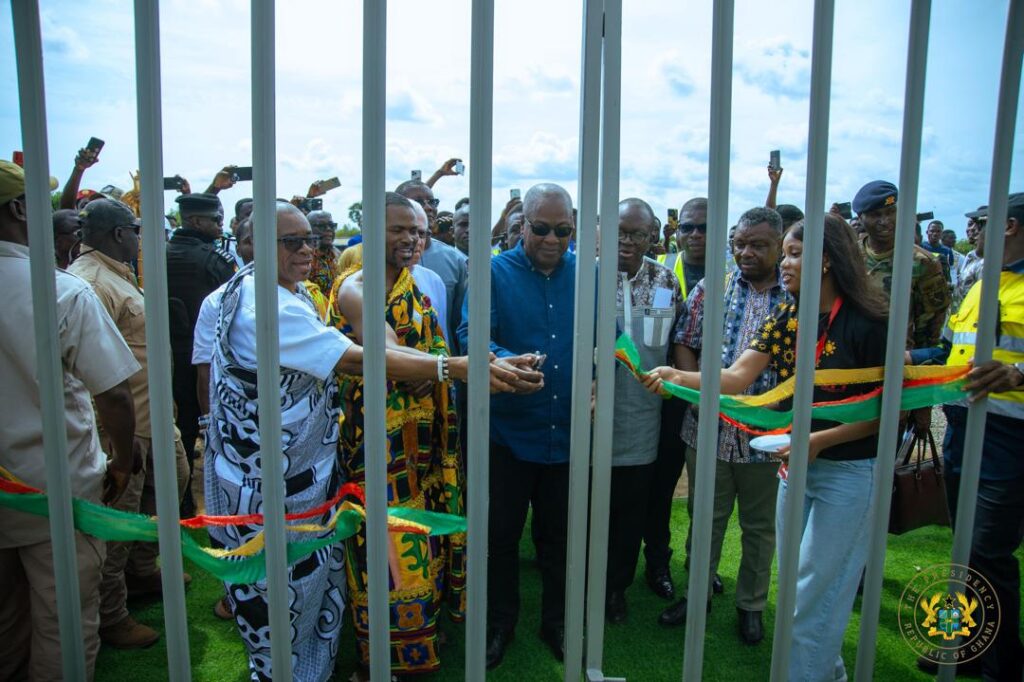
In his State of the Nation Address, President Mahama announced a new Renewable Energy and Green Transition Fund to facilitate the installation of solar streetlights, rooftop solar, off-grid solar systems, and charging stations.
He has also called the energy crisis an “existential threat to Ghana’s economy.”
The new government has expanded the scope of the Energy Ministry to include the Green Transition in its portfolio — a meaningful policy signal.
But the Ministry has yet to outline a clear roadmap detailing specific goals, targets, and implementation strategies.
The echo of history is hard to ignore. Ghana’s Nationally Determined Contribution estimates that between $9.3 billion and $15.5 billion per year is needed to meet the country’s climate ambitions — a figure that dwarfs current commitments.
Thermal generation still accounts for 66% of Ghana’s power generation, with hydro at 33%, leaving renewables in a marginal position.
The Sun Keeps Shining
The structural conditions for a solar breakthrough are more favourable today than they have ever been.
Prices are low, international financing is available, and at least one administration has named green energy transition as a formal portfolio priority.
The LMI rooftop project in Tema has demonstrated that large-scale industrial solar is commercially viable on Ghanaian soil.
What Ghana has struggled to build — more than solar farms or bilateral agreements — is institutional credibility.
This article was edited with AI and reviewed by human editors