


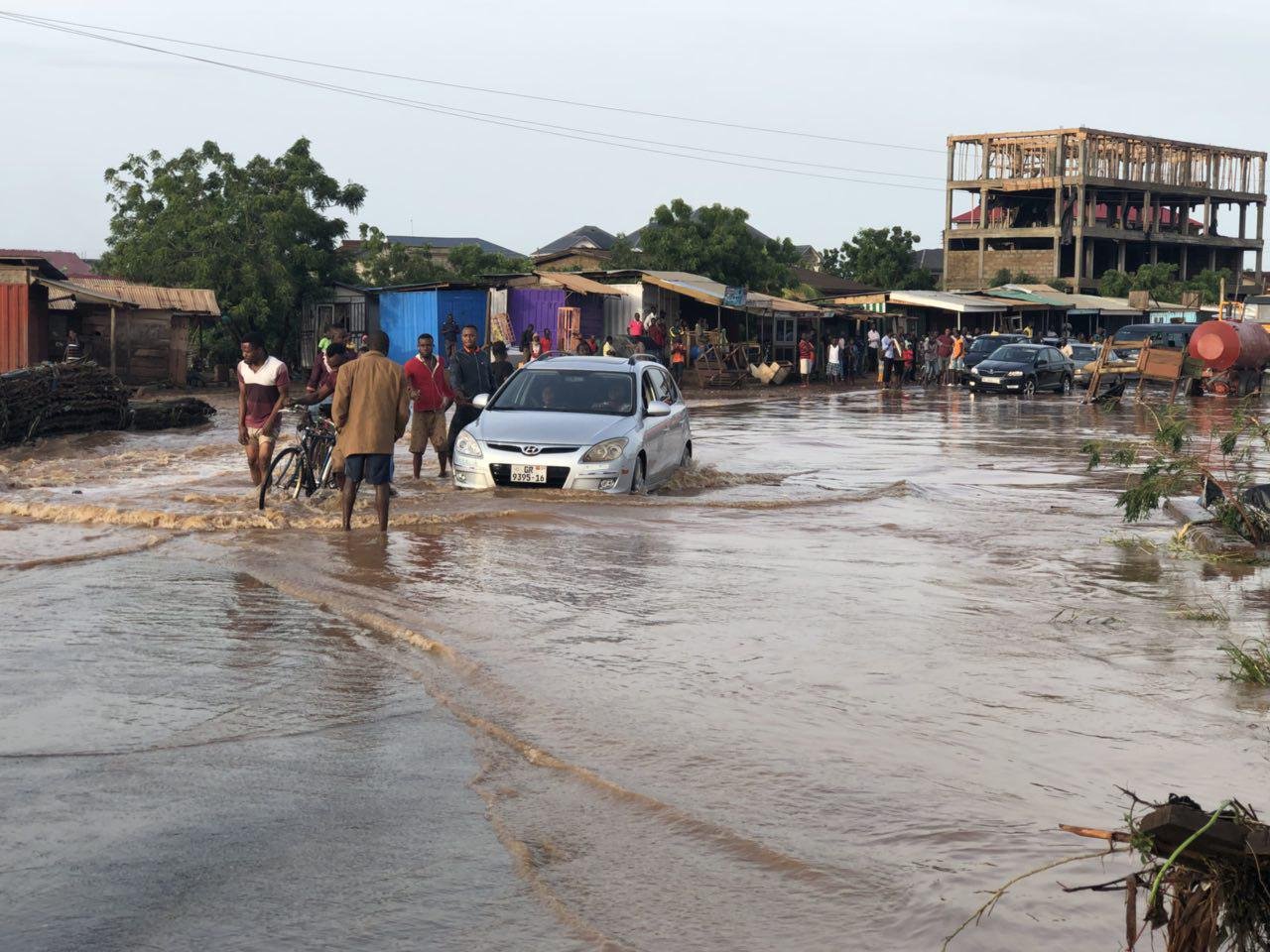
Accra suffers disorderliness during every torrential rainfall. The city crashes and grinds to a halt, while commuters and residents alike suffer the familiar reality of flooding.
For one of the fastest-growing urban cities in Africa, poor road networks, non-existent drainage, and uncoordinated public transportation systems characterize its urban landscape. I fear the city will become uninhabitable in the foreseeable future without directed, coordinated steps.
On the evening of June 3, it took me about 5 hours after work to get home. Although I count myself fortunate to have gotten home around 11:20 pm, personal accounts on X (formerly Twitter) suggest that a lot more people got home after midnight.
Some unlucky ones also suffered a fate far worse than chasing tetanus-infested troskis (a minibus), as many lost household items to the floods. In Accra, heavy rains routinely inundate roads, and many people lose their homes and belongings at an alarming rate.
It is not lost on me that the recurrence of floods, along with the attendant disasters, is human-engineered. The culture of fly-tipping continues to be Accra’s common approach to refuse disposal. It mirrors a careless attitude: what is unseen is treated as nonexistent.
Somewhat like how newborns experience the world, if you will. Babies, as we know, often cry during their formative months when they do not see their caregiver (usually the mother). Between age zero and four months, if a caregiver or object is out of sight, to their little minds, it ceases to exist.
Over time, the child gets better at understanding that objects and caregivers are still there even when out of sight, out of hearing, or out of touch.
The concept of object permanence in developmental psychology explains the child’s emergent awareness. Fly-tipping, then, to my mind, is the inverse of this acquired awareness: in disposing of our waste offhandedly, we revert to an out-of-sight-out-of-mind approach.
In this sense, our relationship to waste resembles an infant’s worldview. By dumping refuse in illegal places like gutters, drainage systems, and flowing water bodies, far from our immediate view, the rubbish disappears —and so does our responsibility—an act unbecoming of adults.
We feel good thereafter because we don’t see the waste anymore until the consequences of our actions come roosting in the form of flooding.
We may need more community sensitization and stricter punishable measures to curb the menace of illegal dumping.
I can also speak of the abysmal drainage system that we have inherited, and continue to inherit, courtesy of the failures of our government and its related agencies.
Taking these two issues, fly-tipping and poor drainage systems, along with the confluence of poor urban planning—voilà, welcome to Accra, where water takes over our streets and homes during and after a 3-hour downpour.
What does it mean, then, for Accra to be inhabitable, flood-proof, and public transport friendly? This question requires careful unwrapping.
Since the beginning of the year, commuters in Accra have experienced an acute shortage of readily available public transportation. The government promised some buses to ease the transportation problem.
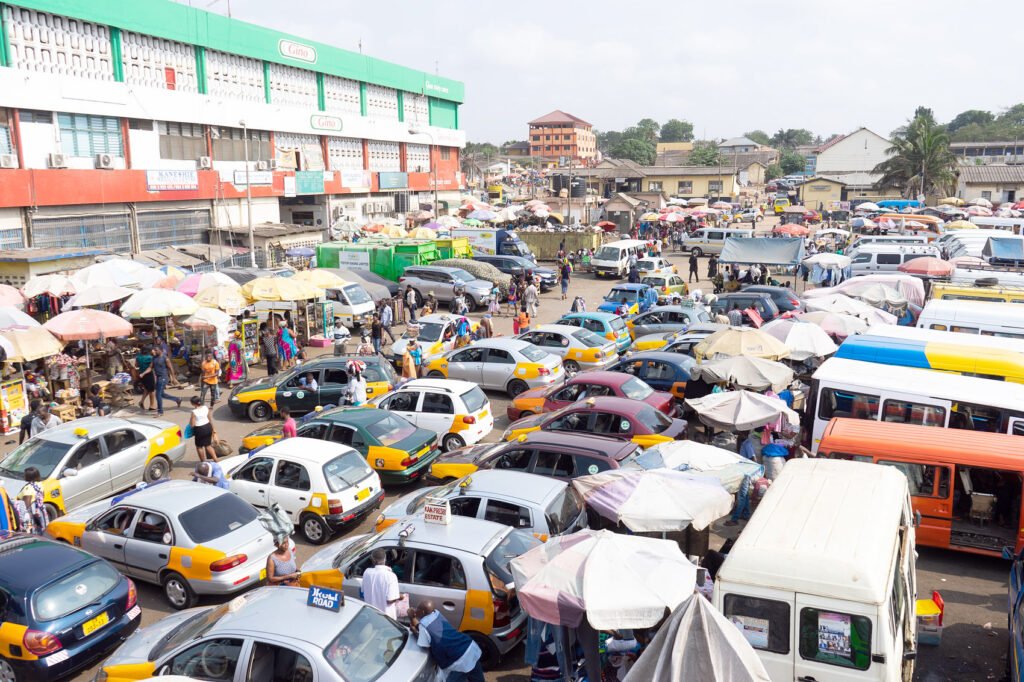
To the government’s credit, some buses — they claim about 100 Metro Mass Transit — ply the roads to various locations such as Accra-Madina-Adenta, Accra-Achimota-Amasaman, and Accra-Mallam-Kasoa.
Yet the problem persists, suggesting that the numbers are mere hyperbole, if not political posturing.
So although some buses ply the roads, 100 of them, as claimed, are below what commuters experience.
There are far fewer private commercial buses than there are commuters in Accra. The problem worsens with the deluge caused by rain to the point that many commuters are often stranded. Worse are the roads that disappear at the hint of a downpour.
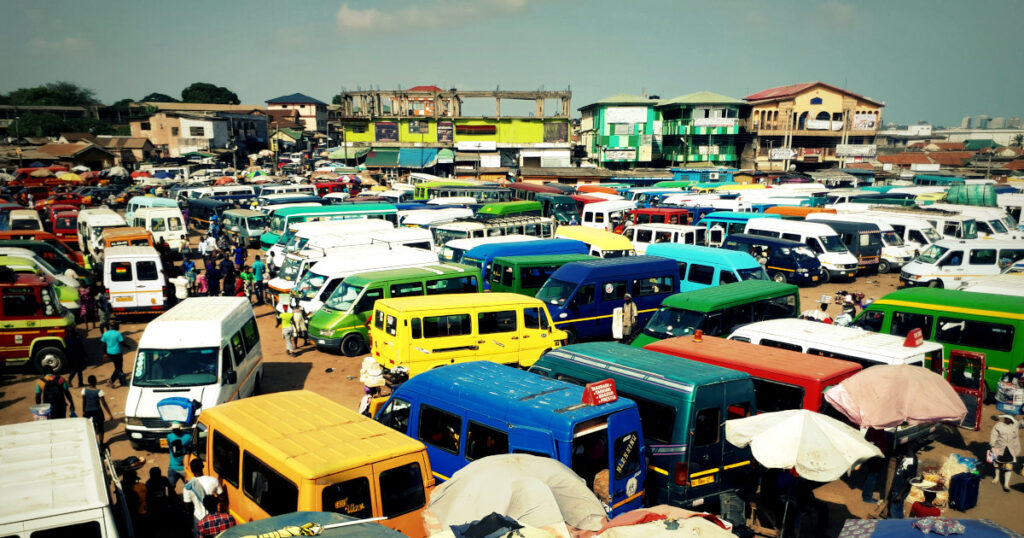
Accra residents, honestly, are in the Hunger Games of public transportation. It is a sport where a mother jostles against other commuters for a seat with her three kids, and where schoolchildren jump onto a bus through the open window at the back. It is survival.
The government’s half-baked, piecemeal solution is sorely inadequate in the face of the shortages experienced. The transportation issue strips dignity from the Ghanaian person in Accra who is trying to make ends meet and makes her life excruciating for no reason other than her inability to afford a private vehicle.
Going from point A to B should not be this difficult. We need more government buses on our roads, even for 24 hours, in tandem with the government’s own 24-hour economy pitch during the 2024 elections, on which they admittedly won.
Another bane is the inept attitude of the Ghana Town and Country Planning. Accra is growing at an annual rate of 2.2 percent to 2.6 percent, according to World Bank Open Data.
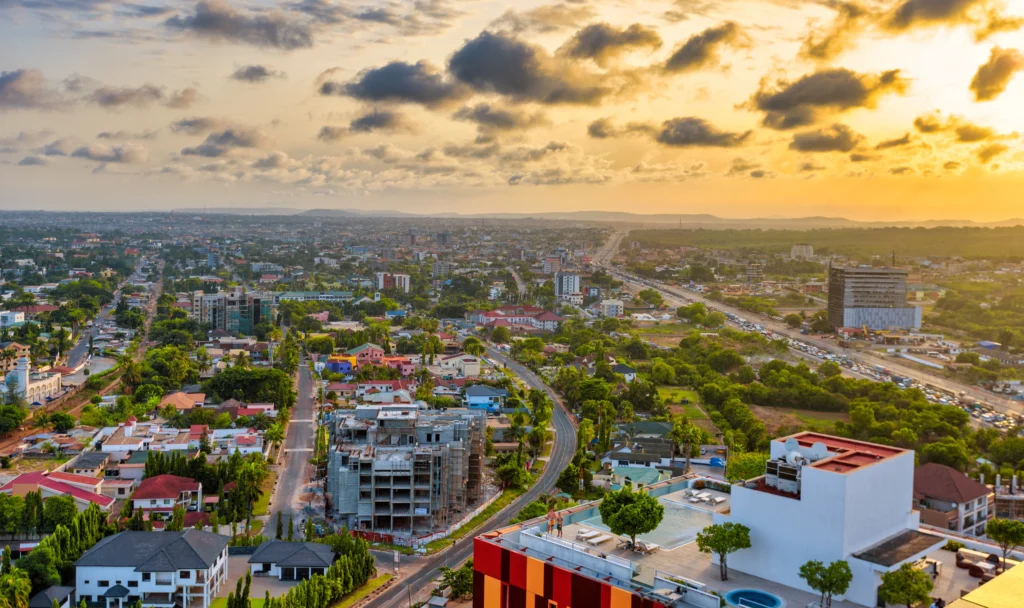
Nonetheless, the impuissant institution mandated to regulate and plan urban growth sits idle. Many new homes and commercial structures pop up in the city center and outskirts like a contagion: unwelcome, unsupervised, and unplanned.
The institution’s inability to provide proper advice and sanctions regarding where to build and where not to build culminates in indiscriminate building by citizens and noncitizens alike.
Many buildings in swamp lands, landfills, and on unauthorized roadways are curious examples of this institution’s powerlessness, costing lives and property. If this body were doing its mandated duty to the nation, many of the flood-related issues would disappear.
The very day I got home late, a trending video on TikTok showed a storey-building that had collapsed with occupants trapped under the rubble in Adenta.
A very sad situation easily averted if someone did their job. The Town and Country Planning must not look on anymore. The mandated powers given by the government need exercising. The government should ensure that allocated funds are readily directed to the institution to enable inspection, demarcation of drainage areas, and proper city planning.
When cease-and-desist letters are issued, they must be complied with without favour, regardless of the people involved.
Accra is indeed growing; nevertheless, the lack of supervised town planning is hurting its livability and charm. The government must act now lest the problem deepen, increasing the costs borne by inhabitants and future generations.
Difficult times call for creative solutions; dreaded situations call for drastic solutions, and these times and situations are upon us.
The views and opinions expressed in this article are those of the author and do not necessarily reflect the views of The Labari Journal. This content represents the author’s perspective and analysis.



Follow