
On Friday, February 7, 2025, Sam Nartey George, a Member of Parliament for Ningo Prampam, was officially sworn in as Ghana’s Minister of Communication, Digital Technology, and Innovations.
After a contentious vetting process by the Parliament’s Appointments Committee in the prior month, Mr. George set out on a mission to introduce new policies and direction for the Ministry.
The new Minister was critical of the previous administration, claiming it had mismanaged and faltered.
He listed calamities such as the failed 5G rollout, the crippling financial situation of telecom operator AT Ghana, and the decision to hastily provide a license to Starlink without the company setting up a local office.
The Minister’s first year can be described as a steady march of policy execution. But there has also been backtracking and postponing of initiatives he previously announced.
There was also the controversial standoff between his Ministry and Ghana’s largest satellite TV provider, Multichoice Ghana.
Some detractors tag him as “arrogant”, questioning some of his policies, including his Ministry’s first draft of a Cybersecurity Bill, which they say is an overreach.
Others praise him for trying to protect consumers, especially in his dealings with local telecom providers, to provide more value for data services.
After a year on the job, we review some of his contentious episodes as the head of the Ministry of Communications.
The SIM Registration Redo
One of the most immediate and defining moves of Minister George was the decision to scrap the previous administration’s nationwide SIM registration exercise effectively.
He declared his predecessor’s multi-year effort a “waste of everybody’s time” because of a purported failure to cross-reference biometrics against the National Identification Authority (NIA) database.
At a press conference early into his tenure, Mr. George unveiled plans for a comprehensive national SIM card registration, which would not involve physical queues. He even gave a date for the exercise: July 1, 2025.
But July 1 came and went, and no registration exercise took place.
Mr. George may have jumped the gun on his initial launch date. He later announced that there would need to be a new Legislative Instrument (L.I.) to provide the exercise with a “proper legal basis.”
He recently announced a completely new SIM registration to be relaunched by the first quarter of 2026.
The new announcement came with renewed scrutiny, with Bright Simons of IMANI Ghana questioning the logistics of this new exercise.
On the social media platform X, he inquired about the sole sourcing of the project to a relatively new company called “Transactly“.
Mr. George pushed back on this criticism, stating that the project had not been sole-sourced as alleged by Mr. Simons.
Currently, details on the new registration process are scarce, but Mr. George reiterated in an interview that it will not be done in person but through users’ phones.
The DSTV Price Saga: Consumer Champion or Regulatory Overreach?
The Minister’s most high-profile public battle was the aggressive push to force MultiChoice Ghana, the operator of DStv, to reduce its subscription prices significantly.
He accused the company of charging Ghanaians more than customers in comparable African markets and issued a directive for a 30% price cut, even threatening to revoke the company’s operating license.
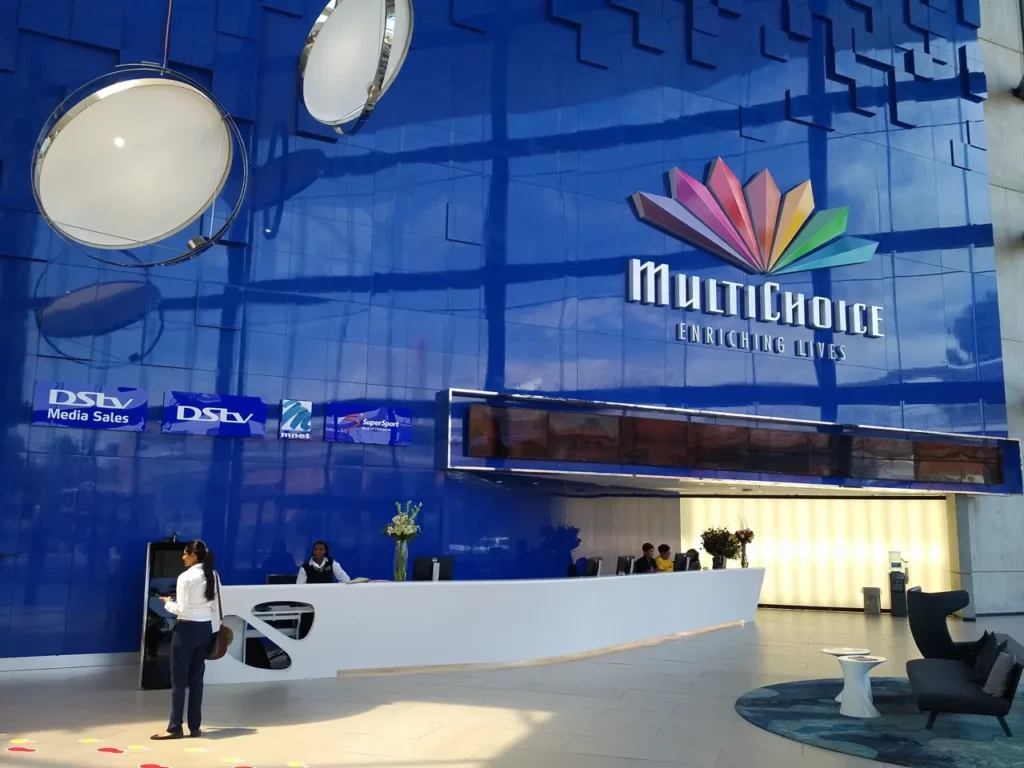
While his stance was hugely popular with consumers, the saga quickly spiraled into political and regulatory chaos.
After stating that Multichoice had failed to provide documentation that the Ministry had requested, he announced the company would face a daily fine of 10,000 GHC
The situation was later “resolved”, with Multichoice providing consumers with more channels for its lower bouquets.
Mr. George signaled that this was a win for consumers, stating he had given consumers “better value“.
However, critics stated that his initial promise of reducing prices had not been fulfilled.
The episode underscored the Minister’s inclination toward direct, populist intervention but raised concerns about the consistency and legality of regulatory action in the communications sector.
Mobile Data and the Telecel-AT Ghana Tussle
In a supposed win for consumers, George successfully pushed the major telecom operators, particularly MTN Ghana, to increase their data bundle values for the same price.
MTN, designated as a Significant Market Power (SMP), was directed to increase its bundles by 15%, while others increased by 10%, effectively lowering the cost of data for millions of Ghanaians.
However, the handling of state-owned AT Ghana (formerly AirtelTigo) has drawn significant criticism.
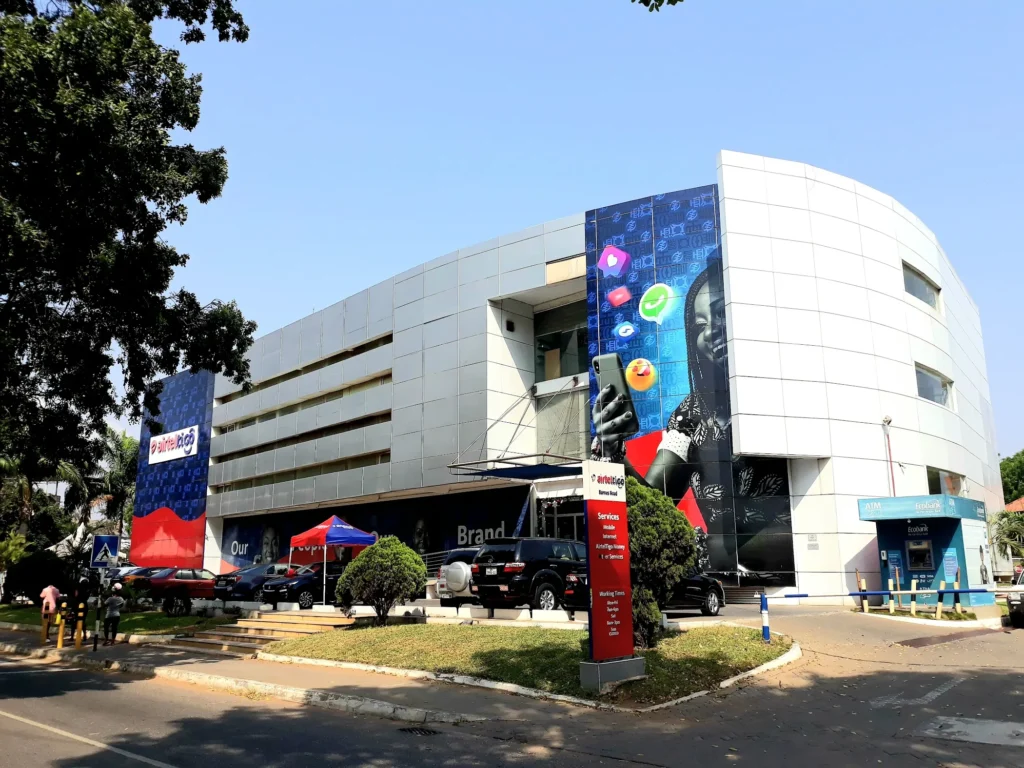
In early May, the Minister initially signed a Memorandum of Understanding (MoU) with Canadian firm Rektron Group for a proposed $1 billion investment to rescue the debt-strapped telecom.
Rektron was reportedly “blindsided” when Mr. George announced that AT Ghana’s customers would be placed on Telecel’s network, supposedly signalling that there would either be a merger or acquisition.
Reports have stated that Mr. George was reportedly pushing a $50 million investment plan linked to Telecel, the country’s second-largest telecom operator.
Later in a press briefing, the Minister appointed the audit firm KPMG as a transaction advisor to evaluate AT Ghana. He stated, “the outcome of the work of KPMG will determine the way forward” regarding the company’s future.
KPMG was given a 60-day assessment period to complete its audit and present its recommendations. As of this publication, there have been no updates on its review.
Interestingly, a new report claims that KPMG’s work started in mid-October, hence the delay of its report and recommendations.
The Still-Awaiting 5G Promise
Despite repeated assurances and deadlines, Ghana’s much-hyped 5G network rollout remains a promise yet to be fully realized.
The former administration had announced an initial launch date in December 2024 and a new shared infrastructure model through the Next-Gen Infrastructure Company (NGIC).
Mr. George, when appointed as minister, was very stern about the 5G deal and its rollout to consumers. He reaffirmed an aggressive deadline of June 2025 for the NGIC to deliver 5G services.
But in June, the Minister announced that he had extended the deadline to December 2025.
As of the date of this publication, there is no indication that a full rollout of 5G services will be achieved. Mr. George has yet to publicly address this issue.
Other policies and deals will need to be detailed in the coming months by Mr. George.
Earlier in June, the Minister signed a $1 billion agreement with the United Arab Emirates (UAE) to establish the “Ghana-UAE Innovations and Technology Hub” in Ningo-Prampram, Greater Accra.
The first phase of the project will involve the development of a 25-acre site in Ningo-Prampram, with construction set to begin in 2026 and completion expected within two years.
Whether this comes to fruition remains to be seen. Ironically, the Ningo Prampam area was also home to the “Hope City” project, which failed to materialise.
The “One Million Coders” will also need to be expanded on as some persons who signed up have reported that they have been “left in the dark” on its progress.
As we roll into 2026, more scrutiny from civil service organizations will be focused on the Minister.
The coming months will determine if Minister George can trade in his image as a public advocate for that of a steady, reliable policy administrator.