


STORY HIGHLIGHTS
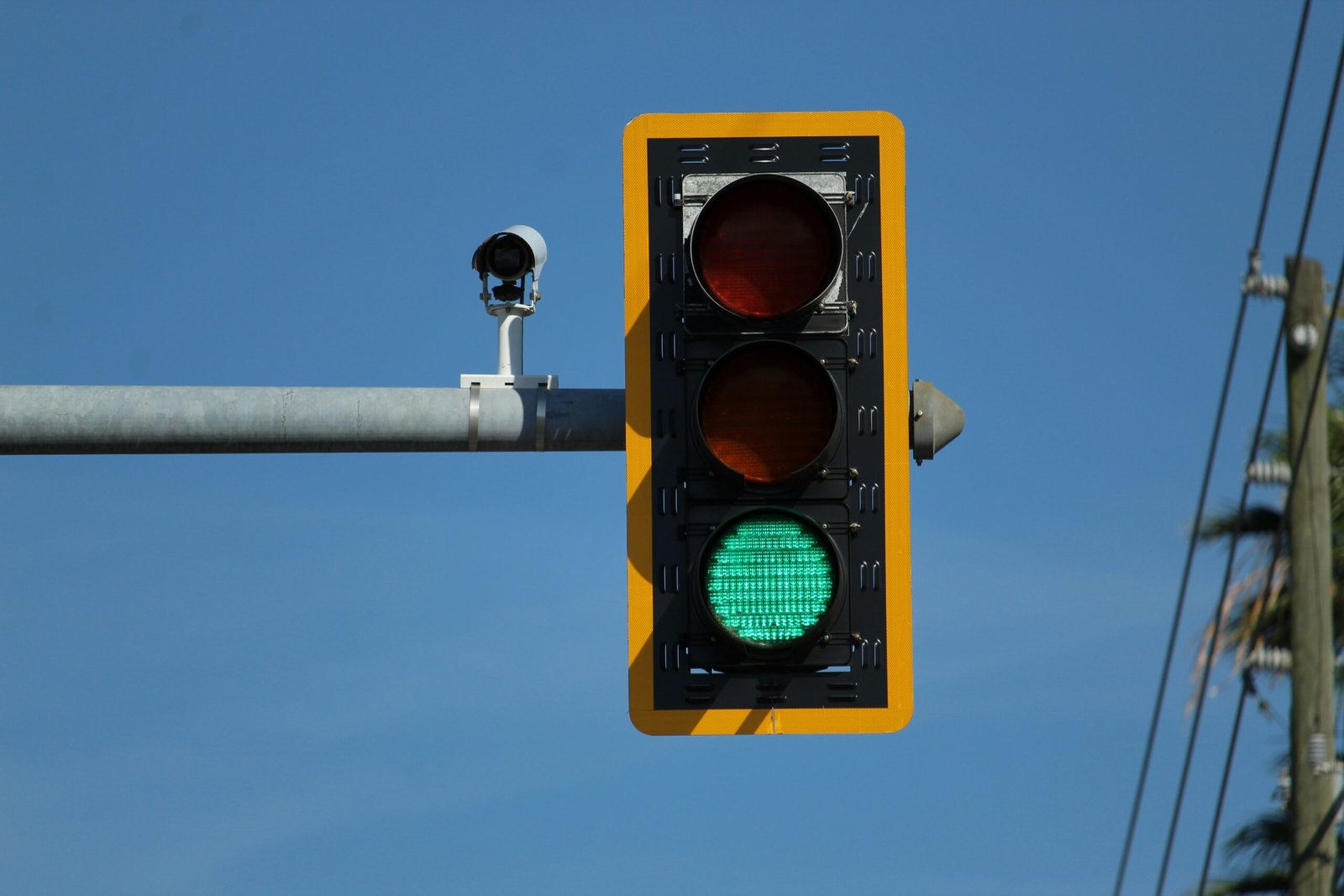
- Only 257 of Ghana’s 411 traffic signals are functional, with 132 completely offline and 22 permanently decommissioned, according to a Department of Urban Roads assessment from April 2026
- Between 2020 and 2026, 587 incidents damaged the network — vehicular crashes alone account for more than three-quarters of disruptions
- Organised criminal syndicates are systematically stripping signal infrastructure of solar panels, copper cables, and computerised controllers
- The state owes maintenance contractors for previously completed works, effectively paralysing rapid-response repairs
- A flagship smart traffic system — the AITMS — has stalled at 23% completion, with expensive hardware sitting in storage due to unresolved legal disputes
At peak hours on the Accra–Kasoa corridor, the absence of working traffic lights has collapsed urban order. Commuters sit in gridlock for hours. Hawkers weave between stationary vehicles. Police officers are dispatched to manually direct traffic at junctions that should have been automated years ago.
A frank government assessment has now put precise figures to a crisis that millions of Ghanaians navigate daily.
In an online post by the Minister of Roads and Highways, Kwame Governs Agbodza, an assessment by the Department of Urban Roads (DUR) reveals that just 63 percent of the country’s 411 traffic signals are currently operational — meaning 132 intersections across eleven regions are effectively unmanaged, and another 22 units have been permanently decommissioned.
Crashes, Thieves, and Obsolete Hardware
The DUR assessment catalogues 587 distinct incidents that disrupted the traffic signal network between 2020 and 2026.
Vehicular crashes are the dominant cause of destruction, accounting for 77.5 percent of incidents — 455 in total. Reckless driving and overspeeding repeatedly knock down poles, gantries, and control systems at major intersections, including Okponglo, Tesano, and Kasoa.
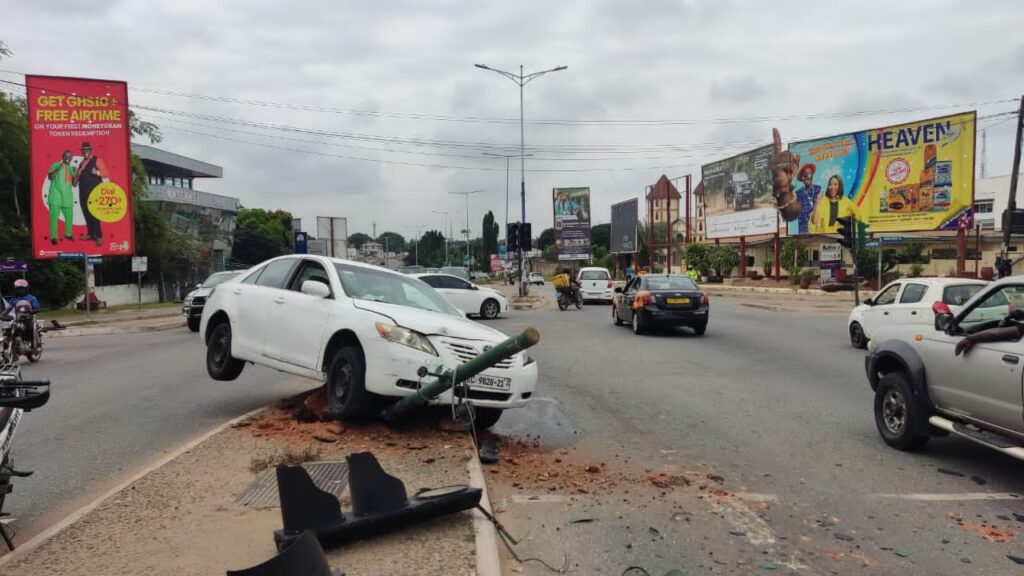
Each collision can take out not just the immediate signal but the entire electronic assembly housed within it.
The second threat is more deliberate. Organised criminal syndicates account for 102 incidents — 17.4 percent of the total — targeting infrastructure with increasing sophistication.
Thieves are bypassing security enclosures to extract backup batteries, micro-controllers, solar panels, inverters, and underground copper cables. At some locations, criminals have physically climbed overhead gantries to slice and remove specialised copper power delivery cables.
A further 30 incidents involved equipment obsolescence — cases in which replacement parts for legacy hardware are simply no longer manufactured anywhere in the world.
The Awoshie-Pokuase corridor offers a concentrated illustration of the damage. At School Junction, a violent crash destroyed the solar array and control system and killed the driver responsible.
At Odorgono and Anyaa Market, repeated theft has stripped out the core operating components of multiple signals.
The Geography of Neglect
The network’s vulnerabilities are compounded by a stark geographic imbalance. Greater Accra hosts 241 of the country’s 411 traffic signals — 59 percent of the entire national inventory.
Ashanti Region accounts for another 61 signals, or 15 percent. Five regions under DUR oversight currently have zero traffic lights at all.
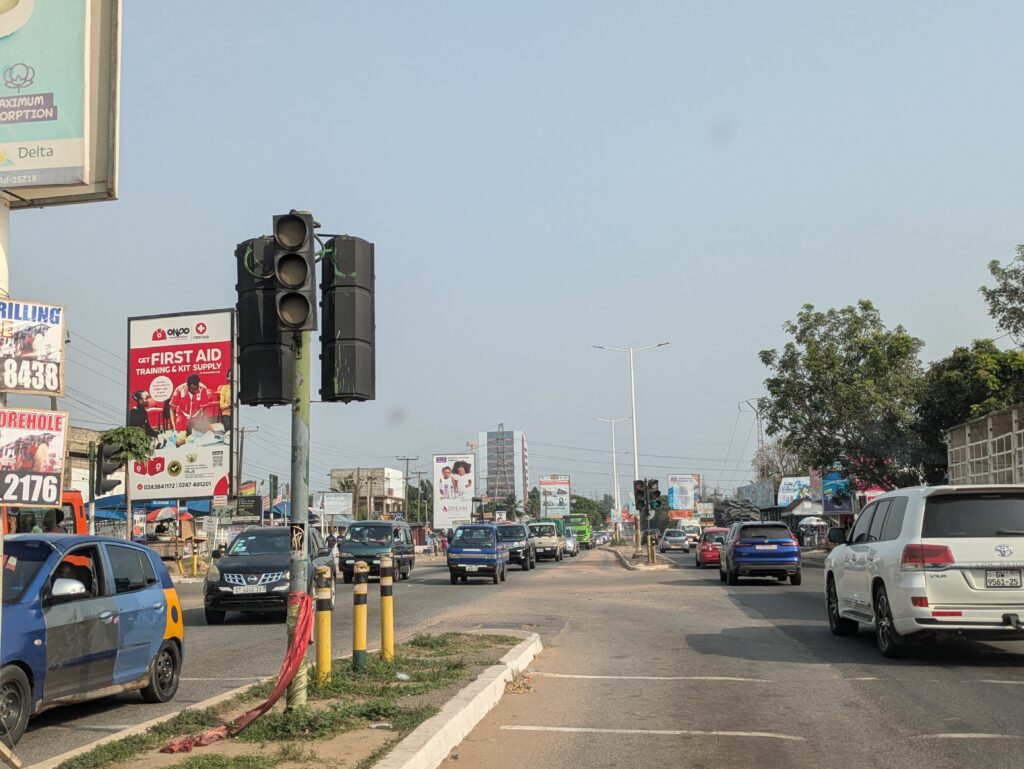
This concentration means that when signals in Greater Accra fail — and they fail often — the consequences ripple across one of West Africa’s most congested urban environments. It also means that most of Ghana’s regions are simply outside the system entirely.
A Repair System That Cannot Repair Itself
The DUR assessment identifies two primary bottlenecks: unresolved contractual issues and public indebtedness — the state currently owes maintenance contractors for work already completed.
That last point carries a particular edge. Contractors who have finished repairs and submitted invoices are not being paid, and as a result, they are no longer mobilising for new restoration jobs.
The government’s failure to honour existing payment obligations has effectively converted a maintenance crisis into a structural standstill. Intersections that could be restored within days remain dark for months.
The Smart System That Went Nowhere
The long-term answer, according to DUR, lies in transitioning from standalone traffic lights to Intelligent Traffic Systems — networks of interconnected smart controllers, CCTV cameras, and real-time management centres capable of adapting signal timing to live traffic conditions.
One pilot is already running. The Area-Wide Traffic Signal Control System (AWTSCS), funded jointly by the Agence Française de Développement and the Government of Ghana, manages the Neoplan-to-CBD corridor through 33 smart controllers, 80 CCTV cameras, and a Bus Priority System feeding into the Accra Traffic Management Centre. By most accounts, it works.
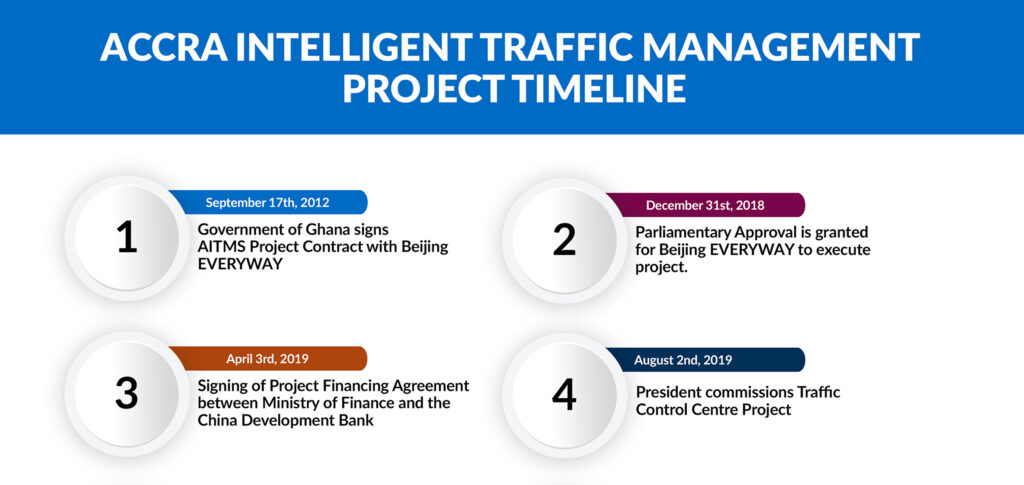
The flagship project, however, is paralysed. The Accra Intelligent Traffic Management System (AITMS) — conceived to transform signal coordination across the capital — has stalled at 23 percent completion.
Its centrepiece “Intelligent Tower” command centre is 65 percent built. High-tech hardware procured for the project sits idle in storage. The cause: unresolved legal disputes tied to a decade of mismanagement.
The AITMS saga stretches back to a contract signed in 2012 with Beijing Everyway Traffic and Lighting Technical Company. Work began in 2019.
A year later, the contract was controversially re-awarded to a different Chinese consortium — a decision the then-minority in parliament, including current Roads Minister Kwame Agbodza himself, warned would expose Ghana to a massive judgment debt.
A $55 million claim did follow, though the Permanent Court of Arbitration in The Hague ultimately dismissed it in 2023.
The damage to the project’s momentum, however, has not been undone.
What Comes Next
The DUR is now deploying a set of physical security upgrades at restored signal sites: heavy-duty steel cages around control cabinets, thicker iron casing plates, lockable underground chamber covers, and mandatory branded identification for all field technicians.
Increased enforcement under the Road Traffic Regulations is also being pursued against those caught damaging public infrastructure.
Ghana loses an estimated GH¢4.5 billion annually to traffic congestion, according to a February 2026 urban mobility study. A functioning traffic signal network is not a luxury; it is infrastructure with a direct and calculable return.
This article was edited with AI and reviewed by human editors



Follow