


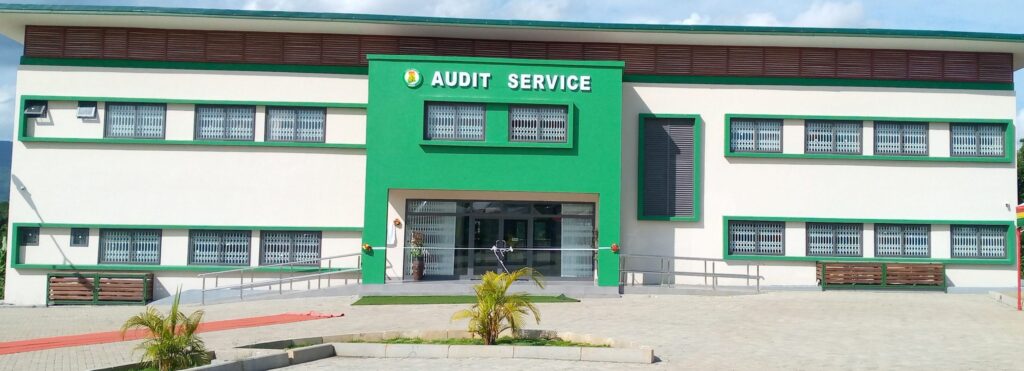
Story Highlights
- The Auditor-General’s payroll audit flagged over GH¢800 million in unearned salaries paid to more than 6,000 government workers between January 2023 and June 2025
- The Fourth Estate named Frank Oliver Kpodo, former Director of Procurement at the Ministry of Defence, as the individual who allegedly received GH¢427 million — more than half that total
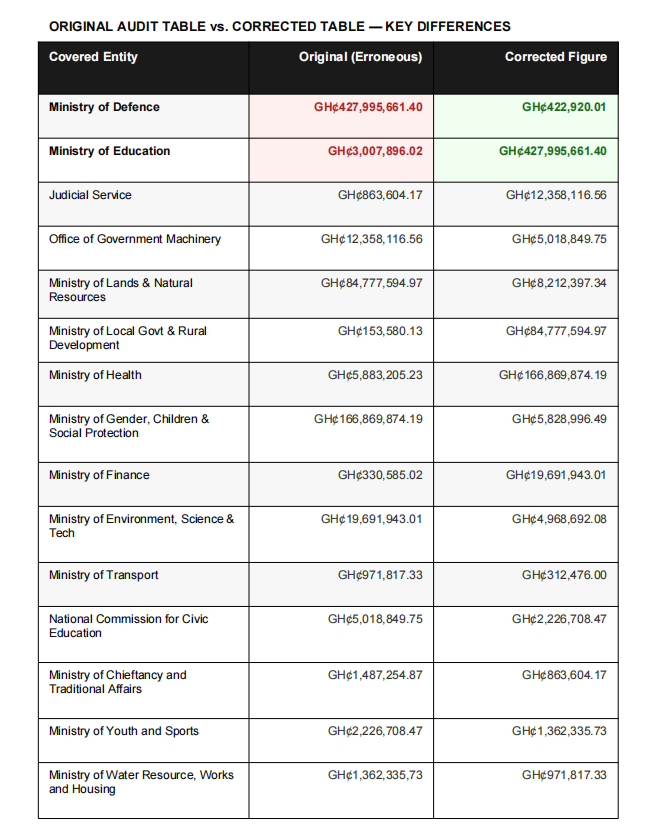
- The Audit Service has since admitted to a “transpositional error”: the GH¢427 million figure actually relates to 3,476 unaccounted staff at the Ministry of Education, not Kpodo
- The Ghana Audit Service has issued an “unreserved apology” to Kpodo, the government, and the public
The figure was staggering enough to feel impossible.
According to a (now deleted) report published by the investigative media outlet, The Fourth Estate, on April 20, 2026, a single civil servant at the Ministry of Defence — Frank Oliver Kpodo, then Director of Procurement — had allegedly received over GH¢427 million in unearned salaries across just 29 months.
That sum exceeded Ghana’s entire budget allocation for the Ministry of Transport, which stood at GH¢151 million. The story spread rapidly across newsrooms and social media timelines, triggering outrage and intensifying scrutiny of the man at the centre of it.
There was only one problem. The number was wrong.
The Error
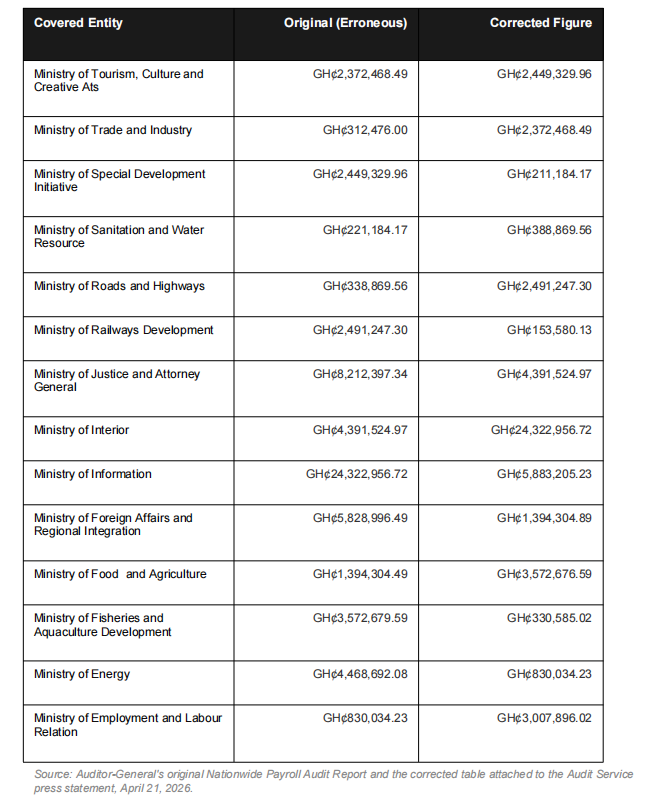
In a press statement released on Tuesday, April 21, 2026, the Ghana Audit Service identified the figure as a “transpositional error,” explaining that the GH¢427,995,661.40 attributed to Mr. Kpodo actually represents the total value of salaries paid to 3,476 unaccounted staff within the Ministry of Education.
The clarification follows public controversy generated by findings from the audit, which covered the period from January 1, 2023, to June 30, 2025, and was widely reported by sections of the media.
The Audit Service offered what it described as its “most sincere and unreserved apologies to Frank Oliver Kpodo for the distress and unwarranted public scrutiny this error may have caused.”
The apology was extended to the government, the Controller and Accountant-General’s Department (CAGD), and the Ghanaian public at large.
For Mr. Kpodo, the correction came a day too late. By the time the retraction was published, his name had already been circulated nationally as the face of Ghana’s payroll crisis.
What The Fourth Estate Reported — And What Stands
It is important to distinguish between the error and the underlying story. The Auditor-General’s broader payroll audit found that more than 6,000 government employees received over GH¢800 million in unearned salaries.
That figure has not been retracted. The controversy is still very real.

The Auditor-General recommended that Principal Spending Officers discontinue the validation of the flagged individuals and recover the total amount of close to GH¢801,808,427.04 in unearned salaries, warning that officers who fail to do so would be held personally liable.
Mr. Kpodo himself, when contacted by The Fourth Estate before the retraction, described the audit findings as “worrying and surprising,” saying he could not “imagine how that can happen.”
He insisted his salaries were processed through the CAGD with independently verifiable pay slips, and said no one from the Audit Service had reached out to him.
The CAGD, for its part, pushed back firmly. The Department maintained that Ghana’s public payroll system contains multiple layers of safeguards, and insisted that overpayments of the magnitude alleged would not be possible under current arrangements.
A Systemic Problem
Ghost names on Ghana’s public payroll are not new. Early reports as far back as 2005 flagged the problem in key sectors such as education and health.
Subsequent initiatives, including the Human Resource Management Information System introduced in 2014 and biometric registration, achieved only partial success — in 2017, over 26,000 ghost names were removed, yet the problem persisted.
Finance Minister Dr. Cassiel Ato Forson has pledged a monthly payroll validation process going forward. He issued a direct caution to those who validate ghost names: “They will be personally liable for the loss of public funds.”
The Question of Public Trust
The Auditor-General’s error not only damaged one man’s reputation, but it also damaged the credibility of the very institution Ghana depends on to keep the state honest.
The CAGD, in a statement issued on April 20, called on the media and social media users to verify sensitive financial allegations before publication, warning that inaccurate reporting on public payroll systems could misinform the public and undermine confidence in state institutions.
That warning now applies with equal force to the Auditor-General’s own office.
When Ghana’s foremost accountability body publishes a report naming an individual in connection with nearly half a billion cedis — and then retracts it the following day — it raises uncomfortable questions about the rigour of the audit process itself.
The Audit Service noted that the corrected summary has been provided to ensure accuracy and maintain public trust in its work, reaffirming its commitment to accountability and transparency in the management of public funds.
The Fourth Estate has itself faced a barrage of scrutiny for its publication. Online commentators have questioned the outlet’s journalistic integrity for failing to properly verify the figures before publication.
Some have defended the media publication, pointing to the original error by the audit service.
According to Mr. Kpodo’s legal counsel, Prince Ganaku, his client is looking at legal options against The Fourth Estate and could sue them for damages in court.
Ironically, Mr. Kpodo was in the news three weeks ago for an alleged GH¢4.8 million fraud linked to a vehicle supply contract.
The Ranking Member of Parliament’s Public Accounts Committee (PAC), Samuel Atta-Mills, had called for the prosecution of the former procurement director while he was at the Ministry of Defence.
What was supposed to be a story on the prevailing issue of ghost names in Ghana’s public sector has instead become a debate about the trust of media outlets and the information they publish.
What Ghana’s accountability institutions must now reckon with is whether their processes are rigorous enough to name names — and whether they are prepared to bear the consequences when they get it wrong.
This article was edited with AI and reviewed by human editors



Follow