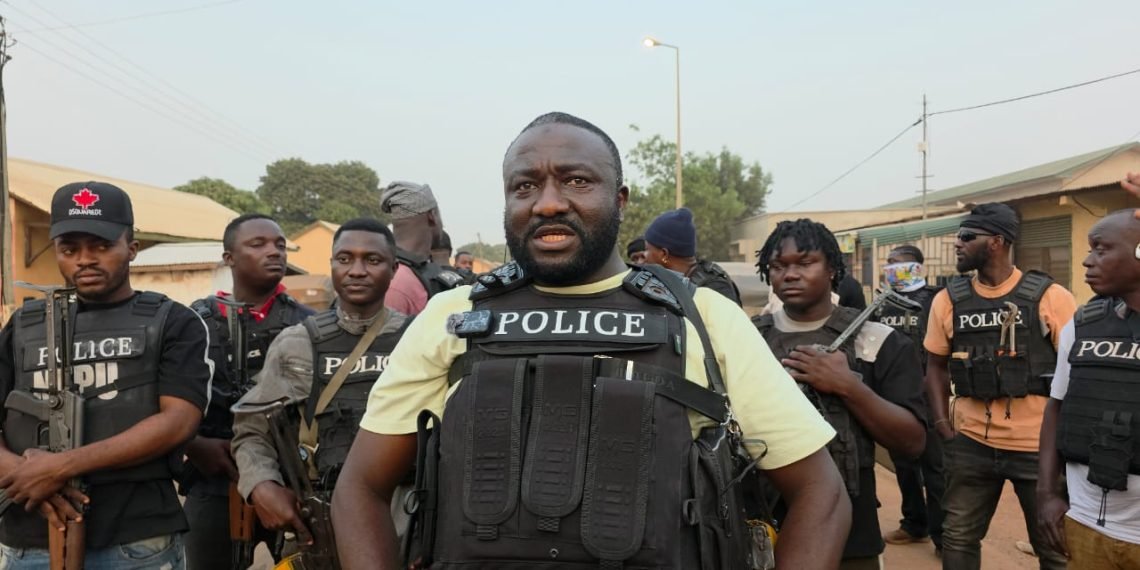
A few weeks ago, Ibrahim Mahama, founder of the Savannah Centre for Contemporary Art and CEO of Red Clay Studio, claimed officers from the Ghana IGP’s Special Operations Team boarded his bus, forced him to unlock his phone, deleted footage he had recorded, and assaulted him.
He reported sustaining injuries, including a broken tooth, cut lips, rib pain, and recurring headaches.
At a press conference on March 23, Mahama said the incident had disrupted his schedule, leading to the postponement of lectures at the Royal College of Art, the University of Cambridge, and the University of Oxford, as well as planned trips to Helsinki, Amsterdam, and South Africa.
A Commander Under Scrutiny
Central to the growing controversy is not only what happened to Ibrahim Mahama, but what DSP Bawah Abdul Jalil — the Black Maria’s commander — did, or did not do, in that moment.
According to Mahama’s account, Mr. Jalil was present at the scene and looked on as the assault unfolded, despite having the authority and ability to intervene and stop it.
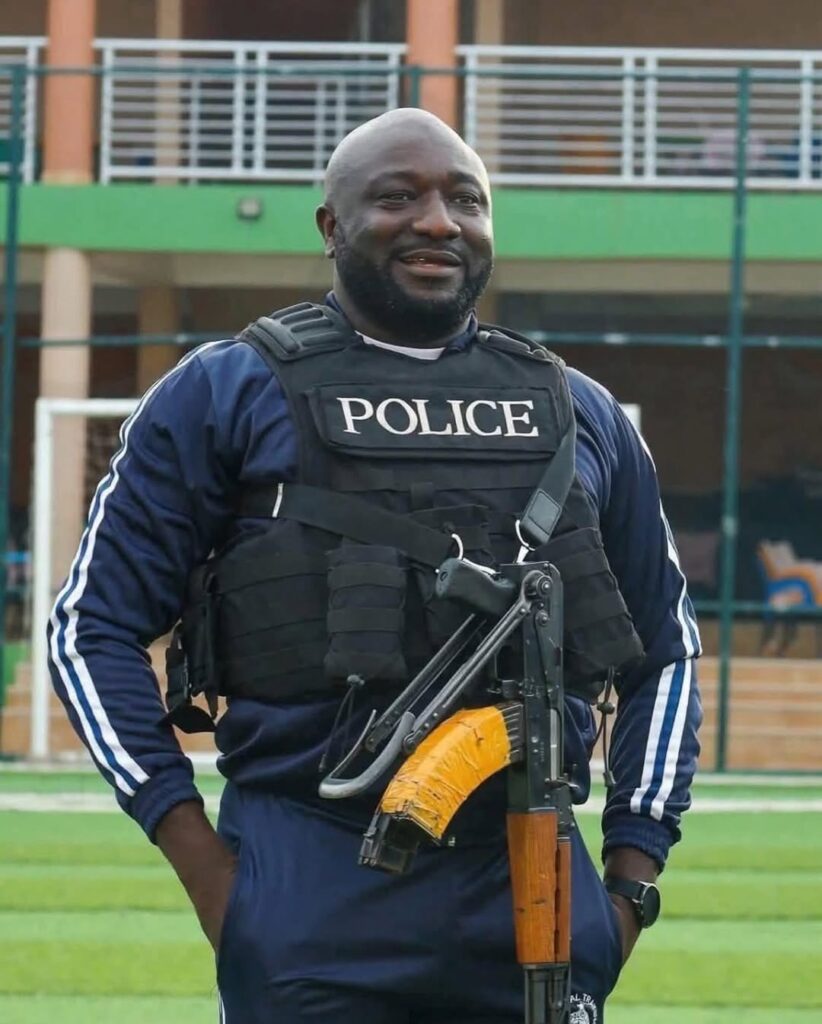
That allegation strikes at the heart of command responsibility. Mahama reportedly accused the police force’s leader of attempting to slap him personally.
DSP Jalil has pushed back forcefully. In a detailed situation report, the team said the incident was purely a traffic enforcement operation that escalated due to the conduct of a non-compliant commercial driver — not an attack on any public figure.
He further claimed his team had intervened as protectors, shielding Mahama and his companions from an angry mob of frustrated road users.
Mahama has rejected that version of events entirely.
The Leadership Change Signal
Even as the controversy deepened, DSP Jalil recently hinted that a leadership change at the Black Maria unit is coming.
The timing of that signal — in the immediate aftermath of the most damaging episode in the unit’s brief but turbulent existence — has not gone unnoticed.
Whether the hint reflects a voluntary transition, a negotiated exit, or pressure from within the Ghana Police Service hierarchy remains unclear.
But for many watching the case unfold, it raises an unavoidable question: is a leadership change the accountability the moment demands, or is it a managed retreat designed to shield the institution from deeper scrutiny?
A Contradiction at the Heart of the Police
The Ibrahim Mahama case has also laid bare a striking internal contradiction within the Ghana Police Service itself.
The Northern Regional Police Command insists the Special Operations Team had already been withdrawn from the region as of March 5, 2026, while a detailed statement issued by the team’s commander, DSP Bawah Abdul Jalil, places the unit firmly at the centre of events on March 21.
The divergence raises critical questions: if the taskforce had indeed been withdrawn, under whose authority was DSP Abdul Jalil and his team operating in Tamale on the day?
And if his team was present, why has the Regional Command distanced itself so firmly from their actions?
The Unit’s Rise and Troubled Past
The Special Operations Team was deployed to the Northern Region in November 2025 after growing concerns about escalating criminal activities in the Tamale metropolis, including armed robbery, vehicle theft, drug trafficking, and attacks targeting mobile money vendors and business operators.
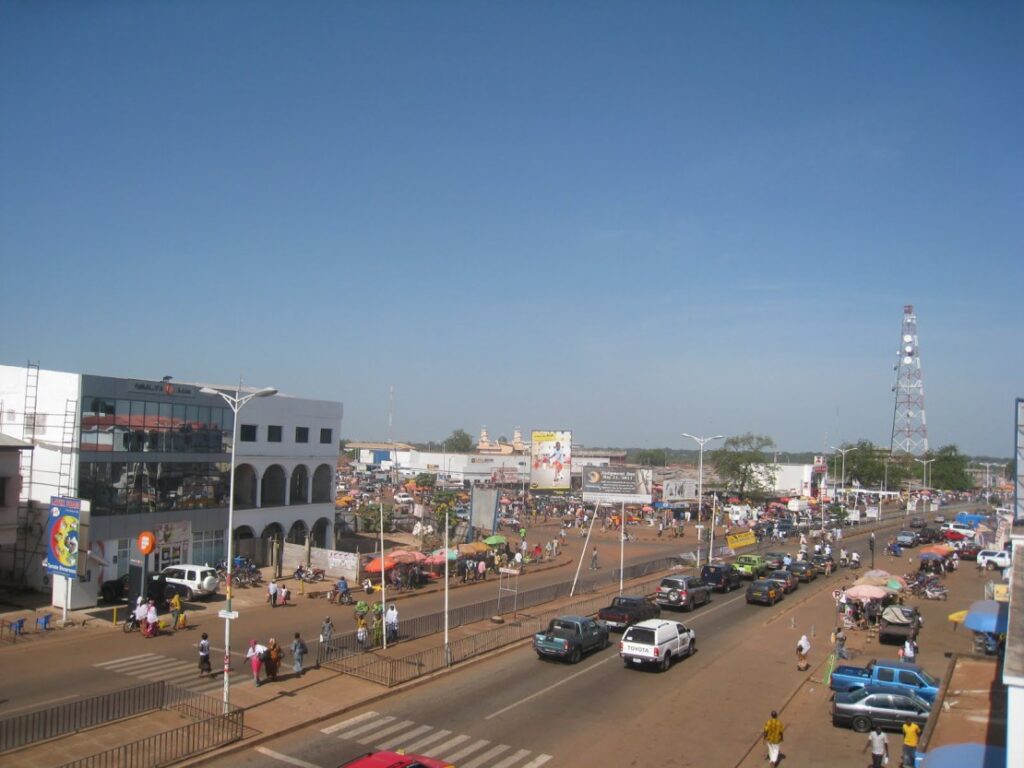
Under Mr. Jalil’s command, from Tamale to Yendi, Savelugu to Damongo, the message was loud and unmistakable: lawlessness would not be tolerated.
Drug peddlers, armed robbers, and hardened street operators who once operated with impunity were rounded up, and criminal enclaves that had functioned as no-go zones were dismantled.
The unit earned genuine public support. When withdrawal came in early March 2026, demonstrators visited traditional rulers, religious leaders, and the Mayor of Tamale to express their displeasure and seek intervention to keep the team in the region.
But DSP Jalil’s record has been controversial.
In 2007, the Ghana Police Service arrested the same Abdul Jalil Bawa, then a Police Constable, for the alleged theft of three AK-47 rifles and ammunition from the police armoury.
Mr. Jalil maintained his innocence, stating that he had been “set up”.
In January 2017, he was accused of assaulting a superior officer at the Jubilee House — an incident that drew national attention after surveillance footage emerged.
Investigation and the Demand for Justice
The Ghana Police Service transferred investigations into the alleged assault to the CID Headquarters, following a high-level meeting on March 26, 2026, involving the Inspector-General of Police, members of the Police Management Board, and Mahama himself.
The Director-General of the Police Professional Standards Bureau was also tasked to fast-track a parallel inquiry into officer conduct.
Mahama has been clear about what he wants from the process. Speaking after the meeting, he said: “It’s not about compensation. It’s more just about justice.”
He broadened his call beyond his own case: “If this could happen to me, as known as I am, then what about the people on the street if they go for an operation and someone dies of internal injuries — who’s going to speak for that person?”
This article was edited with AI and reviewed by human editors