



STORY HIGHLIGHTS
- Cina Lawson has served as Togo’s digital economy minister since 2010, making her one of Africa’s longest-serving technology ministers
- Her Novissi mobile cash-transfer programme reached over 920,000 vulnerable Togolese during COVID-19, drawing a $100 million World Bank commitment
- Togo’s internet penetration expanded from under 2% to 74% during her tenure
- A 2020 ECOWAS court ruling found that the 2017 internet shutdown, ordered under her ministry, illegally violated citizens’ freedom of expression
LOMÉ, Togo – In 2022, Google’s Equiano subsea cable — stretching from Portugal to South Africa — made its first touchdown on African soil in Togo.
It was the result of years of deliberate courtship by Cina Lawson, Togo’s Minister of Digital Economy and Transformation, who has spent over a decade positioning a low-income West African nation as the continent’s unlikely digital vanguard.
Educated at Sciences Po and Harvard University, Ms. Lawson worked in telecommunications before her appointment to government — a career that took her from the World Bank in Washington to Alcatel-Lucent in Paris and eventually Orange Group in New York.
She has led Togo’s transition to an inclusive digital economy, drawing from more than 20 years of experience in digital policy and regulation.
She was first appointed Minister of Posts and Telecommunications in May 2010 by Prime Minister Gilbert Houngbo, and has held successive digital portfolios under President Faure Gnassingbé ever since.
Fifteen years in the same seat is unusual anywhere. In West Africa, it is extraordinary.
But recent controversies, including internet shutdowns for Togolese citizens, have cast a shadow on Lawson’s otherwise clean resume.
The Architect of Togo Digital 2025
Ms. Lawson’s signature achievement is the Togo Digital 2025 strategy — an ambitious national blueprint she helped shape and now drives.
The strategy aims to provide all citizens above age five with a biometric ID and affordable high-speed internet access, digitalize public services and government-to-citizen payments, and accelerate Togo’s emergence as a regional digital hub.
The numbers are hard to dismiss. Under her tenure, mobile internet penetration expanded from less than 2% in 2010 to 74% in 2021.
She also initiated and led legal and regulatory reforms to enable private investment in the telecoms sector, including the privatization of the incumbent operator, Togocom.
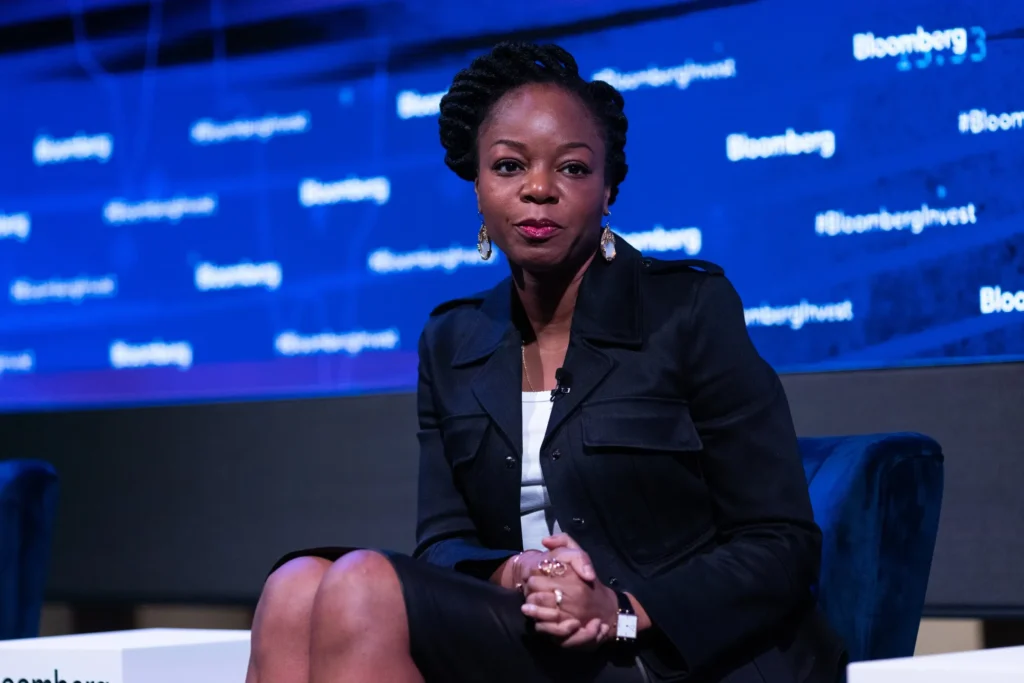
Her most celebrated initiative remains Novissi, a mobile-based cash transfer programme launched during the COVID-19 pandemic.
The programme supported over 920,000 informal sector workers, with 63% of beneficiaries being women. Fifteen percent were identified using machine learning and mobile metadata, drawing global attention to Togo’s data-driven governance model.
The success attracted major institutional backing. In December 2024, the World Bank approved $100 million in financing to support Togo’s digital acceleration, with a focus on broadband connectivity, digital skills, and entrepreneurship.
In 2024, Ms. Lawson also launched the Togo Data Lab in collaboration with the Center for Effective Global Action (CEGA), aiming to build a local ecosystem of data science expertise and empower Togolese scientists to use AI and satellite-based tools to improve sectors such as agriculture.
The global recognition has followed. She has received international accolades from the World Economic Forum, Forbes, and Jeune Afrique.
In 2019, she received the Harvard Kennedy School Alumni Public Service Award, becoming the first female African political figure to do so.
The Tension in the Record
But Lawson’s tenure has not been without controversy. The same digital infrastructure she has built to connect citizens has also, on several documented occasions, been wielded to silence them.
The internet shutdowns at the centre of the controversy were implemented during anti-government demonstrations that broke out in August 2017, when the opposition called for the return of the 1992 constitution, guaranteeing multi-party elections and a two-term presidential limit.
The government’s response included blackouts that disabled all internet access — social media, data messaging, and communications — for days at a time.
Media Defence and Amnesty International represented plaintiffs who challenged the Togolese government’s decision to shut down the internet on two separate occasions in 2017, while protesters were calling for constitutional reforms.
State authorities also responded using unnecessary and excessive force, with security forces firing live ammunition and using tear gas against protesters and bystanders.
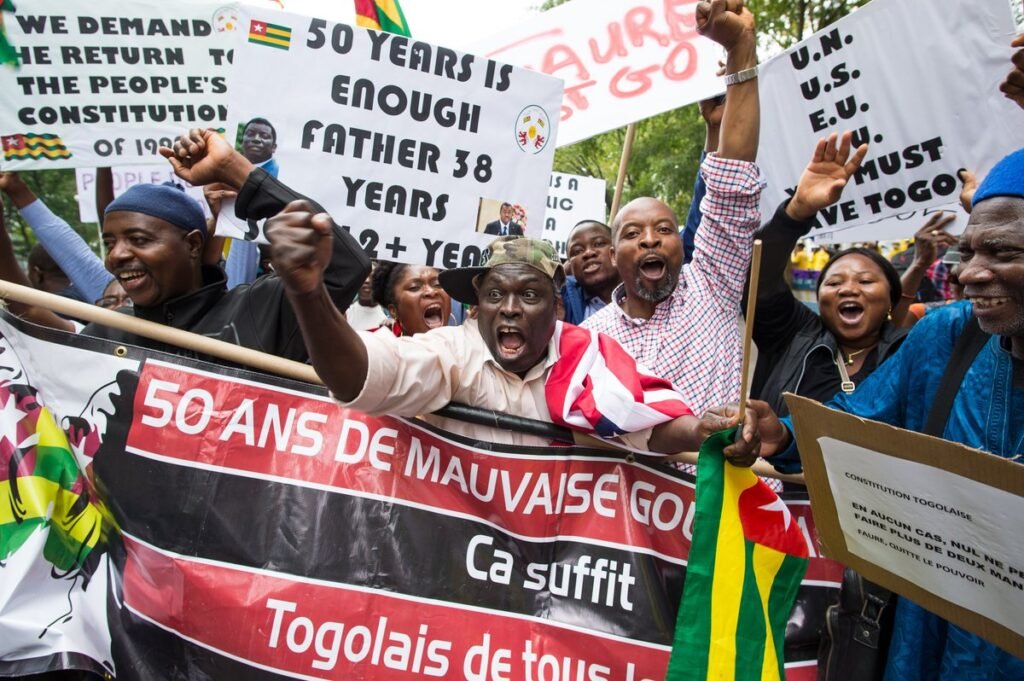
The regional verdict was unambiguous. The ECOWAS Community Court of Justice ruled that the September 2017 internet shutdown was illegal and violated the applicants’ right to freedom of expression.
Amnesty International Togo and partner organisations filed the lawsuit. The court ordered Togo to enact laws and safeguards protecting the right to online expression — obligations the government has been slow to fulfil.
The shutdown of 2017 was not an isolated incident. Togo’s authorities restricted internet access multiple times under President Gnassingbé’s rule — including during pro-democracy protests in 2017 and the 2020 presidential elections.
When Togolese citizens went to vote in February 2020, authorities disrupted access to messaging services, including WhatsApp, Facebook Messenger, and Telegram, on election day after polls had closed — despite calls by local and international rights groups for an open internet.
The 2017 six-day blackout cost Togo an estimated $1.8 million, according to Access Now. In protest, social media users launched the hashtag #AskCina, directed at Lawson as the minister responsible for digital infrastructure.
In February 2020, the Committee to Protect Journalists joined 27 other press freedom and human rights organisations in writing directly to Lawson, urging her to ensure an open, accessible, and secure internet throughout Togo’s election period — and noting the country was already facing a court case over the 2017 shutdown.
A Portrait in Contradiction?
What emerges from Cina Lawson’s record is a figure of genuine institutional accomplishment operating within a political system that has consistently subordinated civil liberties to stability.

There is no discounting her efforts. The Novissi programme’s reach is real. The infrastructure she built matters. And the shutdowns were authorised by a government — not solely by a minister.
Yet Ms. Lawson has never publicly distanced herself from those decisions. She holds the portfolio. The letters went to her desk, and she acted on those instructions.
As of today, Lawson has a new title: Minister of Public Service Efficiency and Digital Transformation. She continues to spearhead the country’s digital efforts, especially in AI and internet connectivity.
In 2024, Togo’s Parliament (dominated by President Gnassingbé’s UNIR party) approved reforms turning Togo from a presidential to a parliamentary system, effectively eliminating direct presidential elections.
Executive power has shifted to the President of the Council of Ministers (a new prime minister-like role with no term limits), appointed by parliament.
In truth, Cina Lawson is ironically a representative of an autocratic government. While she publicly promotes digital inclusion, her government is known for supressing dissent online.
That tension — between a reformer’s CV and a government’s authoritarian reflex — defines not just Cina Lawson, but the broader challenge of technocratic governance across Africa: what does digital transformation mean for citizens if the state can switch it off the moment they protest?
This article was edited with AI and reviewed by human editors



Follow