


STORY HIGHLIGHTS
- The Constitution of Ghana (Amendment) Bill, 2025, would remove Article 8(2) restrictions barring dual citizens from posts including Ambassador, Secretary to the Cabinet, Chief of Defence Staff and Inspector-General of Police
- President John Dramani Mahama has publicly endorsed the reform, calling it the “Gyakye Quayson law” after the Assin North MP whose citizenship became a legal flashpoint
- Opponents, including some legal scholars and labor voices, warn of divided loyalty and foreign influence in sensitive security roles
Accra, Ghana — A bill that would let dual citizens serve as ambassadors, service chiefs, police chiefs and cabinet secretaries is moving through Ghana’s Parliament.
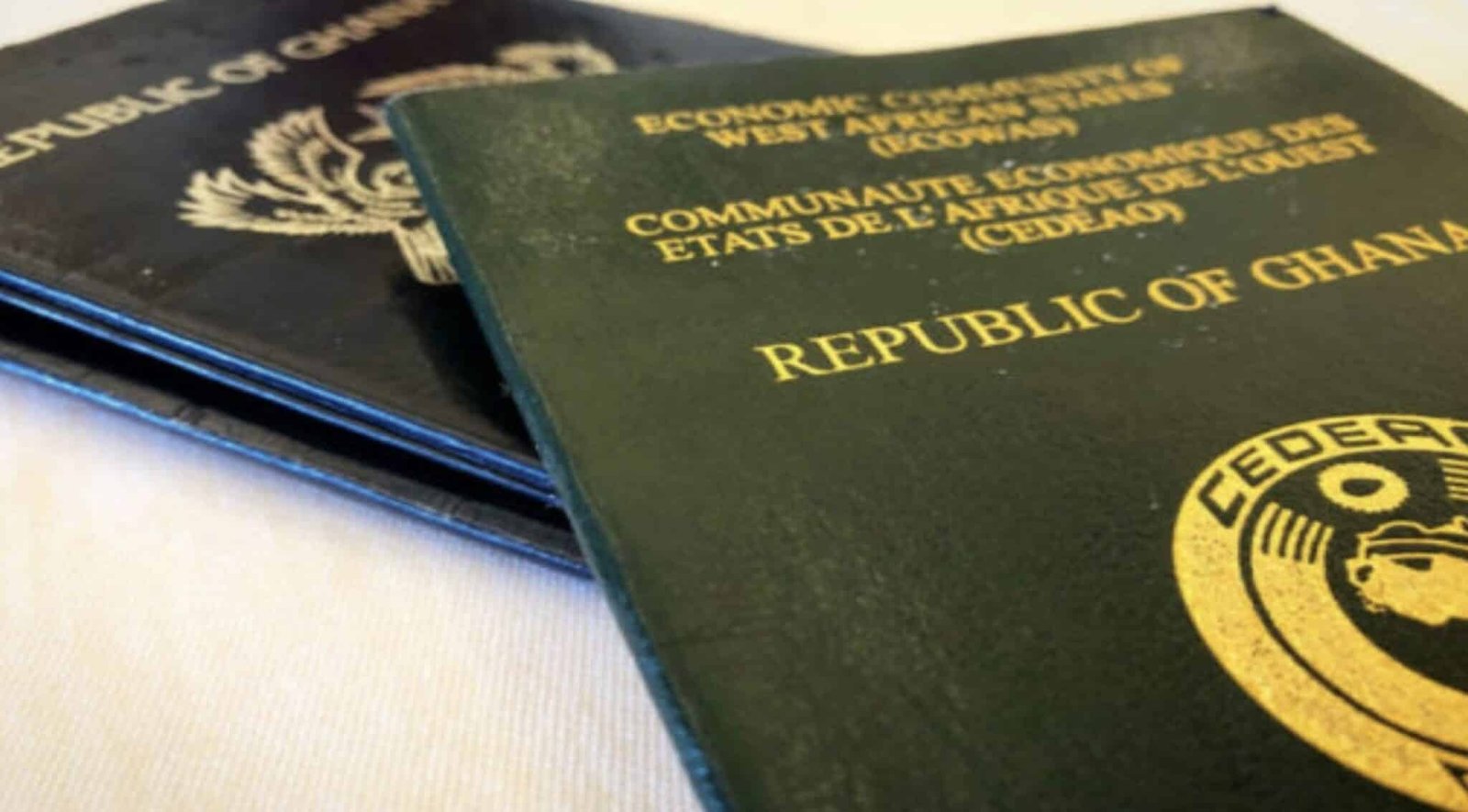
The bill is forcing lawmakers to confront a question the country has wrestled with since it first permitted dual nationality in 1996: whether holding a second passport should disqualify a Ghanaian from serving the state at its highest levels.
The Constitution of the Republic of Ghana (Amendment) Bill, 2025, targets Article 8(2) of the 1992 Constitution, which currently bars people who hold citizenship in, or owe allegiance to, another country from occupying a defined list of state offices.
Among the positions affected are Ambassador or High Commissioner, Secretary to the Cabinet, Chief of Defence Staff or any Service Chief, and the Inspector General of Police.
A separate but related constitutional bar, Article 94(2)(a), blocks anyone who owes allegiance to another country from serving as a Member of Parliament — a restriction President Mahama has said he also wants addressed through the same reform process, which would extend eligibility to ministerial and parliamentary roles for dual nationals.
The bill passed its first reading on February 17, 2026, when the First Deputy Speaker, Bernard Ahiafor, referred the bill to the Constitutional and Legal Affairs Committee for detailed consideration and reporting back to Parliament.
Because the proposal touches the Constitution itself rather than ordinary statute, it cannot pass with a simple majority; constitutional amendments in Ghana carry a higher procedural bar, including required referenda for certain entrenched provisions.
The Case Made by Supporters
Sponsors describe the bill as overdue recognition of a diaspora that has become financially indispensable to the state. Ghana’s diaspora, often referred to by political leaders as the nation’s “17th Region,” has largely hailed the bill as a long-overdue recognition of their dual identity.
President Mahama has made the reform a personal cause, framing it around the case of Assin North MP James Gyakye Quayson, whose citizenship history triggered prolonged legal battles over his eligibility to sit in Parliament.
Speaking at a diaspora town hall in London on May 31, President Mahama said he privately calls the proposed reforms the “Gyakye Quayson law” because of the tribulations the MP went through.
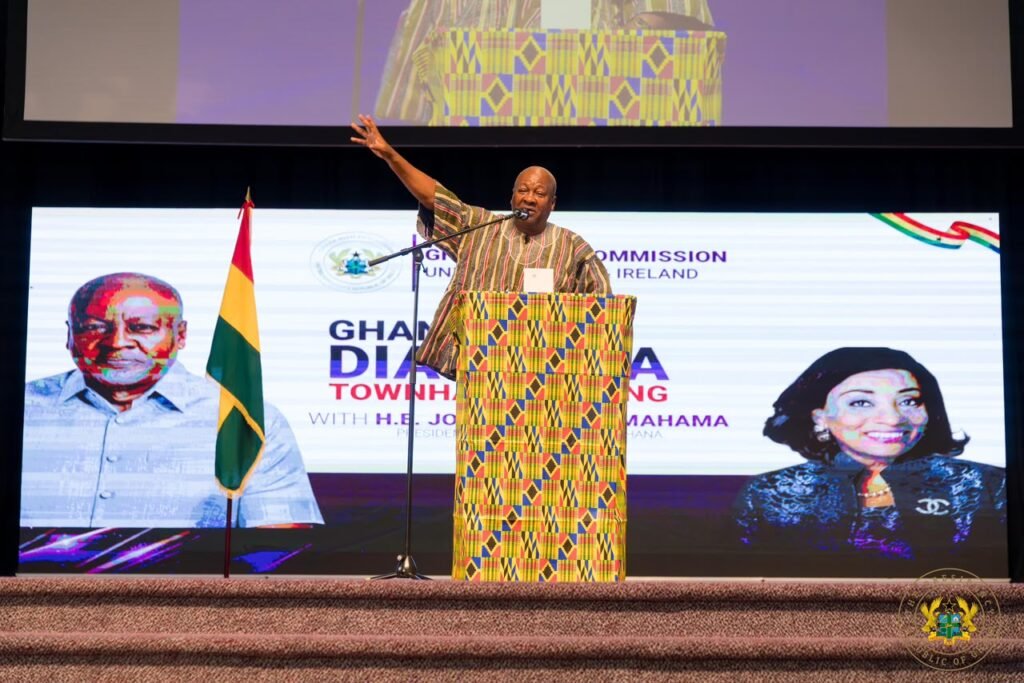
He argued that Ghana’s 16 physical regions should be joined by what he calls a virtual seventeenth — its overseas population — and pointed to remittances of roughly $7.8 billion last year as evidence of the diaspora’s economic weight.
Bill co-sponsor Davis Ansah Opoku, an NPP MP, has rejected the framing that the reform questions anyone’s patriotism.
“This is not about questioning anyone’s loyalty. It’s about recognizing the realities of the world we live in today and allowing capable Ghanaians to take up leadership roles,” he said.
Sponsors have also stressed that the measure carries rare bipartisan backing as a private member’s bill, distinguishing it from more contested legislation moving through the same Parliament.
Civil society voices, including the Center for Democratic Development, have historically supported broader inclusion in citizenship law, while diaspora advocates argue current restrictions amount to what some describe as “fractional citizenship” — full economic membership without full political standing.
Where the Objections Lie
The core objection is about divided allegiance in positions that touch national security and foreign policy. Critics argue that a person answerable, even nominally, to a second state should not command the police, the armed forces or represent Ghana abroad, particularly amid regional instability.
Constitutional scholars have floated a middle path: rather than an outright bar, vetting dual nationals case by case under existing security legislation, such as the Security and Intelligence Agencies Act, 2020.
Some labor unions have voiced a related but distinct concern — that officials with a foothold abroad may be less attentive to the daily pressures facing Ghanaians without that option, a critique less about espionage risk than about accountability and lived experience.
The debate is not new. Ghana’s citizenship regime has a fraught history: in earlier decades, citizenship law was used as an instrument of exclusion, particularly against Ghanaians of Middle Eastern descent.
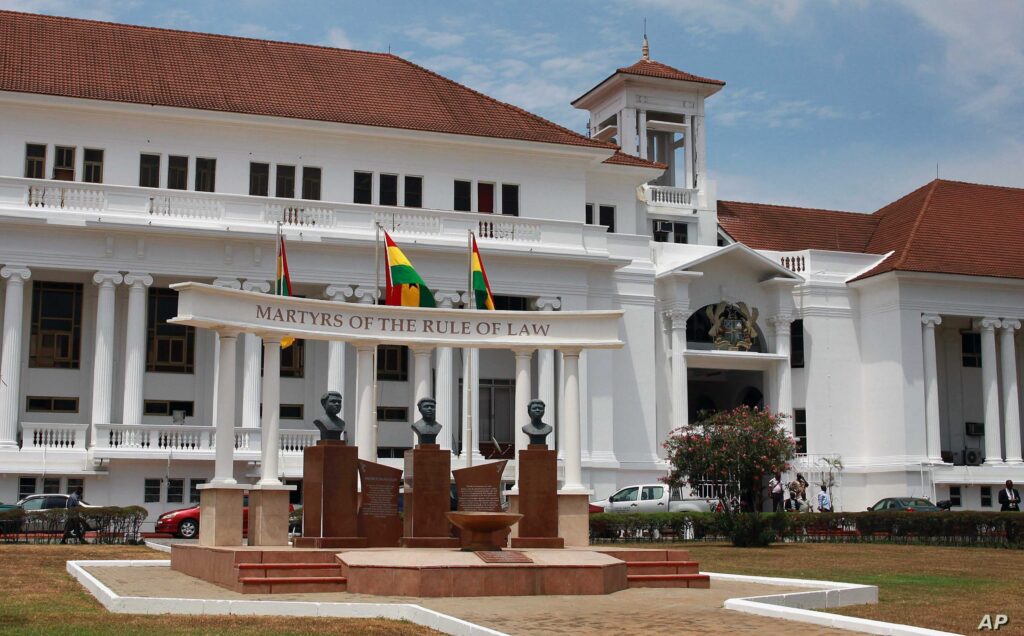
The country rewrote its framework in the 1990s and introduced dual citizenship in 1996. That history informs why any move to further loosen or tighten citizenship-linked rights draws close scrutiny from legal observers.
The Quayson case looms large in this backdrop. His years-long dispute over eligibility, which reached Ghana’s courts, became the clearest illustration for reform advocates of how the current framework can ensnare sitting legislators.
The Supreme Court has separately ruled that the state cannot require dual citizens to hold a certificate as a precondition for exercising citizenship rights, since dual nationality attaches automatically under the law — a ruling that has fed into arguments that the remaining office-holding restrictions are inconsistent with how citizenship already operates in practice.
What Happens Next
As of early June 2026, the bill remained with the Constitutional and Legal Affairs Committee, which must report back to the full House before further readings and any final vote.
Given the higher threshold required for constitutional amendments, the bill’s passage is not guaranteed even with executive backing and stated bipartisan sponsorship.
Recently, the Council of State publicy advised against passing the bill. It had been referred on March 30, 2026, in accordance with Article 291(2) of the 1992 Constitution for consideration and advice.
The Speaker of Parliament, Alban Bagbin, was quick to note that the advice of the Council is not binding.
“While the advice of the Council of State does not determine the legislative judgment of Parliament, it constitutes an important constitutional contribution to the deliberative process contemplated by the framers of the Constitution,” he told the House.
For now, the citizenship bill sits as an unresolved test of how Ghana defines the boundary between economic citizenship and political trust.
This article was edited with AI and reviewed by human editors



Follow