


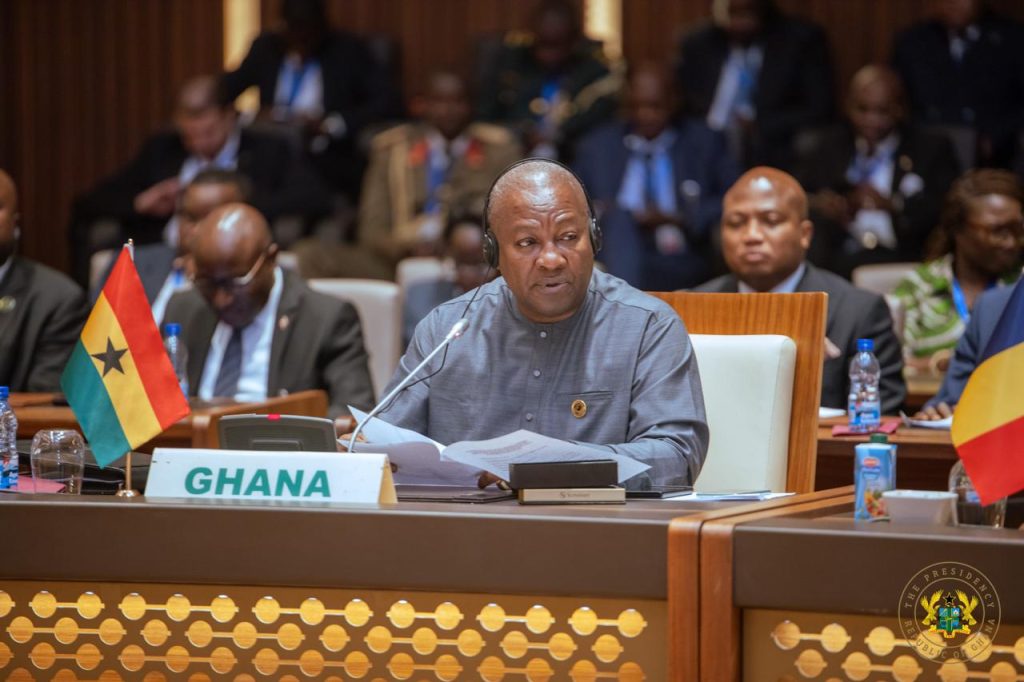
Ghana’s successful push to get the transatlantic slave trade recognised as “the gravest crime against humanity” showcased the highs we are capable of.
From the consistency and continuity that spanned two opposing governments to the centreing of solidarity in the face of neocolonial forces, Ghana conveyed an urgency and awareness of the pan-African ideals our continent desperately needs.
However, in the days leading up to the eventual resolution, it was hard to miss the beats of apathy and cynicism online and on the ground in Ghana.
For many, like under the Akufo-Addo administration, this resolution seemed like a case of a broken social justice clock being correct twice a day.
For starters, successive governments have not done the work to build the kind of society that would be invested in this kind of solidarity. It was only last month that Ketu North MP Edem Agbana said he was going to look into why Ghana’s approved social studies textbooks, much like when I was in basic school over 20 years ago, were still teaching our kids that there were advantages to being colonised.
This speaks to an educational system engineering a society with no semblance of a decolonial edge, unable to appreciate the depth of this historic push for solidarity. But more importantly, it hurts our chances of building similar altars to accountability at home.
A day before the resolution was passed, well-meaning Ghanaians were reminded of our government’s terrible track record when it comes to social justice. Lincoln University in Pennsylvania caused some embarrassment to President John Mahama when it cancelled a scheduled visit where he was to be conferred with an honorary doctorate.
According to the Pennsylvania school, which Ghana’s independence hero Kwame Nkrumah attended, Mahama was to be honoured for his “outstanding contributions to public service, democratic governance, peaceful international and inter-African relationships, and global advocacy for justice, equality, and education.”
For those of us living through Mahama’s governance, it is clear he fails most of these markers.
Ghana’s embassy in the US explained that the school was distancing itself from Mahama because he was supporting proposed anti-LGBTQ legislation seeking to terrorise queer people in Ghana and their allies.
It is understandable why the more uncompromising critics amongst us will rubbish the government’s resolution as shallow and performative, given that the state is on record, per the Commission on Human Rights and Administrative Justice, as being the worst offender when it comes to human rights abuses against queer Ghanaians currently protected by our laws.
Furthermore, the irony in the crackdown on the queer community is that a significant part of the push for draconian anti-LGBTQ legislation is being driven by foreign actors looking to build on the colonial laws that you would think countries seeking justice for the slave trade would be looking to dismantle.
I too am inclined to file the government’s push for reparations in the performative cabinet.
Nana Akufo-Addo similarly had the right posturing before the international community, but is considered Ghana’s worst president by many, not just because he oversaw rotten economic management, but because he wouldn’t stand in solidarity with people he swore to serve.
Consider the time Akufo-Addo rushed to commiserate with France after the Notre Dame fire of April 2019, but would “tear unlooking” when Ghanaians mourned horrific losses from incidents like road crashes likely caused by state negligence, or play the partisanship card in the face of people reeling from disaster, as was the case after the Akosombo dam flooding.
Mahama needs to work to ensure he does not remain on the same marshy, hypocritical path Akufo-Addo trod. Indeed, he’s already knee deep, not just because of his stance on queer community, one of the most vulnerable groups in Ghana, but because of issues like gender equality, environmental justice, and social welfare reform.
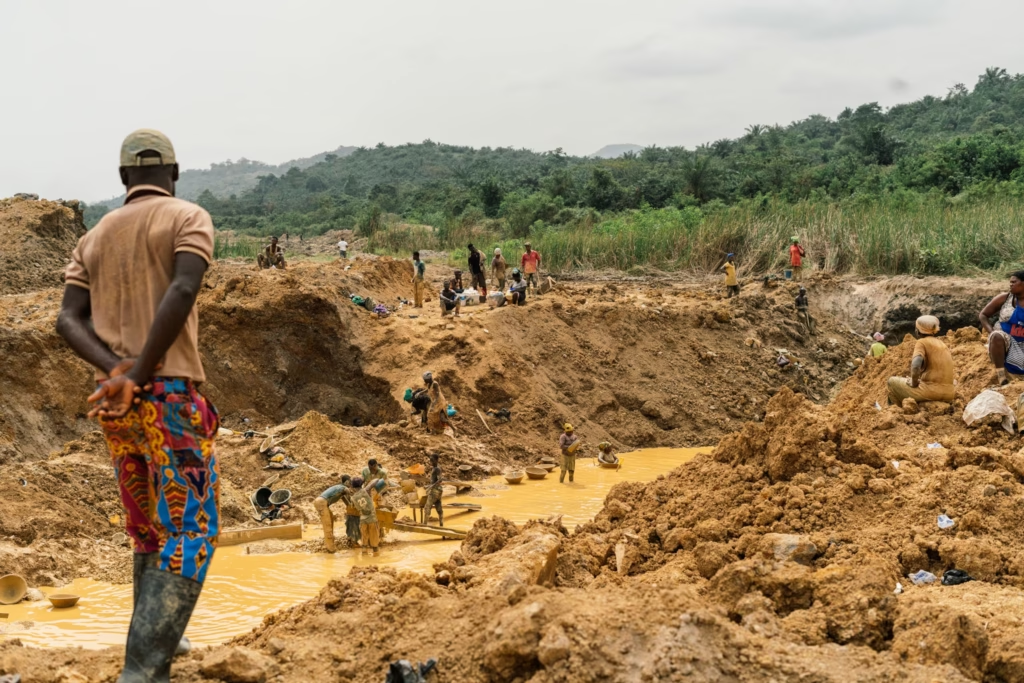
The ecocide driven by illegal gold mining already feels like it will go down as the gravest injustice against Ghanaians. Like the slave trade, a few Ghanaians and collaborators abroad are enriching themselves at the expense of God and nature’s gift to us.
Over 60% of our rivers have been poisoned because of illegal mining, and several communities have been left with nothing but grief after losing the rivers, forests, and farmlands they grew up with.
Even in the face of substantial evidence against appointees, Mahama has denied us the justice we crave despite lofty promises he and his assigns made to us when campaigning for power.
These are but a few of the failings that undermine the extent to which Ghanaians can invest in our government’s social justice endeavours on the international stage.
I know some of the African nationals deported to Ghana by the Trump administration are probably scoffing at our celebration of the UN resolution, given some of them were treated in ways not befitting a country trying to unite people of colour globally against the insatiable imperial machine.
I do not mean to belittle Ghana’s feat at the UN, but in the grand scheme of things, standing before the UN pushing for a just contextualisation of the horrific slave trade costs our leaders little.
We have already seen the limitations of our world order when it comes to serving developing countries, and given that the richest and most powerful nations did not back the resolution, it wouldn’t be harsh to say this resolution could end up being less than symbolic.
It is at home where our leaders are called to make actual sacrifices in the name of social justice. It is at home that they have consistently failed, choosing their comforts and business interests instead.
If the Mahama administration wants to showcase its commitment to solidarity and social justice in the face of historical wrongs, it would do well to sincerely engage with the injustice at its doorstep.
We cannot demand contrition about the past while building on the legacy of these injustices in the present.


Follow