


Story Highlights
- The Ghana Swimming Association (GSA) has formally withdrawn from hosting the 2026 African Swimming Championships, scheduled for May 5–10 in Accra
- The withdrawal follows a protracted dispute between the GSA and the National Sports Authority (NSA) over internal electoral processes
- Over 43 countries had already confirmed participation and made travel arrangements before the cancellation
- Ghana faces a fine of no less than $100,000 and risks being barred from future international swimming competitions
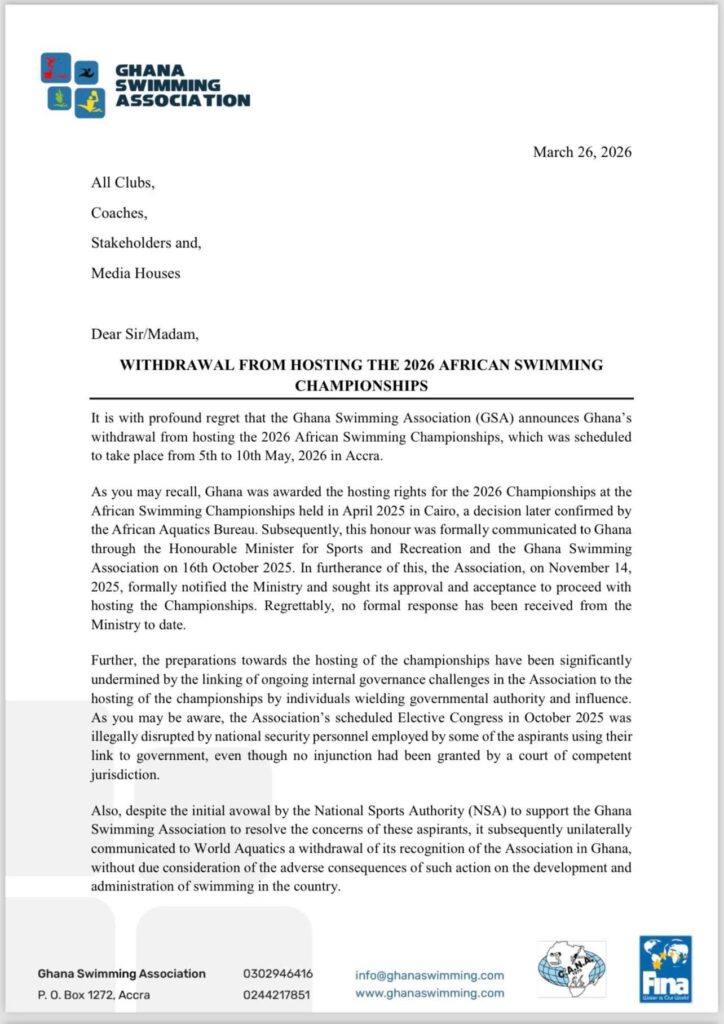
ACCRA, GHANA — In a letter dated March 26, 2026, addressed to clubs, coaches, stakeholders, and media houses, the Ghana Swimming Association announced what it described as a decision of “last resort” — a formal withdrawal from hosting the 2026 African Swimming Championships.
The event, which was to run from May 5 to 10 in Accra, would have been a landmark moment for aquatic sports in West Africa. Instead, it has become the latest casualty of a deepening institutional standoff between the Association and Ghana’s sports governance authorities.
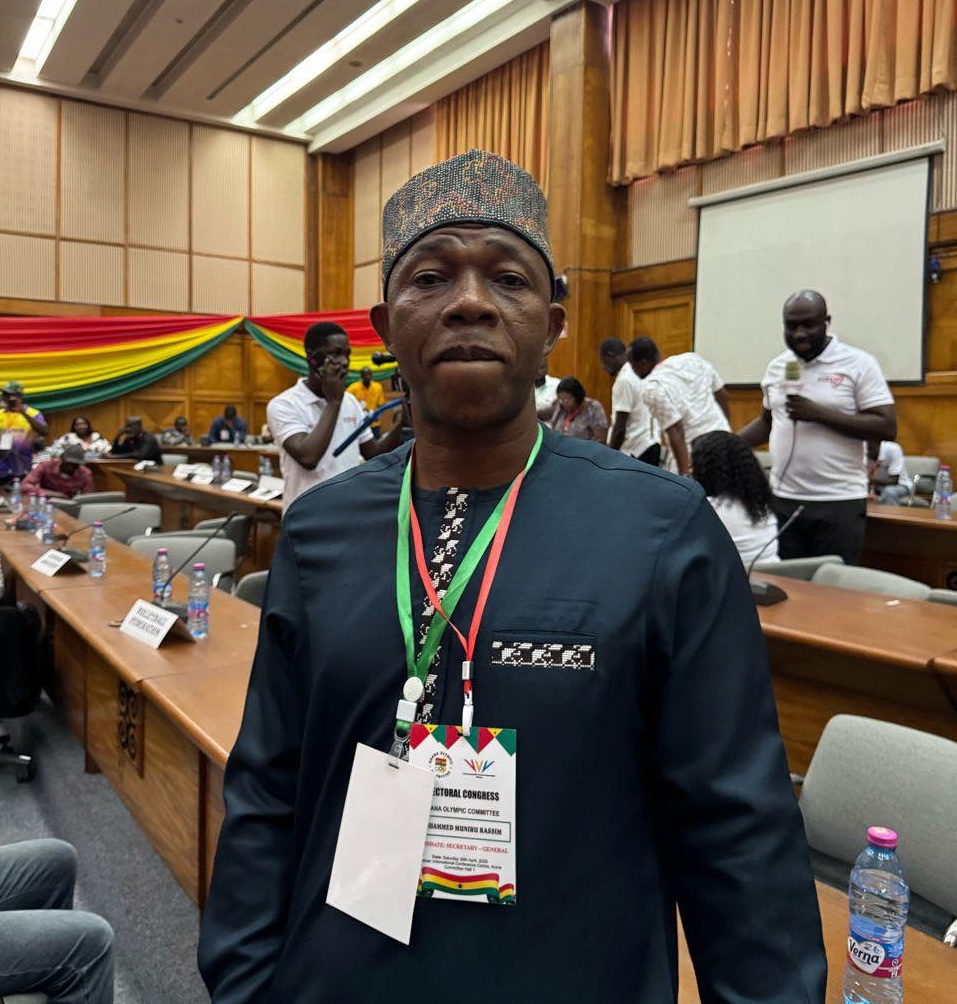
The letter, signed by General Secretary Mohammed Muniru Kassim, lays out a detailed and pointed account of how an internal electoral dispute spiraled into a crisis that has now embarrassed Ghana on the continental stage.
An Election Disrupted
The roots of the crisis stretch back to October 2025, when the Ghana Swimming Association’s scheduled Elective Congress was, according to the GSA, “illegally disrupted by national security personnel employed by some of the aspirants using their link to government” — even though no court injunction had been granted.
It was a moment that set the tone for everything that followed.
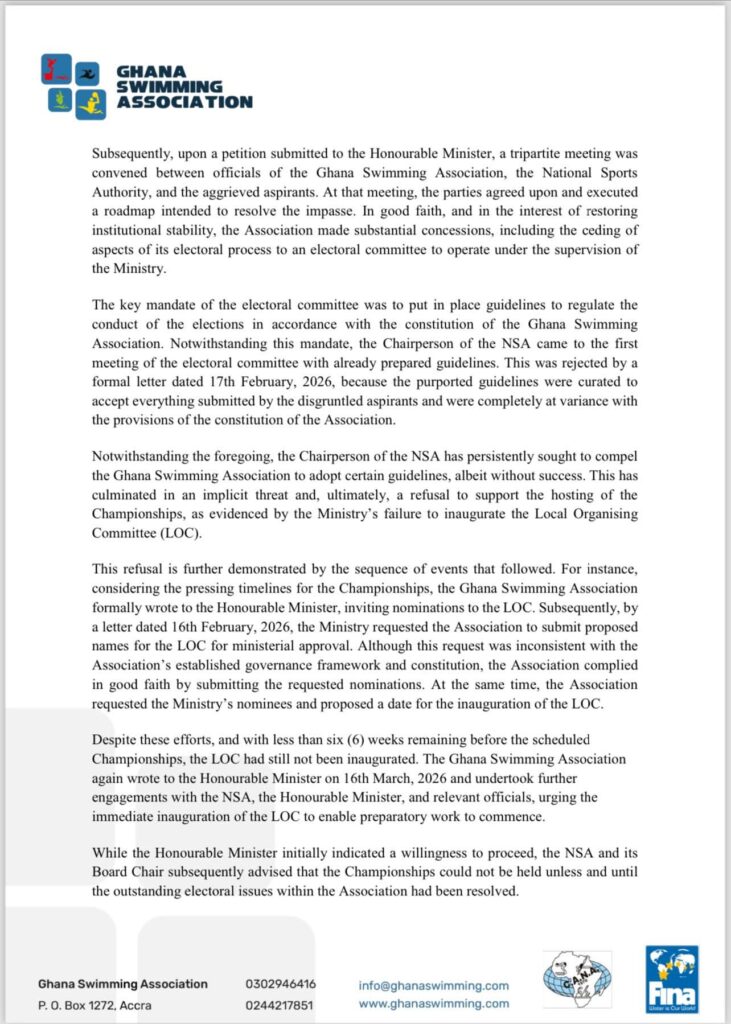
Following the disruption, a petition was submitted to the Minister for Sports and Recreation. A meeting was subsequently convened, bringing together officials of the GSA, the National Sports Authority, and the aggrieved aspirants.
The parties agreed on a roadmap to resolve the impasse, and the Association — in what it describes as a show of good faith — ceded aspects of its electoral process to an electoral committee operating under ministerial supervision.
That concession, the GSA now argues, was met not with reciprocity but with further overreach.
The Electoral Committee Standoff
The electoral committee’s mandate was to establish guidelines for conducting elections in accordance with the GSA’s constitution.
But at the very first meeting of the committee, the Chairperson of the NSA arrived with already-prepared guidelines — guidelines the GSA rejected by formal letter on February 17, 2026, on the grounds that they were “curated to accept everything submitted by the disgruntled aspirants” and were “completely at variance” with the Association’s constitution.
The NSA, the GSA alleges, continued to push for the adoption of those guidelines. When the Association refused, the tone of the engagement shifted.
The GSA says this ultimately resulted in “an implicit threat and, ultimately, a refusal to support the hosting of the Championships” — a refusal made visible, in the Association’s telling, by the Ministry’s failure to inaugurate the Local Organising Committee (LOC) for the Championships.
A Bureaucratic Slow Walk With High Stakes
The timeline of events around the LOC makes for troubling reading. The GSA formally wrote to the Minister inviting nominations to the LOC.
In a letter dated February 16, 2026, the Ministry asked the Association to submit proposed names for ministerial approval — a request the GSA considered inconsistent with its governance framework but complied with nonetheless.
The Association submitted the nominations and in turn requested the Ministry’s nominees, proposing a date for the LOC’s inauguration.
With less than six weeks to the Championships, the LOC had still not been inaugurated.
On March 16, 2026, the GSA wrote again to the Minister, urging immediate action. While the Minister initially signalled a willingness to proceed, the NSA and its Board Chair subsequently advised that the Championships could not proceed unless the Association’s electoral disputes were first resolved.
It was a condition the Association found untenable — and ultimately, a bridge too far.
A Fine, A Reputation, A Future at Risk
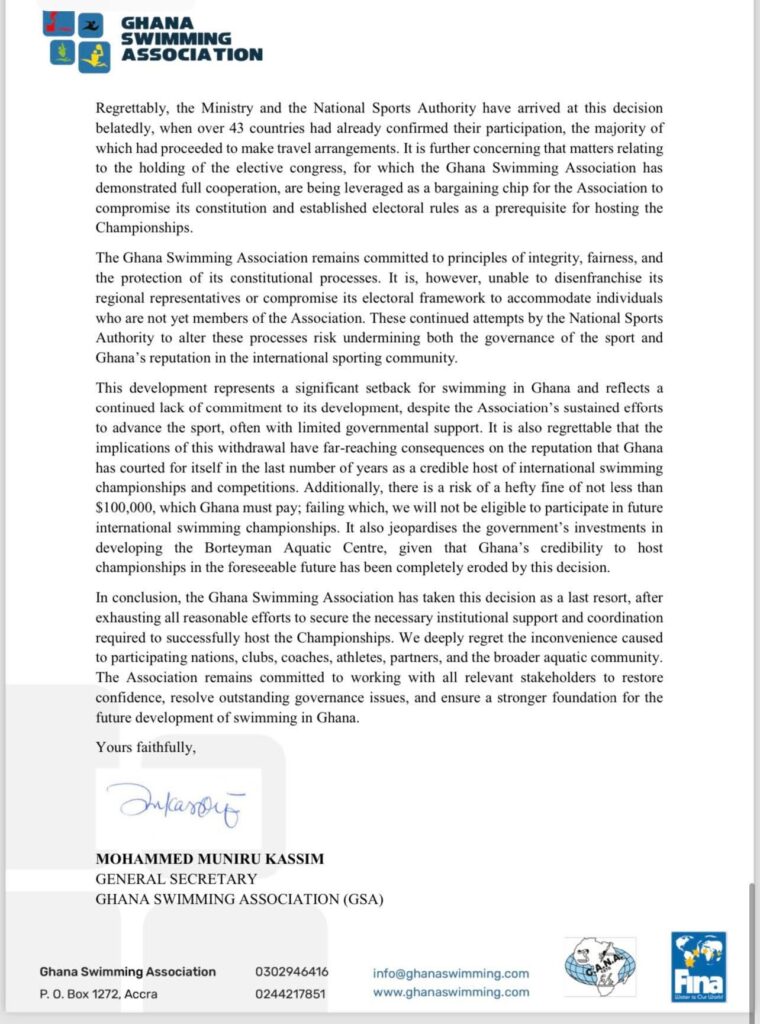
By the time the GSA announced its withdrawal, more than 43 countries had already confirmed participation, with the majority having made travel arrangements. The abruptness of the decision has drawn deep embarrassment on Ghana’s sporting establishment.
Financially, the picture is stark.
The GSA warns of a fine of no less than $100,000, which Ghana must pay. Failure to do so could result in Ghana being barred from future international swimming championships.
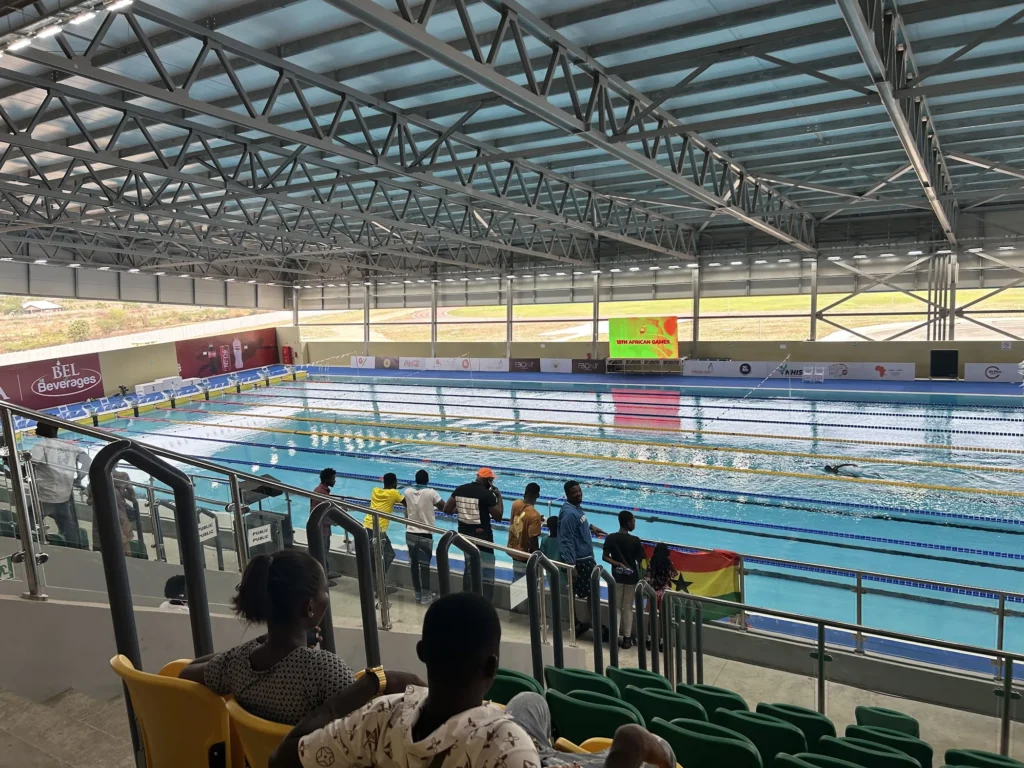
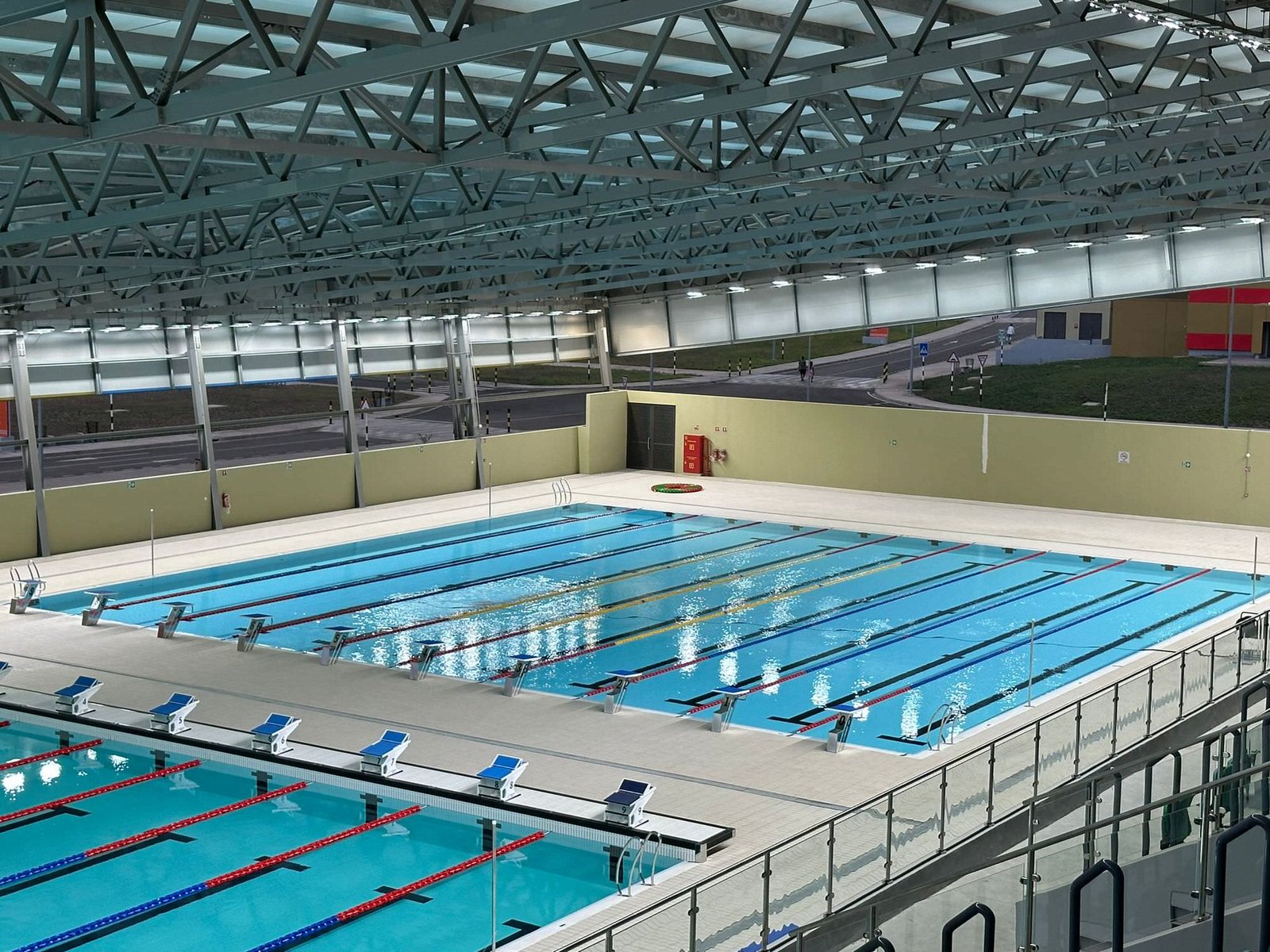
The withdrawal, the Association argues, also jeopardises the government’s own investments in the Borteyman Aquatic Centre, a facility whose credibility as a championship venue has now been “completely eroded.”
Perhaps most damaging is the reputational toll. Ghana had, over recent years, cultivated a reputation as a credible host of international aquatic events. That standing, the GSA says, has been severely undermined.
A Association That Says It Was Left With No Choice
In its letter, the GSA is careful to frame itself not as an aggressor but as an institution backed into a corner. It expresses deep regret for the inconvenience caused to “participating nations, clubs, coaches, athletes, partners, and the broader aquatic community.”
It maintains that it remained committed to constitutional processes and could not “disenfranchise its regional representatives or compromise its electoral framework to accommodate individuals who are not yet members of the Association.”
The Association also offers a broader warning: that the NSA’s continued attempts to alter internal sporting processes “risk undermining both the governance of the sport and Ghana’s reputation in the international sporting community.”
For its part, neither the Ministry of Sports and Recreation nor the National Sports Authority had issued a public response at the time of this publication.
This article was edited with AI and reviewed by human editors



Follow