


Story Highlights
- NDC foot soldiers who worked tirelessly to return Mahama to power are being abandoned by appointees, triggering fresh anger within the party’s grassroots
- Despite launching a strict Code of Conduct for appointees in May 2025, some officials had already failed to declare their assets months after taking office, raising questions about compliance
- The Minority has accused the administration of engineering a pattern of state capture to favour Ibrahim Mahama’s business interests, including mining concessions
- Civil society groups warn that the fight against illegal mining is failing, with the number of compromised forest reserves rising under Mahama’s watch
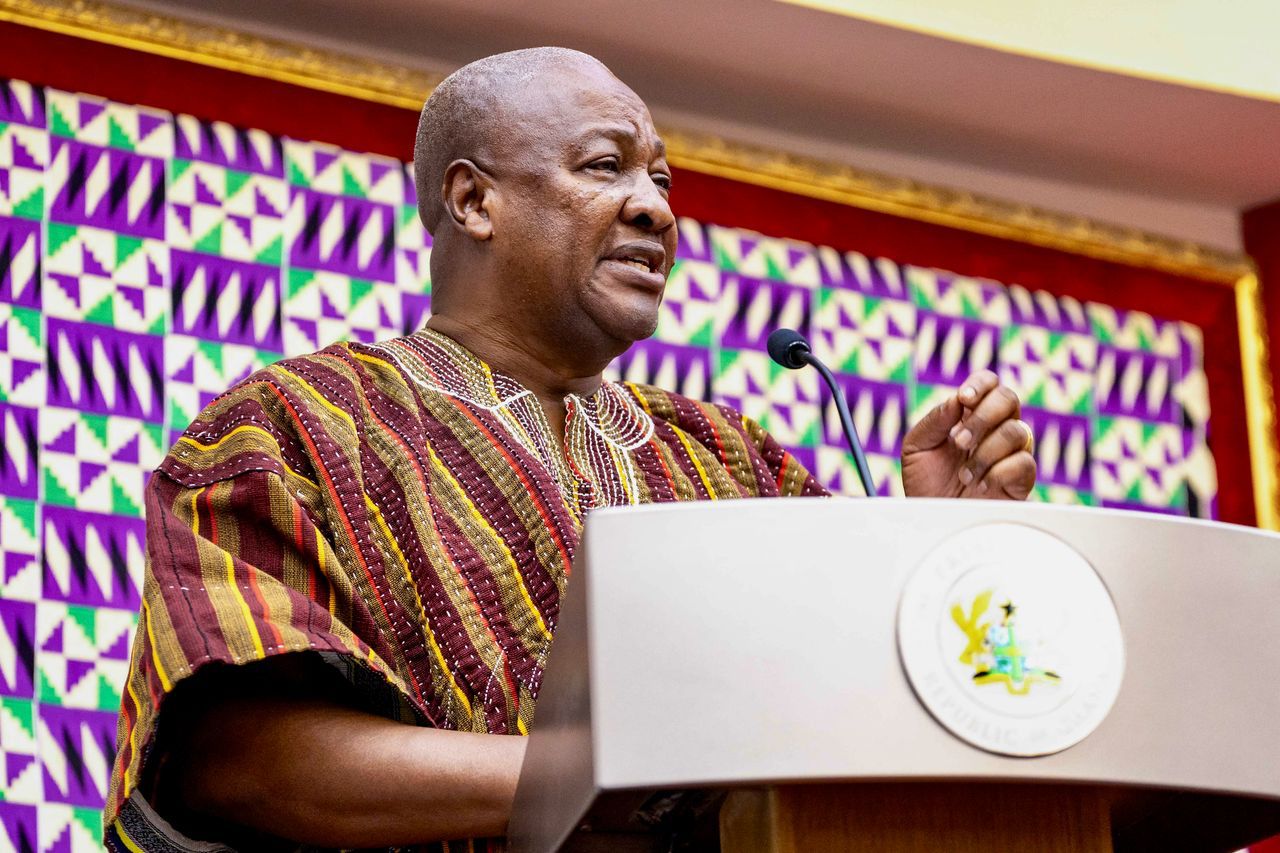
When John Mahama swept back into power on January 7, 2025, the promise was renewal—a reset.
Ghanaians, exhausted by the previous four years of economic turmoil under the Akufo-Addo administration, handed the National Democratic Congress (NDC) a resounding mandate.
The message from the electorate was unmistakable: do better this time.
Fifteen months into his second term, the President is doing some things differently. He has launched a Code of Conduct for appointees, created new institutions to fight illegal mining, and pledged to hold the line on corruption.
But in the corners of Ghanaian political life where memories run long, a familiar story is beginning to take shape.
The foot soldiers are restless. Some appointees are “misbehaving”. His brother is never far from a headline. And the rivers, polluted by illegal mining (galamsey), are still running brown.
The Restless Foot Soldiers
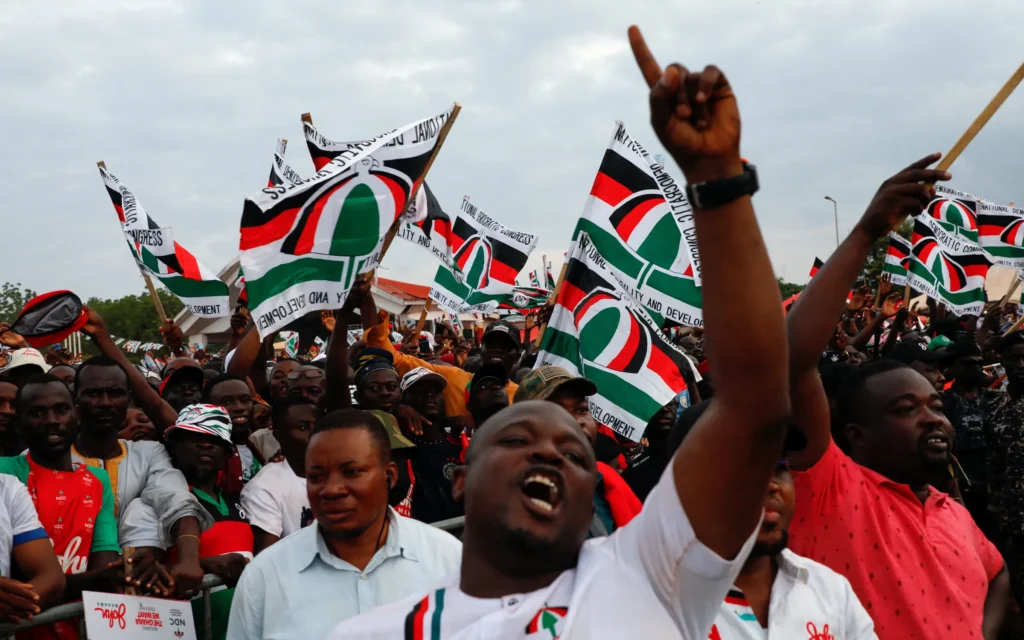
Every Ghanaian government has its foot soldiers — the grassroots faithful who knock on doors, organise communities, and keep party structures alive during the lean years of opposition. They are the foundation. And they always expect a reward.
Speaking on Accra FM in February 2026, former NDC National Organiser Joshua Akamba issued an unusually candid warning: some government appointees who had worked closely with party loyalists in opposition now no longer answered their calls.
Mr. Akamba vowed to name and shame those he described as betrayers of the party’s grassroots.
“We cannot struggle together in opposition and then abandon the people after victory,” he said, adding that the conduct of some appointees could generate serious disaffection ahead of the 2028 elections if left unchecked.
The grievance is not simply about ingratitude.
Many party supporters had risked their livelihoods and family relationships to campaign for the NDC, with the expectation that a government victory would translate into employment. For many, that hope remains unfulfilled.
NDC General Secretary Asiedu Nketia, speaking to party faithful at Winneba in February 2026, acknowledged the frustrations but sought to manage expectations, noting that the President’s commitment to running a lean government had limited the number of available appointments.
But the language of “lean government” rings hollow for those who gave years of their lives to the cause.
A Code of Conduct With a Credibility Problem
To his credit, President Mahama moved early to put guardrails on his administration.
In May 2025, he launched what he called a comprehensive Code of Conduct and Ethics for all political appointees — fulfilling a key promise made during the 2024 election campaign as part of his 120-day Social Contract with Ghanaians.
The Code was sweeping in ambition. It forbade appointees from accepting gifts from those with a stake in government decisions, barred them from using their positions to secure contracts or appointments for family and associates, and required prior approval from the Chief of Staff for all travel outside Ghana.
Nepotism and conflicts of interest were explicitly prohibited, with the Code noting that even the appearance of bias was grounds for investigation.
The President did not mince words. “I have left my appointees in no doubt that I will bring down the hammer swiftly and strongly if they breach any of these provisions,” he declared.
But the Code arrived under a cloud of its own making.
By April 2025 — three months after the government took office — at least 55 appointees had failed to comply with a February directive to declare their assets by March 31.
It was only after a media investigation by The Fourth Estate, an investigative media platform, exposed the list of defaulters that the President summoned his appointees to Jubilee House and launched the Code of Conduct.
Those who still had not declared assets by May 7, 2025 were told to consider themselves automatically dismissed.
The sequence is notable. The Code was not launched because the President’s team had strong internal discipline. It was launched, in part, because journalists forced his hand.
For an administration that positioned itself as a corrective to the ethical failures of the previous government, the optics were uncomfortable.
It is also worth noting that this was not Mahama’s first Code of Conduct. He had instituted a similar framework during his first term in 2013.
The question that many Ghanaians are quietly asking is: if the first code did not transform political culture, what makes the second one different?
The Brother in the Room
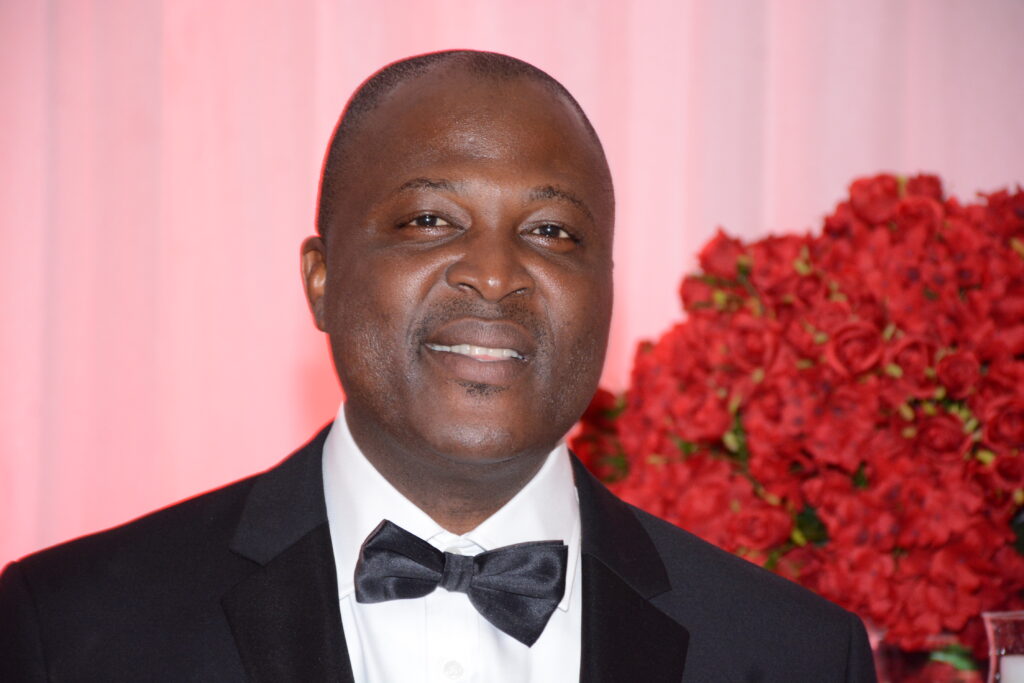
If the Code of Conduct created awkward optics for the administration, the controversy surrounding Ibrahim Mahama — the President’s businessman brother — has provided its critics with something far sharper.
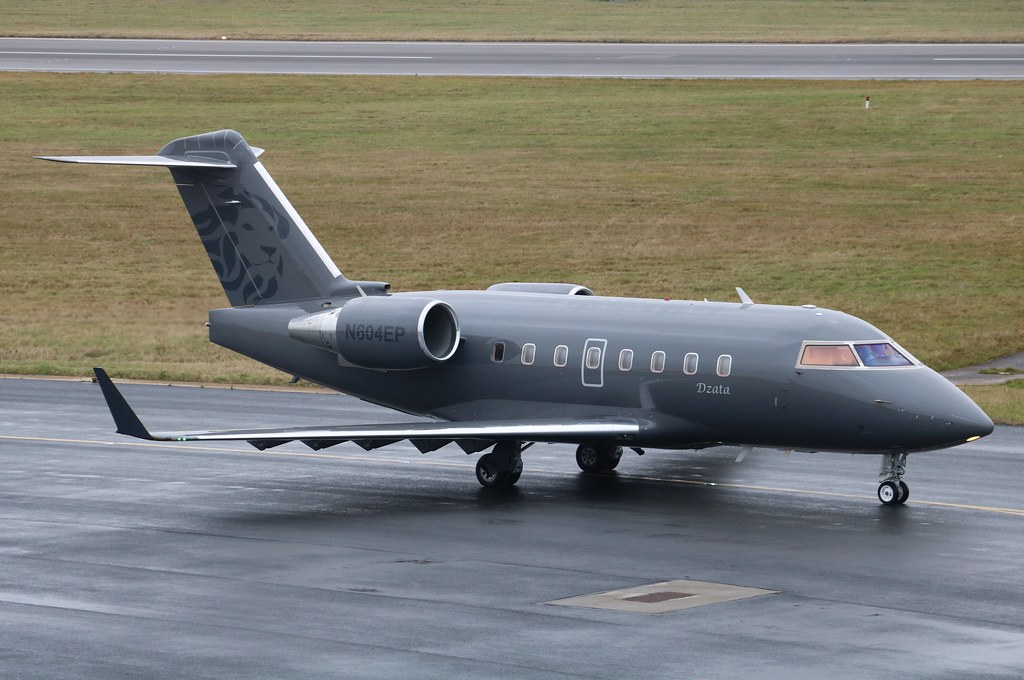
From the earliest days of his new term, President Mahama was jetting in and out of the country aboard the private aircraft of Ibrahim Mahama, a prominent businessman, while the state’s $37 million Dassault Falcon 900EX-Easy presidential jet sat idle.
The government’s justification shifted several times. Officials described the presidential aircraft as undergoing review.
As late as May 2025, Mahama was still arriving in Abidjan for the African Development Bank Annual Meetings aboard Ibrahim’s jet, branded “Dzata,” even as the controversy over the presidential fleet raged back home.
Analysts were divided on the legality, but many agreed the political cost was real.
Ghanaian energy analyst Senyo Hosi argued that while the arrangement might not be technically illegal, public institutions are ultimately judged by the standards people perceive them to meet.
“How it appears to the public is more important,” he said.
A separate anti-corruption expert was less forgiving, insisting that no public relations effort could neutralise a clear conflict of interest between a sitting president and his brother’s business empire.
That business empire is where the story grows considerably more serious.
In July 2025, the Minority Caucus in Parliament accused the NDC government of orchestrating “state capture of the worst kind,” alleging that strategic appointments and government decisions were being engineered to benefit Ibrahim Mahama’s company, Engineers and Planners (E&P) Limited.
They also alleged that former E&P employees had been placed in key positions within the mining regulatory sector. The Minority has yet to provide concrete evidence with these allegations.
The controversy reached a new flashpoint in March 2026, when the Damang Gold Mine — one of Ghana’s most significant mining assets — had its lease expiring, with Ibrahim Mahama’s E&P among the interested bidders.
The Minority argued that the President’s continued use of Ibrahim’s aircraft constituted a personal benefit that breached Article 284 of the 1992 Constitution, and that the integrity of any bidding process for the mine could not be separated from that relationship.
“The person who has repeatedly provided the President with a $70 million aircraft cannot in the same breath be assessed as an arm’s-length applicant for a billion-dollar national asset,” the caucus said.
The Presidency has not formally addressed the conflict of interest allegations in detail. The administration’s broader position has been that Ibrahim Mahama is a private citizen entitled to do business.
But the Code of Conduct that Mahama himself signed — the one that warns that even the appearance of bias is grounds for investigation — makes that defence increasingly difficult to sustain.
“The fight against galamsey is complex”
Of all the issues haunting Mahama’s second term, none carries more historical irony than galamsey.
For years in opposition, President Mahama and the NDC hammered the Akufo-Addo administration over illegal small-scale mining with relentless force.
They argued that the government was complicit, coddling miners for political gain while rivers turned the colour of rust.
The NPP UK Chairman acknowledged the full circularity of the situation, pointing out that when Mahama was in opposition, he demanded that Akufo-Addo declare a state of emergency in galamsey-affected areas and deploy soldiers to confront illegal miners.
“He now wields power,” came the retort from his former critics.
Now, wielding that power, Mahama faces the same intractable crisis — and the same accusations.
The administration has not been idle. President Mahama declared all water bodies and forest reserves security zones, and the government established the National Anti-Illegal Mining Operations Secretariat (NAIMOS), deploying trained task forces across affected regions.
Over a thousand Blue Water Guards were deployed along major rivers including the Ankobra, with plans to extend the initiative to the Pra and Birim.
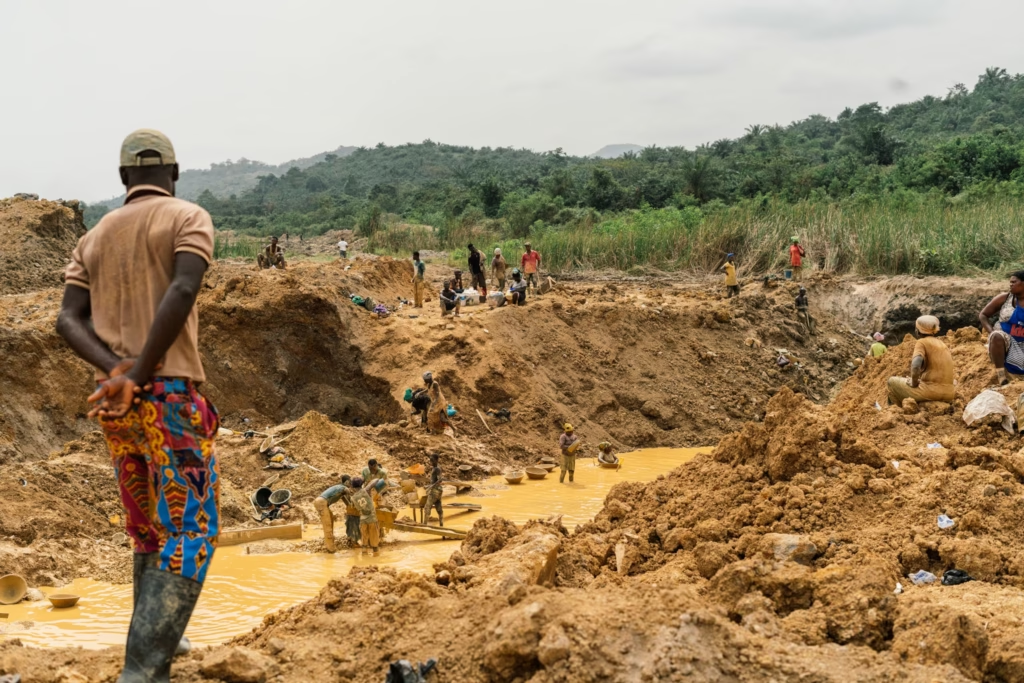
But on the ground, the numbers tell a different story.
The Ghana Coalition Against Galamsey, in a damning assessment issued in late March 2026, declared the anti-galamsey effort “lethargic” and warned that it was being fuelled by “impunity among enforcement agencies and government representatives.”
When Mahama took office, 45 forest reserves were impacted by illegal mining. That number has since risen to at least 50, with over 9,000 hectares of forest area now affected.
Critics noted that Mahama’s first term was, in fact, the first time any Ghanaian president confronted galamsey head-on — and that it failed then too, largely because politicians were placed at the centre of enforcement efforts rather than empowered technical institutions.
History, it appears, is repeating itself.
The coalition’s political charge against the current administration has grown sharper.
For his part, President Mahama has been candid about the scale of the challenge. “The fight against galamsey is a complex one,” he told workers on May Day 2025.
“When I was vying for the presidency, I did not kid myself that I would win that fight within four months of taking office.”
The President has also pointed to early signs of progress, noting improvements in some previously polluted rivers.
At the New Year School conference in January 2026, he pointed to the Ayensu River as one where the water appeared clearer following sustained enforcement actions.
Whether these improvements are real progress or managed optics remains contested. The activists counting compromised forests say the numbers do not lie.
The Weight of Familiarity
There is a particular political burden that comes with a second chance. Voters who give a leader another term do so with their eyes open. They know the record. They remember the stumbles. And they are watching — often more critically — for the signs that things have truly changed.
To its credit, the Mahama administration has demonstrated in its first year a level of intent and responsiveness that deserves recognition, including the establishment of accountability mechanisms and renewed coordination on environmental enforcement.
But intent and outcomes are different currencies. The foot soldiers are still waiting. Some appointees behave as though codes of conduct are for other people.
A presidential jet sits in a hangar while the President flies on his brother’s aircraft — a brother whose company is now eyeing one of Ghana’s most valuable mining assets.
And in the forests of Atewa, where over five million Ghanaians draw their water, the machines are still running.
Small cracks are developing with President Mahama’s second foray in office. Whether his administration can fill those crevices before the damage worsens will be something to keep a close eye on.
This article was edited with AI and reviewed by human editors



Follow