STORY HIGHLIGHTS
- A Court in Sekondi issued an arrest warrant on May 20, 2026, for Sule Anas, an Arabic-language tutor accused of defiling and sodomising two minors at Fijai Zongo Central, near Sekondi.
- Police say Mr. Anas was hired by community leaders to teach children Arabic on weekends and allegedly lured victims into a mosque storeroom under the guise of spiritual cleansing rituals.
- A leaked audio recording, reportedly capturing a conversation between Anas and one of the victims after the alleged abuse, has circulated widely on social media.
- The case follows a string of recent Ghanaian cases involving clergy and religious tutors, including the March 2026 arrest of a Cape Coast pastor on child sexual abuse charges.
- A nationwide Child Rights International study released in May 2026 found defilement accounts for nearly 60 percent of all reported offences against children in Ghana, with hundreds of cases stalled in courts for years.
Disclaimer: This story features descriptions of child sexual abuse
SEKONDI, Ghana — Police in the Western Region are hunting for an Arabic-language tutor accused of sexually assaulting two children at a mosque.
Recently, a leaked audio recording of an alleged post-abuse conversation between the suspect and one of his victims circulated widely online.
The case has reignited public anger over a pattern that child rights advocates say has become disturbingly familiar in Ghana: adults entrusted with authority over children allegedly use that trust to commit abuse, often with little fear of swift consequence.
The Allegations
According to a police statement issued by Superintendent Olivia Adiku, head of the Public Affairs Unit of the Western Regional Police Command, the suspect, identified as Sule Anas, was engaged by leaders of the Fijai Zongo Central community to teach Arabic to local children on weekends.
A warrant for his arrest was issued on Wednesday, May 20, 2026, by the Gender Court in Sekondi.
Investigators allege that the suspect lured the two minors into a storeroom inside the mosque on the pretext of performing spiritual cleansing for them, before allegedly sodomising and defiling the children.
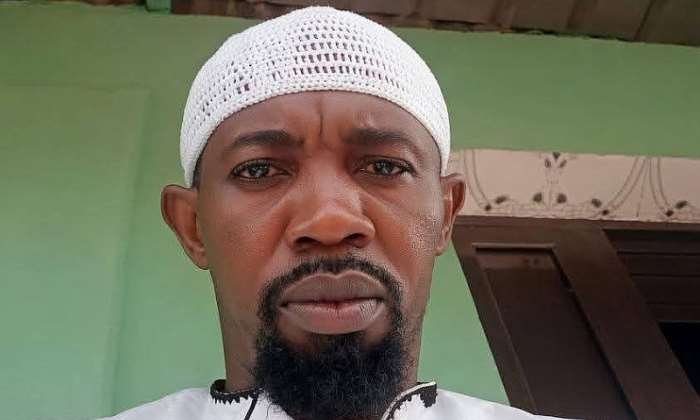
Anas is described as fair in complexion and approximately 5.7 feet tall, and police say intelligence suggests he may be hiding in either Côte d’Ivoire or Togo after fleeing the country.
In the weeks since the initial police statement, a leaked audio recording reportedly capturing a phone call between Anas and one of the alleged victims has spread widely on social media.
In it, the alleged victim is heard describing ongoing physical discomfort consistent with the injuries described in the police complaint, while Anas is heard urging the child to keep the matter private and to frame it in religious terms.
Part of a Recurring Pattern
The Sekondi case lands amid a string of recent abuse allegations against figures occupying positions of trust in Ghanaian communities.
In March 2026, the Criminal Investigations Department, working with the Cyber Security Authority and National Security, arrested a pastor in Cape Coast in connection with offences involving a minor, including defilement and the production and possession of child sexual abuse materials.
The suspect, Ebenezer Kondua, the 45-year-old lead pastor at Mahanaim Christian Centre in Ankaful, had presented himself online as a medical professional and marriage counsellor — another instance of an authority figure leveraging perceived credibility to access and groom victims.
Last year, Ransford Owusu Ansah, a 16-year-old who played for Siano Soccer Academy in Amasaman, Accra, passed away in March 2025. The cause of his death was linked to continuous alleged sexual abuse by his coach, Ibrahim Anyass.
Mr. Anyass was arrested by authorities. He has since been on bail and is awaiting trial.
The Scale of the Problem
The Sekondi case arrives just weeks after Child Rights International (CRI) published findings from a nationwide study tracking abuse cases across the country.
The organisation found that defilement is the most prevalent abuse against children in Ghana, accounting for 59.4 percent of reported offences, based on research that tracked 899 cases across 10 regions.
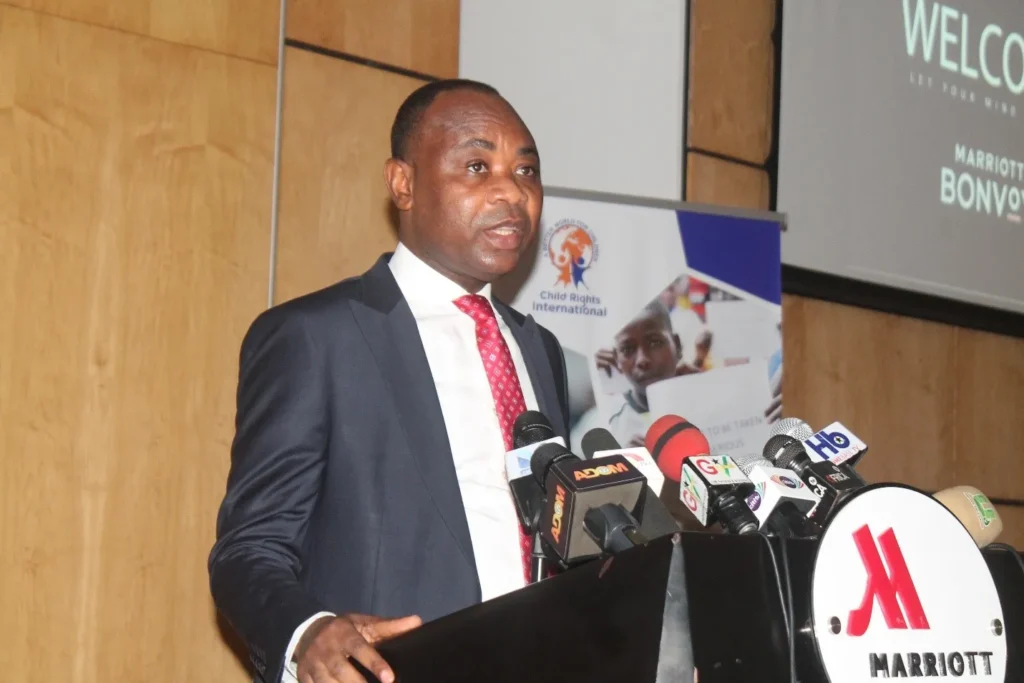
Beyond defilement, the study identified 23 distinct offences, with assault accounting for 18.9 percent and indecent assault for 7.7 percent of cases, alongside abduction, trafficking, rape, and torture.
CRI’s research also exposed a justice system ill-equipped to handle the volume of cases.
CRI Chief Executive Bright Appiah reported that 286 cases remained pending, with some languishing in the court system for up to a decade, and that systemic delays cause secondary victimisation as children are forced to relive trauma through repeated court appearances and frequent adjournments.
This often results in victims losing up to a month of schooling annually.
Earlier research into court outcomes paints an even starker picture of attrition. A review of Ghana’s Judicial Service data found that between July 2014 and June 2016, 985 cases of defilement were processed in circuit courts in the Greater Accra region alone, but only 60 — about 6.1 percent — went through a full trial.
Meanwhile a 2021 UNICEF Ghana country report estimated that nationally, only about 15 percent of child sexual abuse cases end in a conviction.
Why Disclosure Remains Rare
Beyond the courts, researchers point to deep cultural barriers that keep most cases from ever reaching police.
UNICEF’s assessment of Ghana’s child protection landscape found that violations are often tacitly accepted — due to the familiarity of the perpetrator, the poverty of the family, tradition or social norms — or minimised as inconsequential, and that the memory or reporting of these violations may be buried due to shame or fear of reprisal.
The same assessment warned that the impunity of perpetrators and prolonged exposure to abuse may leave victims believing this is their fate, or that violence is normal — a dynamic that helps explain why cases like Fijai Zongo’s often surface only after a leaked recording, rather than through routine institutional reporting.
A separate national survey found that about 11.2 percent of school children surveyed across four districts reported having been victims of rape or defilement, while broader estimates suggest roughly one in three young women in Ghana experience child sexual abuse before turning 18.
Government Response and Outstanding Questions
The Ministry of Gender, Children and Social Protection, working with UNICEF, has previously run consultative workshops with religious leaders aimed at building their capacity to prevent and respond to violence, abuse, and exploitation and protect children affected by violence.
But whether such efforts have reached informal, community-organised tutoring arrangements — like the weekend Arabic classes at the centre of the Fijai Zongo case — remains unclear.
For now, the Western Regional Police Command continues to appeal for information on Anas’s whereabouts, directing tips to the Western Regional Domestic Violence and Victim Support Unit (DOVVSU), the nearest police station, or the national emergency lines 191 and 112.
If you are a parent, guardian, or community member with concerns about a child’s safety, contact the nearest DOVVSU unit or call 191/112.
This article was edited with AI and reviewed by human editors