


STORY HIGHLIGHTS
- GBA President Alex Kukula is prioritising U-16 and U-18 youth development as the cornerstone of Ghana’s long-term basketball strategy
- Ghana’s first FIBA referee certification course in approximately 20 years was recently completed; a coaches’ course is scheduled for July
- Domestic courts remain largely outdated, with no meaningful government-funded facilities built in years
- Kukula is pursuing multi-year private sponsorship deals, estimating one Black Stars World Cup appearance bonus could cover roughly 70% of Ghana Basketball’s entire annual budget
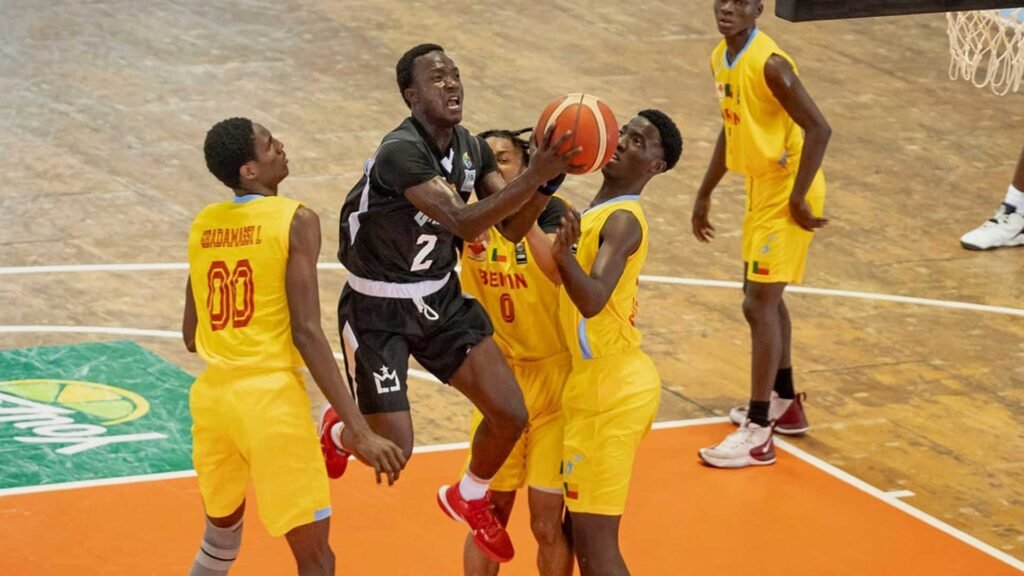
ACCRA — When Alex Kukula assumed the presidency of the Ghana Basketball Association (GBA) in late 2025, he inherited an organisation that had fallen behind much of the continent.
According to Mr. Kukula, the fall can be attributed not to a lack of talent but to a lack of structure.
While most of the spotlight and resources have been allocated to Ghana’s national football team, the Black Stars, basketball unfortunately hasn’t been given enough runway and structure to operate.
In his view, Ghana neglected the fundamentals for too long, and the consequences are now visible at every level of the game.
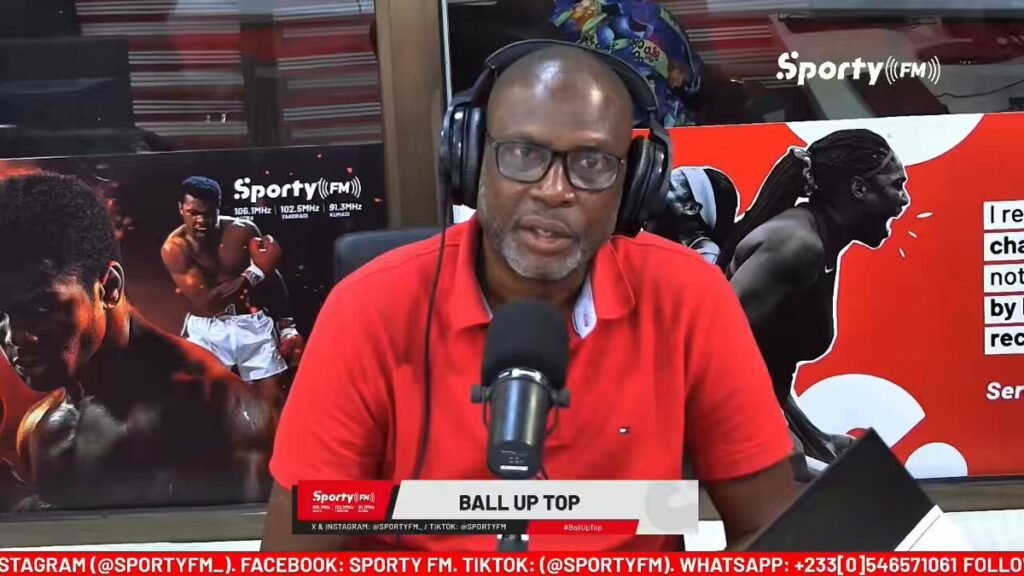
“We didn’t do youth development,” Mr. Kukula said in a phone interview with The Labari Journal.
“All the people we see doing well now — the Côte d’Ivoires, the Malis — they did a lot of youth basketball. That is what they are reaping now at the senior level.”
Countries like Nigeria and Senegal have experienced success in national basketball, including wins at FIBA tournaments and having more athletes from their countries featured on rosters in Europe and the US.
Mr. Kukula’s plan to reverse Ghana’s decline is methodical, if ambitious: rebuild the production pipeline from the ground up, starting with schoolchildren and working upward over a four-year administration cycle.
Whether the plan succeeds depends on several factors, including whether the government will divert more resources into the sport and if investors will take a bet on local basketball.
Early Beginnings
The Ghana Basketball Association was formed in 1961 under the National Sports Authority (part of the Ministry of Youth and Sports).
Ghana was one of 10 founding nations at the first African Basketball Congress in Cairo, Egypt (June 11–14, 1961), which established the African Basketball Federation (AFABA, now FIBA Africa).
Ghana officially joined FIBA in 1962 and is part of FIBA Africa’s Zone III.
Early competitive activity was limited.
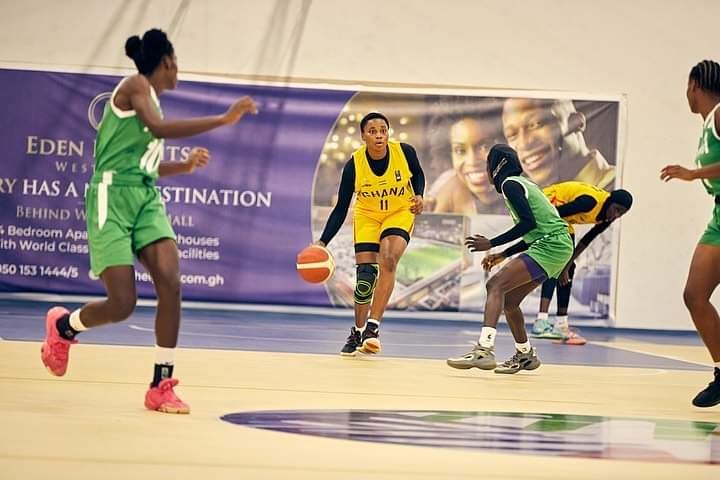
The women’s team participated in the 6th African Women’s Championship in Dakar, Senegal (1976–1977), finishing 6th, and hosted the 7th edition in 1978, placing 3rd (with only three teams participating: Senegal, Somalia, and Ghana).
The men’s team played bilateral friendlies against Ivory Coast in the 1970s but struggled to secure wins.
Since then, Ghana basketball has struggled to remain relevant.
The senior men’s national team has never qualified for major tournaments like the FIBA World Cup, Olympics, AfroBasket, or African Games. They’ve mostly played friendlies.
The women’s team last competed in AfroBasket in 2011. As of recent years, the senior teams have been largely inactive or non-existent at the top level, though youth and 3×3 programs have seen some activity.
A Pipeline That Broke
At the centre of GBA President Alex Kukula’s analysis is Ghana’s educational reform. The shift from a seven-year secondary school system to the current three-year structure, he argues, fundamentally disrupted basketball development.
Under the old model, players could spend five to seven years in school, attending multiple Inter-Co competitions before progressing to university.
Today, many leave secondary school having competed only once — or not at all.
“You see the quality of players at the university level — which is supposed to be the next stop to our national team — and they are still learning the basics,” Mr. Kukula said.
The GBA’s response is to establish a formal youth competition pathway: hosting a non-qualifier U-16 zonal tournament in Accra in September, followed by a U-16 AfroBasket qualifier in 2026, with a pipeline through to U-18 competition by 2027.
The goal is to graduate approximately 30 players each from the U-16 and U-18 programmes over a four-year period — players who can then be promoted into the senior national setup.
Training the Trainers
Before players can develop, Mr. Kukula argues, the technical ecosystem around them must be rebuilt.
Ghana recently completed its first FIBA Level 1 referee certification course in roughly two decades. A coaching certification course is planned for the end of July.
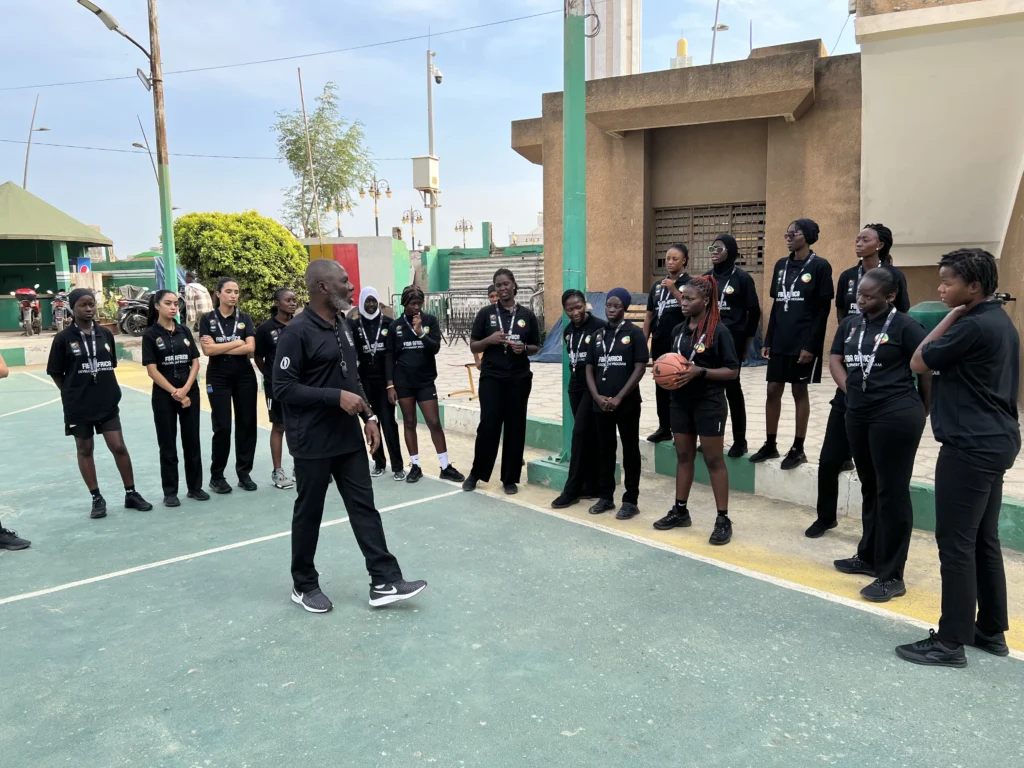
But FIBA’s standard class size — limited to 15 participants — is too small to address the scale of Ghana’s backlog.
Mr. Kukula is in discussions with European and American partners to deliver the same curriculum in larger cohorts, which will likely require financial contributions from participants.
He is also lobbying FIBA for concessions that would allow Ghana to host these courses more regularly.
Courts That Haven’t Changed
The infrastructure picture is equally stark. Ghana’s basketball facilities remain largely the outdoor hard courts that have existed for decades.
FIBA requirements for U-16 tournaments mandate an indoor arena with a minimum of 1,000 seats — a threshold Ghana can barely meet for lower-tier competitions, let alone the higher-level production requirements of senior international events.
Mr. Kukula points to Rwanda as a model Ghana should study.
The Kigali Arena, developed with government backing, has become a venue for continental sporting events and hosted a FIFA World Congress.
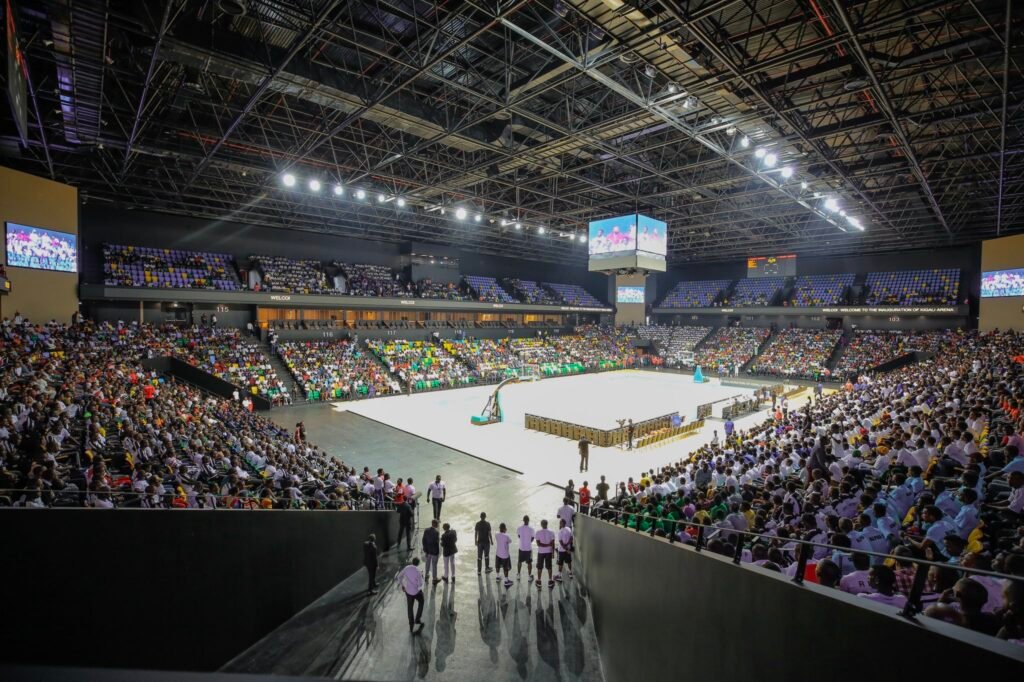
“When people see a basketball arena, they think they are just coming to play basketball inside,” he said. “There’s a whole lot — concerts, everything — that will be held there.”
Recent court construction in Ghana has been largely donor-driven rather than government-led.
Giants of Africa, an organization dedicated to building and empowering young women across the continent, funded a court at the School for the Deaf in Mapo.
Another facility was built at US comedian Michael Blackson’s school in Agoanse. Finally, in Tamale, a facility was built by New York Square in collaboration with the GBA.
At the government level, Mr. Kukula says, nothing meaningful has been done.
The Funding Gap
Another factor holding back the growth of basketball in Ghana is financial constraints.
Mr. Kukula offered one striking comparison: a single appearance bonus paid to a Black Stars player at the FIFA World Cup — GHC 100,000, by his estimate — would cover approximately 70% of Ghana Basketball’s entire annual operating budget.
“That should tell you where we are,” he said.
Unlike football, grassroots basketball is a difficult sell to corporate sponsors. Mr. Kukula acknowledges the chicken-and-egg problem: organisations want to invest in success, but development work is invisible, long-term, and hard to monetise.
His approach is to seek four-year sponsorship commitments rather than one-off donations — ideally, a partner willing to commit a fixed annual sum over the full administration cycle. Several international partners are reportedly in discussion.
Government funding through the national sports fund remains a possibility. However, Mr. Kukula says the application and approval process has not yet been finalised, and the GBA is not counting on it.
It was reported that Ghana’s Ministry of Youth and Sports was allocated GHS 195.8 million in 2024. That figure was then slashed to GHS 65.9 million in 2025 — a 66.4% cut.
No specific line-item budget for the Ghana Basketball Federation has been publicly disclosed.
Ghanaian athletes in other sports disciplines, including athletics, boxing, and volleyball, frequently self-fund their participation or rely on external sponsorships, even though their victories bring glory to the nation.
Ghana Basketball falls into this same category.
Recently, the government passed the Ghana Sports Fund Bill to help with financing sports. The Bill would help mobilise and manage resources transparently to support athlete welfare and sports infrastructure.
Funds would be drawn from statutory allocations, donations and other approved revenue streams. The sports ministry created an official website to accept donations and sponsorships.
Looking to the Continent
On the question of models to emulate, Mr. Kukula is specific: Ghana should not look to Nigeria, despite that country’s higher profile, because Nigeria’s advantage is primarily financial rather than structural.
The more instructive examples, he argues, are the Francophone countries — Côte d’Ivoire and Mali in particular — which have invested in school sport as a systematic pipeline.
“School sport is very, very serious over there,” he said. “That is where we need to look closely — how to get school sport going even in the present circumstances.”
One potential avenue is for the GBA to collaborate with the Ghana Education Service to take over the basketball component of school competitions and run it independently, as some other sports federations have done. Mr. Kukula believes that model could produce results within a four-year horizon.
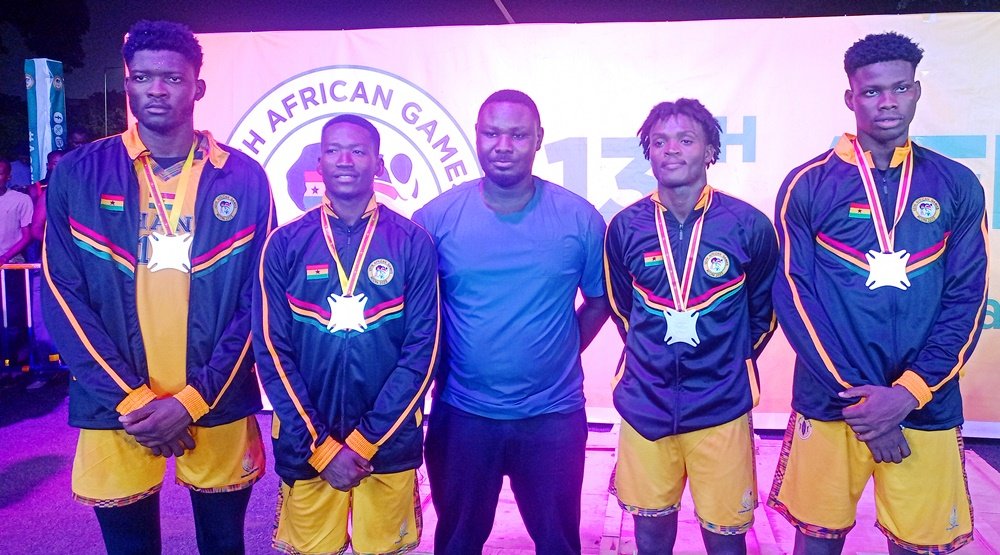
He also sees 3×3 basketball — a format Ghana has competed in internationally, winning a silver medal at a recent competition — as a shorter-term pathway to Olympic participation, with 2032 identified as a realistic target.
Future of Basketball
Mr. Kukula believes that with consistent investment in youth and fundamentals, Ghana will start competing at a higher level (regionally) within about four years, with players becoming more mature and battle-tested.
Overall, he noted that while grassroots work is slow and hard to fund initially, visible progress and success will make the sport more attractive to corporate sponsors and government support.
There is strong existing talent and fan love for basketball — the key is building the proper structure so players learn fundamentals instead of just mimicking stars.
“There’s no doubt we have a lot of talent. And the love for the team is massive. We hope to see some returns very soon.”
Correction: We incorrectly labeled “Giants of Africa” as “Gems of Africa”



Follow