


STORY HIGHLIGHTS
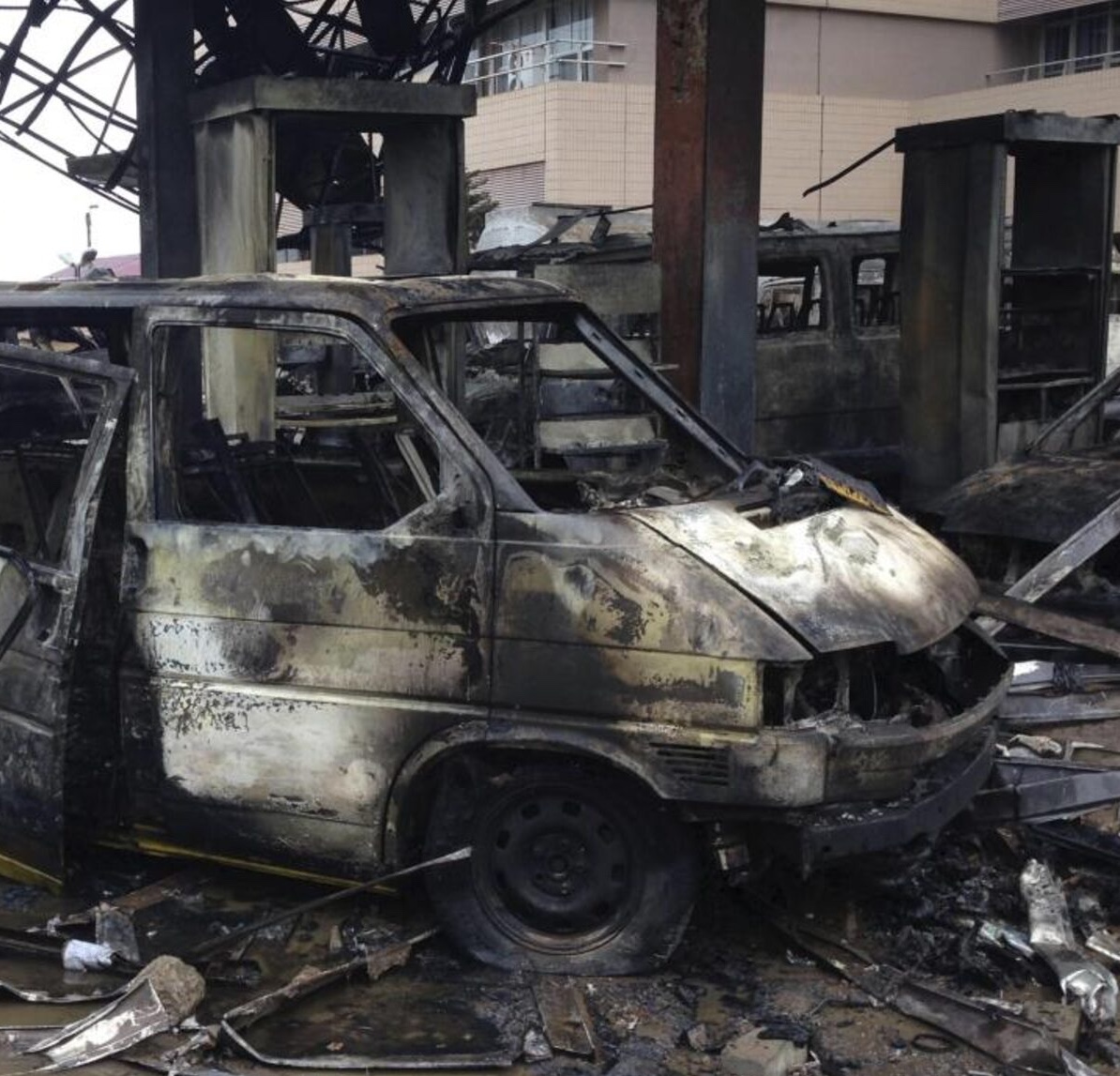
- On June 3, 2015, a flood-triggered explosion at a GOIL filling station at Kwame Nkrumah Circle in Accra killed over 150 people and injured hundreds more, making it one of Ghana’s worst peacetime disasters.
- A government-appointed committee found that drainage failures, regulatory negligence, and an overwhelmed fuel station contributed to the catastrophe — all preventable failures.
- In 2018, 69 victims filed a class action suit seeking GH¢40 million in compensation from GOIL PLC, the National Petroleum Authority, and the Accra Metropolitan Assembly. The case is now in its eighth year.
- Own witnesses for both GOIL and the NPA conceded under cross-examination that the disaster could have been avoided with adequate oversight and regulation.
- The AMA has repeatedly failed to appear in court, attracting sanctions; the case is next scheduled for June 15.
ACCRA — At exactly the spot where floodwaters, fuel, and fire converged eleven years ago to claim more than 150 lives, survivors, bereaved families, lawyers, and civil society actors gathered on Wednesday to ask a question that has hung unanswered over Ghana for more than a decade: Where is justice?
The 11th anniversary memorial of the June 3 disaster — organised by the OneGhana Movement and the Coalition of June 3 Victims at Kwame Nkrumah Circle — was not a rally of grief alone.
It was a public accounting, one that laid bare a legal battle stretching eight years, institutional defendants who have shown up to court inconsistently, and survivors who have gone from tragedy to penury while waiting for a judgment.
The Night That Changed Accra
On the night of June 3, 2015, torrential rains pounded the capital, and an explosion at the GOIL filling station near Kwame Nkrumah Circle turned an already dire flood emergency into a national tragedy.
Hundreds of people caught in the downpour and rising floodwaters had sought shelter at the fuel station. As water levels surged, fuel leaked and floated across the surface, and a spark triggered a massive explosion, engulfing the area in flames.
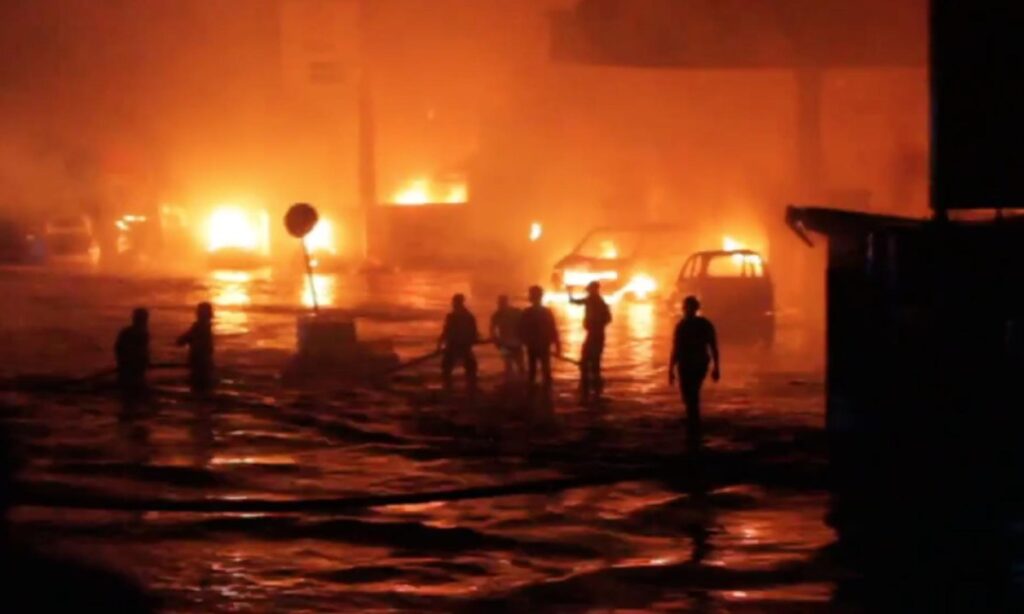
The disaster claimed 154 lives, injured 154 others, and left an indelible mark on the nation’s psyche. Bodies were found in open drains days later. The government declared three days of national mourning.
A government-appointed committee that investigated the catastrophe traced a chain of failures. It identified the flooding of Kwame Nkrumah Circle as the underlying cause, the overflow of fuel from the GOIL station as the intermediate cause, and a lit cigarette dropped into the fuel-laced waters as the final trigger.
The explosion damaged five structures, including the filling station itself, with total property loss estimated at GH¢1.65 million. The committee recommended extensive drainage works and the creation of a sanitation police force to enforce environmental regulations.
What the report made plain is that neglected drainage systems, poor urban planning, and the absence of regulatory enforcement at the fuel station were not acts of God. They were acts of institutional negligence.
“The Disaster Was Needless”
That was the framing offered by Senyo K. Hosi, Convener of the OneGhana Movement, at Wednesday’s memorial. “The disaster of June 3 was needless. It ought to have been avoided if those entrusted with the responsibility to take care and exercise duty of care to all and sundry were up to their task,” he said.
His remarks carried weight not only as advocacy but as a summary of evidence that has emerged in open court.

According to Mr. Hosi, GOIL’s own witness admitted under cross-examination that the disaster could have been avoided, and the NPA’s witness confirmed that stronger regulatory oversight could have prevented the tragedy.
If true, those concessions represent a significant evidentiary development — institutional defendants, through their own testimony, acknowledging the kind of systemic failure that civil society has long alleged.
A Case Eight Years in the Making
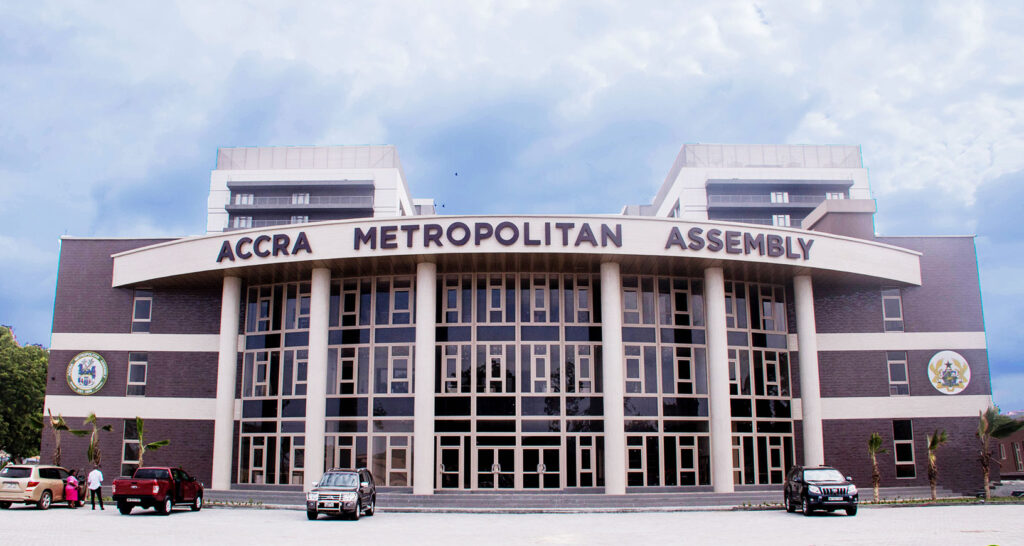
In 2018, 69 victims instituted a class action suit against GOIL, the National Petroleum Authority, the Accra Metropolitan Assembly, and the station manager, seeking accountability, compensation, and justice.
The victims are seeking GH¢40 million in compensation from the NPA and GOIL PLC for the loss of 150 lives, injuries, and destruction of property.
Their lawyer, Etornam Caleb Afutu, disclosed at Wednesday’s event that seven victims have already testified before the court, and witnesses from GOIL and the NPA have presented their evidence.
The proceedings have not been without setbacks.
The case suffered a significant interruption following the death of the dealer of the GOIL filling station in question, Mr Thomson Obeng Annani, resulting in the discontinuation of proceedings against him.
The conduct of the Accra Metropolitan Assembly — the body most directly responsible for enforcing the planning and safety regulations that failed on June 3 — has also drawn sharp criticism.
Mr. Hosi alleged that the AMA had at times failed to appear before the court, attracting sanctions in the process.
It is a pattern that speaks to the broader institutional posture that victims and their advocates say has characterised the response to this disaster from the start: delay, disengagement, and deflection.
The case is next scheduled for June 15, when an AMA witness is expected to testify and be cross-examined. After that, all parties will submit written addresses to the court for final determination.
Mr. Afutu expressed cautious optimism that a judgment could be delivered before the end of the year.
A “Reset” That Must Mean Something
The memorial coincided with a moment of political transition. President John Dramani Mahama returned to office in January on a platform of national renewal, and civil society is watching to see whether that agenda will reach those the state has most directly failed.
Hosi called on the government to demonstrate its commitment to accountability by supporting efforts to bring closure to victims. “Reset must mean justice for victims, accountability for institutions and relief for citizens who have suffered for far too long,” he said.
The ask is not abstract. It is for interim support to survivors still in destitution, for the AMA to finally account for its conduct in court, and for the institutions named in the suit to stop treating the proceedings as an inconvenience to be managed rather than a reckoning to be faced.
For 150 families, the June 3 disaster never ended. It simply moved from the streets of Circle into courtrooms, hospital wards, and the slow erosion of waiting.
Eleven years on, the question from that memorial remains on the record: where is justice?
This article was edited with AI and reviewed by human editors



Follow