



STORY HIGHLIGHTS
- Ghana’s Parliament is considering 15 new ICT-related bills, including the NITA Bill, the Data Harmonisation Bill, and the Emerging Technologies Bill
- Section 37 of the proposed NITA Bill would restrict IT operating licences to companies “wholly owned” by Ghanaian citizens — effectively barring foreign tech firms
- Critics at IMANI Africa warn the legislation directly contradicts the AfCFTA Protocol on Digital Trade, which Ghana’s own capital hosts
- The bills would create overlapping regulatory agencies, adding compliance layers that analysts say could push Pan-African investors to Lomé or Lagos instead
Imagine a health-tech startup based in Kigali. For three years, a small team has built and refined an app connecting rural clinics with urban specialists.
The platform works, and now they want to scale. Ghana — headquarters of the AfCFTA Secretariat and champion of continental free trade — is the obvious next move.
According to IMANI Africa technology policy analyst John Sitsofe Mensah, that startup would be walking into a trap.
Ghana’s Minister for Communications, Digital Technology and Innovations, Samuel Nartey George, has framed the country’s legislative push as a bold digital agenda built on four pillars — innovation, infrastructure, inclusion, and impact — backed by 15 new ICT-related bills to be laid before Parliament.
The bills include the Data Harmonisation Bill, the Emerging Technologies Bill, the Ghana Innovation and Startup Bill, and a revised NITA Bill that would transform the agency into an independent regulatory authority.
But analysts at IMANI Africa see a more troubling picture beneath the ambition.
The 100% Ownership Problem
The AfCFTA Protocol on Digital Trade, adopted by the African Union in early 2024, rests on a foundational premise: a startup should be able to scale across African borders without encountering artificial, discriminatory barriers.
Ghana helped champion that vision. Its lawmakers now appear to be drafting against it.
Section 37 of the proposed NITA Bill dictates that an operating licence for IT services be restricted to companies “wholly owned by a citizen.”
In practical terms, this means a Rwandan health-tech firm cannot open a subsidiary in Accra without transferring 100 percent of its equity to a Ghanaian national.
A Nigerian fintech scaling across West Africa would be legally locked out. Foreign venture capital, a lifeline for early-stage tech companies, would be essentially barred from taking a controlling stake.

The government’s own Deputy Minister of Communications, Mohammed Adam Sukparu, has publicly stated that NITA’s reforms are meant to “create the enabling environment for private sector innovation, fintech growth, SME participation in e-commerce and cross-border digital trade under AfCFTA.”
The citizen-ownership clause points in the opposite direction.
Mensah, writing for IMANI Africa, puts it plainly: Ghana is telling its neighbours it will gladly export physical goods to their markets tariff-free, while keeping their digital services out.
It is, he argues, 20th-century protectionism dressed in the language of 21st-century regulation.
A Regulatory Maze, Not a Single Market
The contradiction is not limited to ownership rules. The AU’s Digital Transformation Strategy envisions a secure digital single market across Africa by 2030 — one where a company compliant in Abidjan can operate predictably in Accra. Ghana’s legislative stack threatens to make that impossible.

The Data Harmonisation Bill, developed by NITA, seeks to establish a comprehensive legal framework for data sharing, standardisation, and interoperability across public and private institutions.
It would make it mandatory for all public institutions to integrate their systems under uniform data standards.
On paper, that sounds like progress. In practice, a foreign company entering Ghana would now navigate at least four separate regulatory bodies: the Cybersecurity Authority for breach protocols, the Data Protection Commission for localisation rules, NITA for software engineer certification, and a separate agency governing AI deployment.
The World Bank has consistently warned that compliance multiplicity of this kind destroys the cross-border scalability that makes digital markets worth entering.
While Ghana does not yet have a comprehensive legal framework specifically regulating data centres and cloud services, NITA is actively developing policies to enhance oversight, promote local data hosting, and establish security standards.
Critics warn that a requirement to store operational data on government-managed local servers, which Section 31 of the NITA Bill appears to enable, could push multinationals to route their African operations through competing hubs in Lomé or Lagos.
The AfCFTA Contradiction
The geopolitical irony is difficult to overstate. As host of the AfCFTA Secretariat, Ghana sits at the heart of efforts to create the world’s largest single market, connecting 1.5 billion people across 55 countries.
The country has been working with the Secretariat to develop digital trade protocols, e-commerce platforms, and cross-border payment systems.
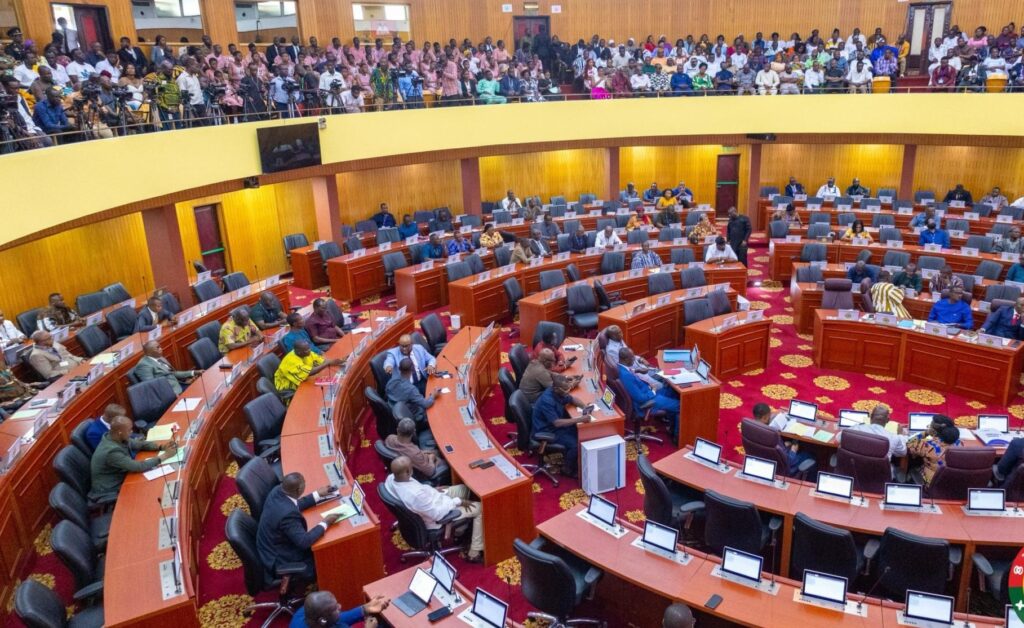
As an AfCFTA member, Ghana is tasked with revamping aspects of its inward investment legislation to align with the agreement’s framework, which aims to phase out a web of bilateral investment treaties and create a more harmonised environment for investment.
The NITA Bill’s citizen-ownership clause would do the reverse — erecting a new, more explicit wall against intra-African digital investment.
If every AU member adopted the same logic, the Pan-African tech ecosystem would collapse under the weight of its own contradictions.
Waiting On Parliament’s Move
Ghana’s government insists its legislative agenda is about modernisation, not exclusion.
Officials say the Data Harmonisation Bill, if approved, would mark a major step toward a secure and connected digital governance system, enabling smooth data exchange among institutions and strengthening trust in digital public services.
Those are legitimate goals. But Mensah and his colleagues at IMANI argue the bills, as currently drafted, are not administrative tools — they are international trade documents with continent-wide consequences.
Passing them without reconciling them with AfCFTA obligations would not just constrain Ghana’s domestic startup ecosystem.
It would signal to the continent that the country holding the keys to Africa’s most ambitious trade experiment cannot be trusted to leave the digital doors unlocked.
Ghana’s Parliament resumes session on May 21st. There’s no confirmation on whether the proposed bills would be passed during their next sittings.
This article was edited with AI and reviewed by human editors



Follow