STORY HIGHLIGHTS
- All active gun licences in Ghana are suspended with immediate effect as of June 23, 2026
- Holders must undergo mental health screening and firearms training before licences are renewed
- Gun-related incidents rose 253% between Q1 2024 and Q1 2025; murders climbed toward record levels in 2025
- An estimated 1.1 million firearms remain unregistered, against roughly 1.2 million registered
- The suspension follows a December 2025 gun amnesty and a March 2026 slowdown in new licence approvals
ACCRA — Ghana has suspended every active civilian firearm licence in the country, the most sweeping intervention yet in a mounting effort to tighten control over guns that have become increasingly lethal in civilian hands.
Interior Minister Muntaka Mohammed-Mubarak announced on Tuesday morning, citing the use of firearms to commit suicide by three affluent Ghanaians in the past three months as the immediate trigger.
The announcement also comes after a former Member of Parliament, Adwoa Safo, was hospitalised after being hit by a bullet whilst she was in her vehicle. The bullets were allegedly from the Kantanka Security Services.
Investigations are ongoing, and many reports say this was due to an internal family dispute.
All licence holders are now required to undergo fresh mental health screening, drug testing, and firearms safety training before their licences will be renewed.
The minister said the exercise would begin on Wednesday, June 24, 2026, with a shooting range in Tesano identified for training, the Narcotics Control Commission deployed to conduct drug tests, and the Mental Health Authority assigned to carry out psychological assessments.
Regional police commands have been directed to designate locations in every region where licence holders can be processed.
The minister also announced that firearms collected during the national gun amnesty — which ran from December 2025 through January 2026 — would be publicly destroyed on July 9, 2026.
A System Built on Paper, Eroded by Non-Compliance
The suspension rests on a licensing framework long acknowledged as broken. Ghana’s Central Firearms Registry (CFR), established in 1955 and operating under a 1972 decree, has administered gun licences through paper records and annual renewals — a system that has produced a compliance crisis of significant proportions.
As of 2019, roughly 1.2 million firearms were registered, but fewer than 100,000 licences were renewed annually, while an estimated 1.1 million firearms were entirely unregistered — a compliance and enforcement gap that officials and analysts have described as the root driver of Ghana’s current gun proliferation problem.
Unlike many African countries, handguns are especially popular in Ghana, and the law requires annual re-registration — a requirement widely ignored.
Of roughly 1.23 million people who legally acquired a gun, only about 40,000 have been re-registering each year.
The process for obtaining a licence was itself minimal. When Minister Muntaka assumed office, he discovered that applicants needed only to write to the minister, after which a background check was conducted before a licence was granted.
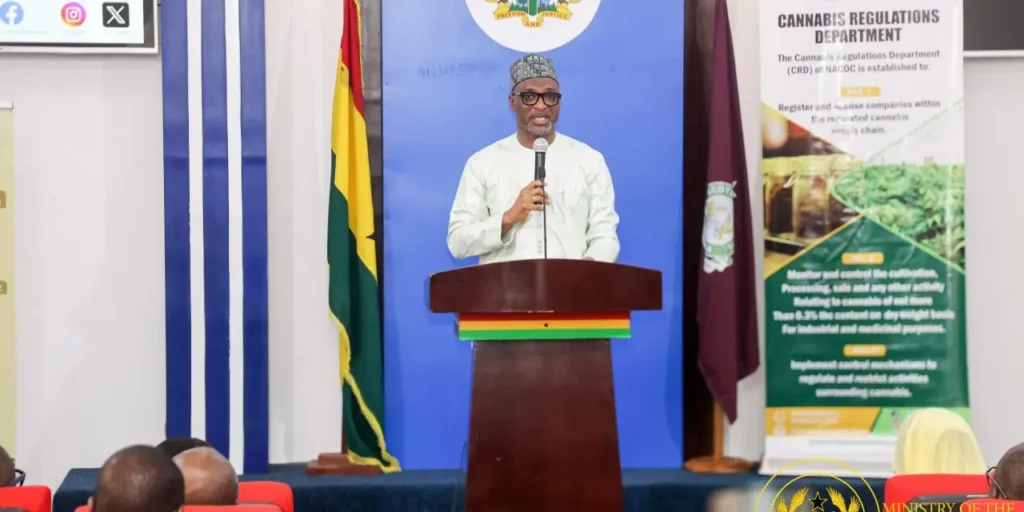
He characterised the system as too easy and moved to slow approvals in March 2026 while broader reforms were introduced.
The Violence Behind the Policy Shift
The urgency of Tuesday’s announcement is underscored by the scale of armed violence Ghana has absorbed in recent years.
In 2024, the Ministry of the Interior recorded 1,219 robberies and 552 murders. By July 2025, 628 robbery incidents and 340 murders had already been documented.
The trajectory across quarterly data is equally stark. National gun-related incidents surged from 15 in the first quarter of 2024 to 53 in the same period of 2025 — a 253% increase — with a broader spectrum of crimes involving firearms and a wider geographic spread across regions.
By the second quarter of 2025, Ghana’s National Commission on Small Arms and Light Weapons recorded 54 gun-related incidents — up from 15 in the prior quarter, a 260% spike.
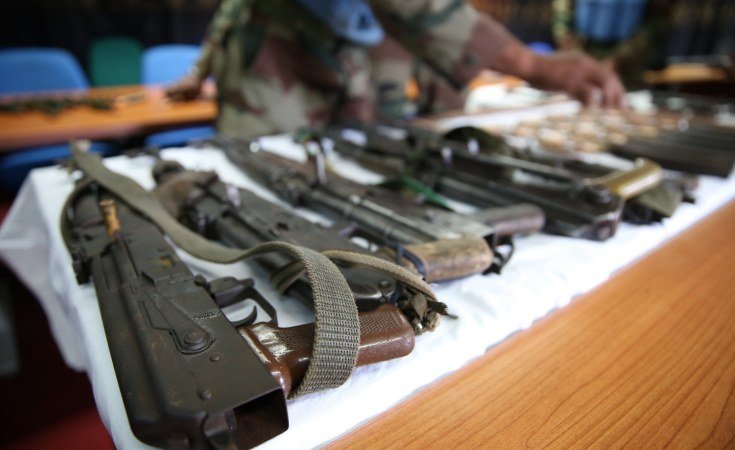
Gun crimes were reported in 11 of the country’s 16 regions. The Ashanti Region alone accounted for nearly 40% of incidents, followed by Eastern and Upper East.
Feeding this violence is an entrenched illicit manufacturing industry. Ghana produces an estimated 200,000 artisanally made firearms annually, making it one of the most sophisticated craft weapons producers in the sub-region.
Many of these weapons flow into neighbouring countries, with the potential to circulate back and fuel domestic conflict.
A Reform Programme Built in Stages
Tuesday’s suspension is not an isolated move. It is the most forceful step in a sequence of interventions the Mahama administration has pursued since taking office in January 2025.
In November 2025, the Interior Ministry announced a six-week national gun amnesty running from December 1, 2025 to January 15, 2026, offering holders of unregistered firearms the opportunity to surrender them without fear of arrest or prosecution.
A ban on the use of powdered guns at festivals and traditional celebrations was imposed at the same time.
In March 2026, the minister announced that new licence approvals had been slowed while the Central Firearms Registry was being digitised — a process intended to allow security agencies to trace every licensed firearm and its holder.
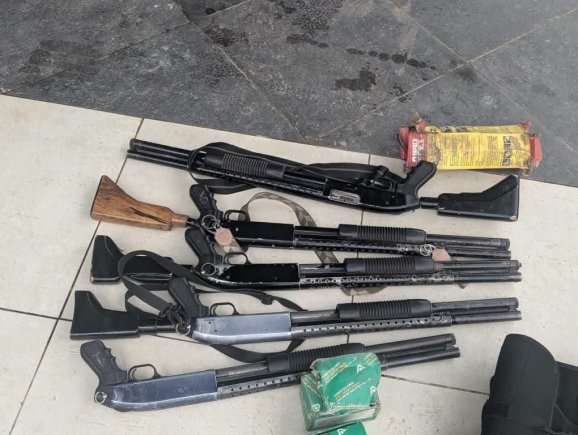
The Kantanka Security Services shooting incident on June 21 appears to have accelerated the latest move.
The Interior Ministry suspended the private security firm’s operating licence after personnel were allegedly found using non-prescribed uniforms and possessing firearms and ammunition on duty at a residence in Kwabenya, Accra — an incident that resulted in the shooting of former MP Adwoa Safo.
Minister Muntaka used his announcement to sharpen the distinction between personal and commercial gun use, warning that firearms registered in an individual’s name cannot legally be transferred for use in private security operations — and that he would pursue violators.
What Remains Unresolved
The suspension raises operational questions that the minister did not fully address on Tuesday. It remains unclear how holders in remote regions will access the required screening and training infrastructure, and no timeline has been set for completing the renewal process nationally.
A press conference was announced to provide fuller details of the new licensing arrangements.
The proposed National Arms Bill — which would replace the 1972 decree and align Ghana’s framework with ECOWAS and UN small arms conventions — had not been enacted at the time of writing, leaving the legal architecture for these measures resting on ministerial authority rather than updated statute.
Analysts have also called for licensing of artisanal gunsmiths as a way to track the production of illicit weapons — a gap that neither the amnesty nor the licence suspension directly addresses.
This article was edited with AI and reviewed by human editors