


STORY HIGHLIGHTS
- Ghana’s Auditor-General has uncovered GH¢580 million in financial irregularities tied to the 2023 African Games
- Key irregularities include inflated contracts, payments for undelivered goods, and cash disbursements outside Ghana’s public financial management system
- The audit recommends surcharges against three former senior officials: Minister Mustapha Ussif, Chief Director William Kartey, and LOC Chairman Dr. Kwaku Ofosu-Asare
- Infrastructure inspections found widespread construction defects across five major Games venues, with rectification costs estimated at GH¢12 million
- Ghana risks exclusion from future African Games over outstanding financial obligations to the African Union
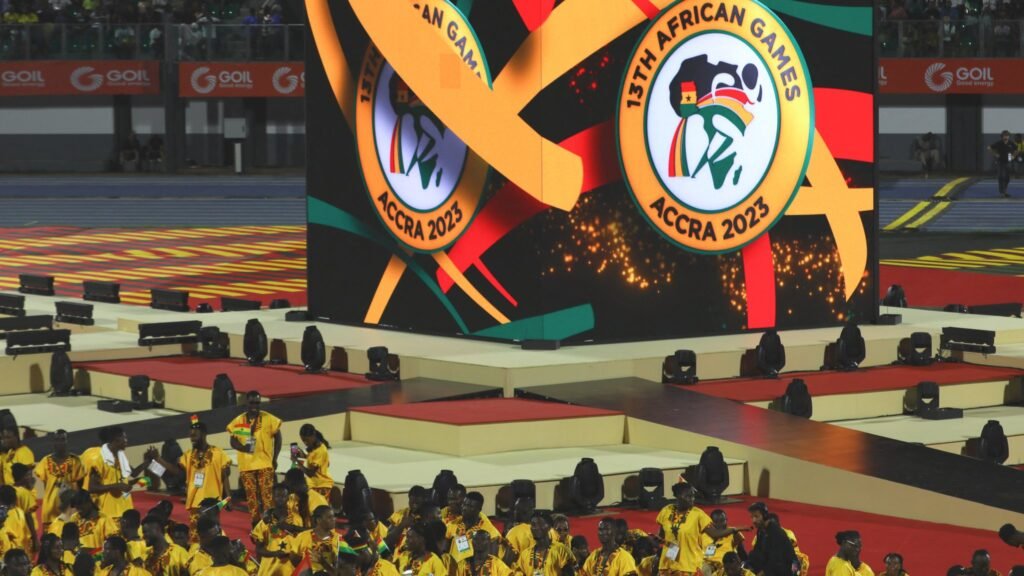
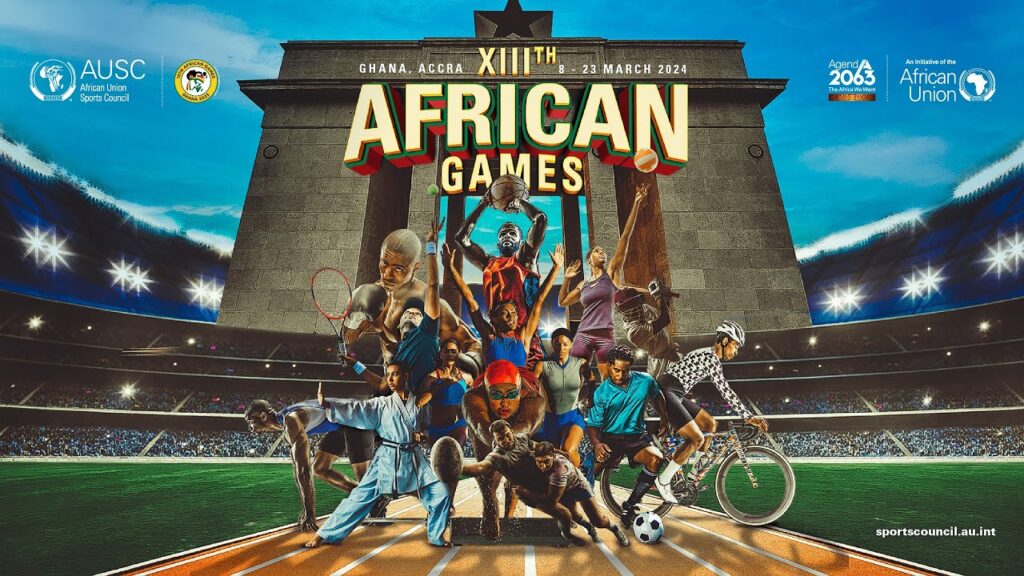
When Ghana won the bid to host the 13th African Games in October 2018, it was promoted as a transformative moment — a chance to reposition Accra as a continental sporting hub, bequeath the nation world-class sports infrastructure, and assert Ghana’s standing on the African stage.
The event, held in August and September 2023, drew nearly the full complement of African nations competing across 29 disciplines and generated genuine continental enthusiasm.
What a comprehensive government audit has since revealed is considerably less flattering.
Commissioned by the Office of the President and conducted under the mandate of the Auditor-General pursuant to Section 16 of the Audit Service Act, 2000 (Act 584), the audit examined every operational, financial, and technical aspect of the Games and submitted its report to Parliament in 2026.
Its findings document a pattern of procurement irregularities, inflated contracts, poor financial controls, and infrastructure failures that together produced total financial irregularities of GHC 580 million — against a total expenditure of GHC 2.2 billion.
Games Financed on Borrowed Money
The financial architecture of the 13th African Games was always high-stakes. In July 2021, Parliament approved a US$170 million loan agreement between the Government of Ghana and CalBank Ghana Limited to finance sports infrastructure and residential facilities.
Parliament simultaneously approved a commercial agreement worth US$145,086,057.54 with Contracta Construction UK Limited for the delivery of the requisite facilities.
The total funds received for the Games came primarily from government releases to the Ministry of Youth and Sports — GH¢2.1 billion — supplemented by cash sponsorships and participation registration fees totalling tens of millions of cedis more.
Despite this expenditure, the audit confirms that a liability of GH¢208,583,739.49 remained recorded as of the date of the report, made up of cedis, dollar, and euro obligations still outstanding.
Single-Source Contracting on a Vast Scale
The most voluminous section of the audit concerns procurement — specifically, the near-total absence of competitive tendering across contracts worth billions of cedis.
Auditors found that single-source procurement was applied across GH¢2.7 billion in contracts without adequate justification.
While some single-source approvals were processed through the Public Procurement Authority (PPA), the report notes that the PPA itself described several of these as “reluctantly accepted” — approvals granted under time pressure or inadequate documentation rather than genuine necessity.
The PPA also intervened to reduce a number of contract sums by 10% and 5%, suggesting its own reservations about pricing, but those reductions were often overridden or circumvented.
One particularly striking case involves JDK Travel and Tours, which was awarded a contract worth US$1,575,000 — approximately GH¢18,900,000 — despite being described by auditors as an unqualified contractor.
JDK subsequently appeared at the centre of multiple overpricing findings, including inflated accommodation charges and vehicle hire contracts.
Auditors found JDK charged US$150 per room per night for 500 rooms across 21 days, against a market benchmark of US$50 to US$70 per room — an inflated total of US$840,000.
The same company’s vehicle rental contracts were benchmarked to reveal overcharging of GH¢13,120,226.21, with additional irregular invoicing of GH¢2,201,514.
A Web of Related-Party Contracts
Beyond JDK, the audit flagged what it described as “common beneficial ownership and related-party exposure” across contracts totalling GH¢150,618,720.83.
Without naming specific ownership structures in the summary findings, auditors indicated that multiple vendors awarded Games contracts shared common directors or beneficial owners, raising concerns about competition, independence, and the integrity of procurement decisions.
The report also found that GH¢20,374,883.45 was withdrawn in cash or disbursed outside Ghana’s Government Integrated Financial Management Information System (GIFMIS) — the public financial management infrastructure designed precisely to create an audit trail for such payments.
Payments made outside GIFMIS are, by definition, harder to trace, verify, or recover.
Paying for Things That Were Never Delivered
Among the clearest findings of loss is the payment of approximately US$374,462.39 — GH¢4,493,548.68 — for sports equipment that was either never delivered or could not be identified.
Under a contract with Messrs Delovely Company Ltd valued at US$3,235,020.60, auditors confirmed that equipment for Table Tennis, Badminton, and Handball was not supplied, and that a further lump-sum line item of US$408,054.22 labelled “Sports Equipment” lacked specifications or supporting documentation.
Separately, GH¢15,093,666 was paid from the Local Organising Committee (LOC) accounts for activities entirely unrelated to the Games — including advance salary payments and disbursements to officials and staff of the Black Stars national football team, among them the Head Coach and Assistant Coach.
These payments were processed through Games accounts despite forming no part of the approved mandate or budget.
Crumbling Infrastructure
Perhaps the most immediately visible dimension of the audit concerns the five major venues constructed or upgraded for the Games.
Physical inspections conducted as part of the audit revealed widespread construction-phase defects — concrete cold joints, slab cracking, poor compaction, inadequate waterproofing, drainage failures, and incomplete works — at facilities including the Aquatic Centre, Legon Stadium, Temporary Kitchen Facilities, and Achimota Pavilion.
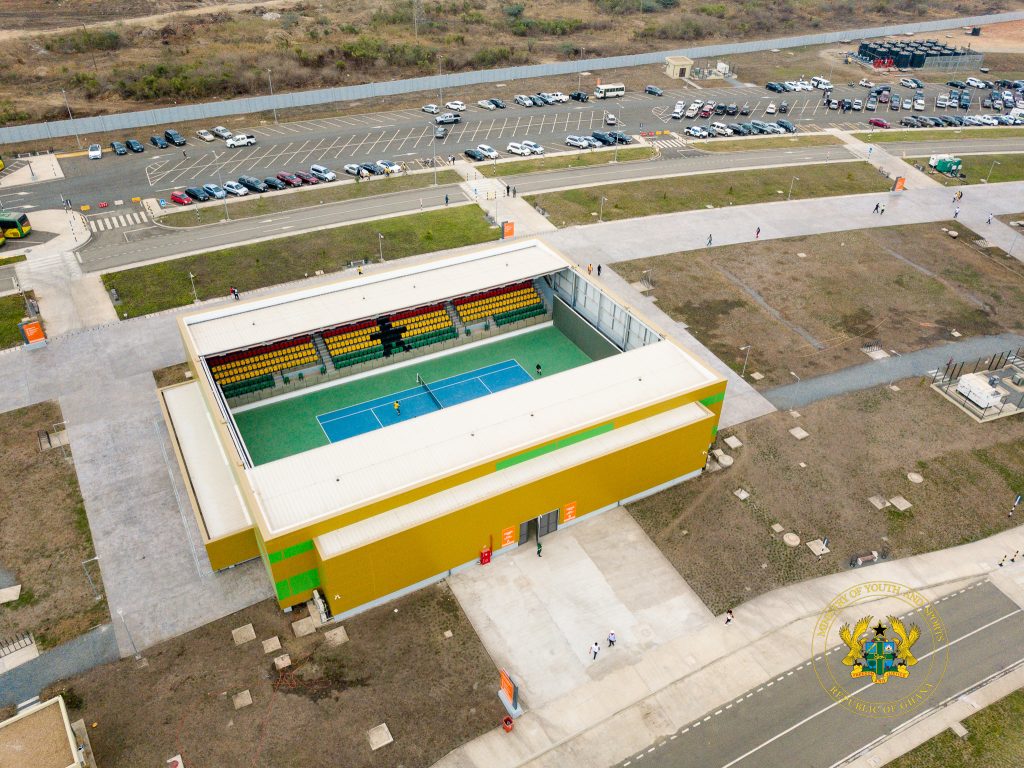
Post-construction assessments added progressive cracking, material degradation, and latent defects attributable to poor supervision and insufficient quality assurance.
The cumulative rectification cost was estimated at a minimum of GH¢12,000,000.
At the Borteyman Sports Complex — the flagship facility constructed under the US$145 million contract — a non-itemised variation order, referred to in the audit as the “May Action Plan,” resulted in a net loss of USD 34,430,646.52, representing a 23.8% reduction in the scope of works actually delivered against what was contracted.
Officials Named, Accountability Demanded
The audit does not merely catalogue failures — it assigns responsibility.
Three individuals are named across virtually every recommendation for surcharge and recovery in the financial irregularities table: Mustapha Ussif, the former Minister of Youth and Sports; William Kartey, former Chief Director at the Ministry; and Dr. Kwaku Ofosu-Asare, former Chairman of the Local Organising Committee.
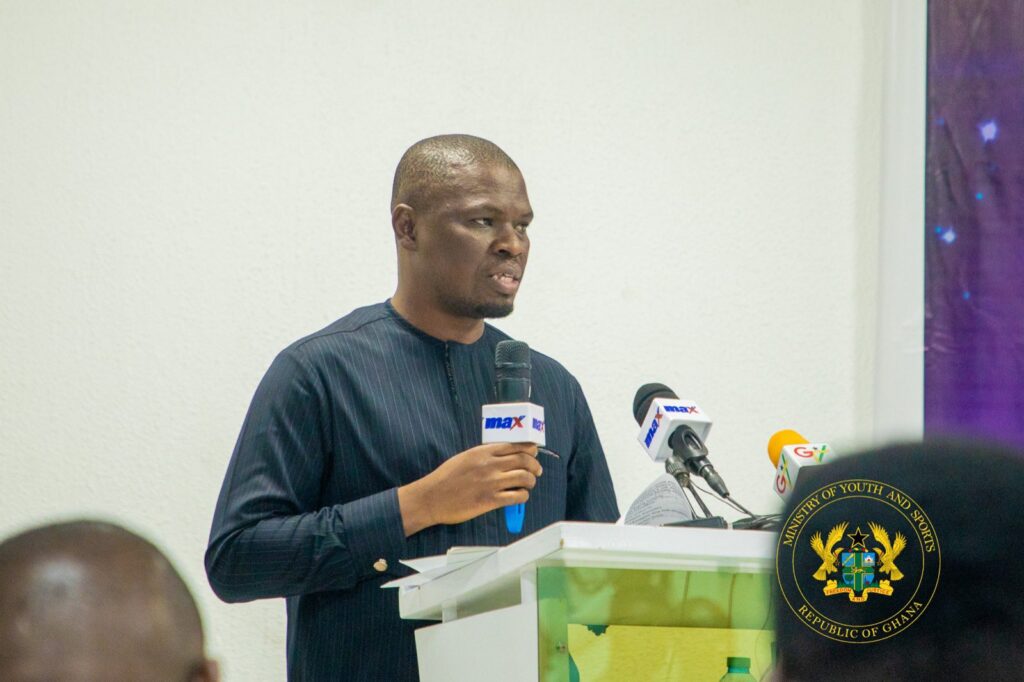
Prof. Amin Alhassan, Director-General of the Ghana Broadcasting Corporation, is named in connection with irregularities at GBC, which was responsible for the Games’ broadcast production.
It is found to have awarded contracts without formal documentation, lost revenue through poor broadcast management, and engaged The Production Room under a EUR 57,030 training contract for which no evidence of delivery could be found.
A Legacy in Question
The LOC’s own Legacy Sub-Committee — established with a specific mandate to prevent Games facilities from becoming “white elephants” — was dissolved before it could accomplish its stated purpose.
The audit found no evidence that the committee was functional during the Games themselves. Post-Games asset management has been described as “poor”, with inadequate handover procedures and a deteriorating state of Games assets.
Most consequentially for Ghana’s international standing, the audit notes that outstanding financial obligations to the African Union under the Host Agreement remain unmet.
If those obligations are not resolved, the report warns, Ghana risks being barred from hosting future editions of the African Games.
This article was edited with AI and reviewed by human editors



Follow