


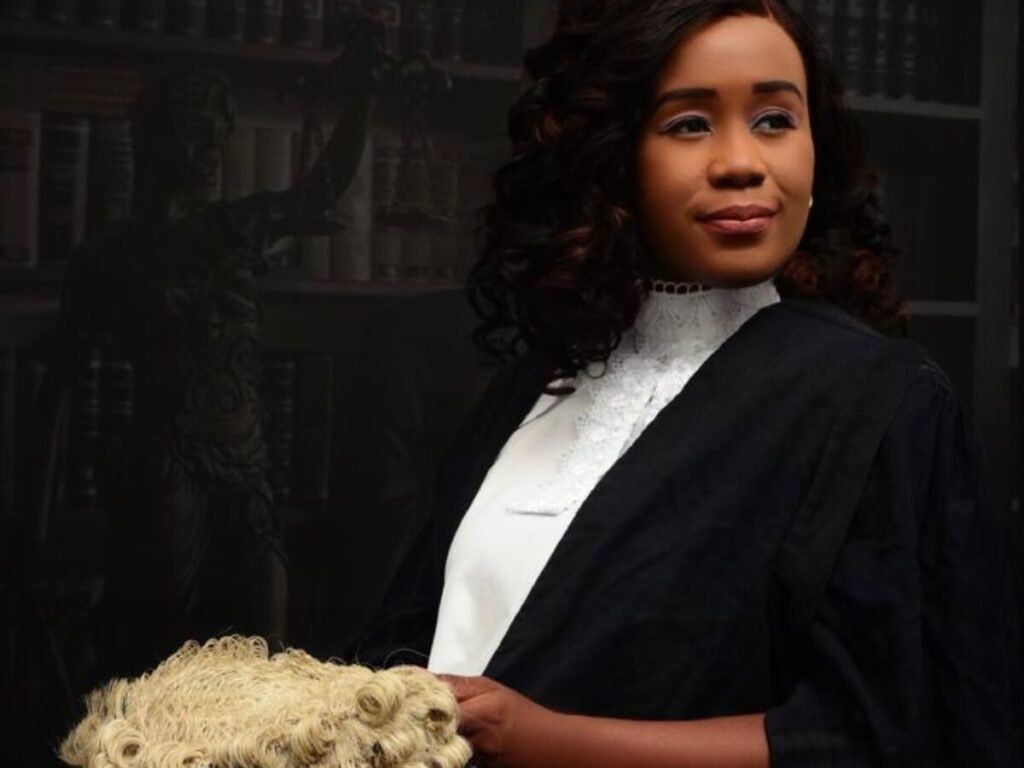
ACCRA, GHANA — Amanda Clinton received an unexpected phone call on a random day. A German-Ghanaian man claimed he had been defrauded of nearly $300,000 after investing in a gold trading company.
After a detailed conversation, Clinton agreed to take on the case, not knowing it would put her career on a steep trajectory. Her consultancy was barely off the ground. She had no office — just a mobile number listed online and a willingness to take the case seriously.
That call would eventually bring victims queuing outside a rented meeting room in Accra, ignite a national conversation about white-collar crime in Ghana, and transform Clinton into one of the country’s most prominent and sought-after legal voices.
Amanda Clinton, 48, has become a recognisable face in mainstream Ghana. She has made appearances on television and radio, giving opinions on legal cases, including the Ken Ofori Atta extradition and the recent arrest of a Ghanaian MP in the Netherlands.
Along her legal journey, she took a peculiar side quest by contesting for the presidency of the Ghana Football Association (GFA). Although it did not result in Clinton becoming the first woman president of the GFA, it put her in the national spotlight and boosted her credentials.
The Labari Journal conducted an online interview with Clinton to learn more about her background, her legal career, candidacy for the GFA presidency, and whether a run for public office in Ghana is in the near future.
A Journalist With A Law Degree
Clinton was born in Sierra Leone to a Ghanaian mother and a Sierra Leonean father. Her parents were both lawyers. She and her identical twin sister Bianca moved to the UK when they were eight.
Clinton spent most of her formative years in Britain, where she says her instincts pulled her toward journalism — not law.
“I truly wanted to be a journalist at heart,” she admits. “I couldn’t, because my parents would only pay for law.”
She trained as a pupil barrister at Pump Court Chambers in London under Edward Cumming KC — at the time, one of the youngest Queen’s Counsels in British legal history. The training, she says, gave her a grounding in white-collar crime and high-stakes defence work that she has never entirely left behind.
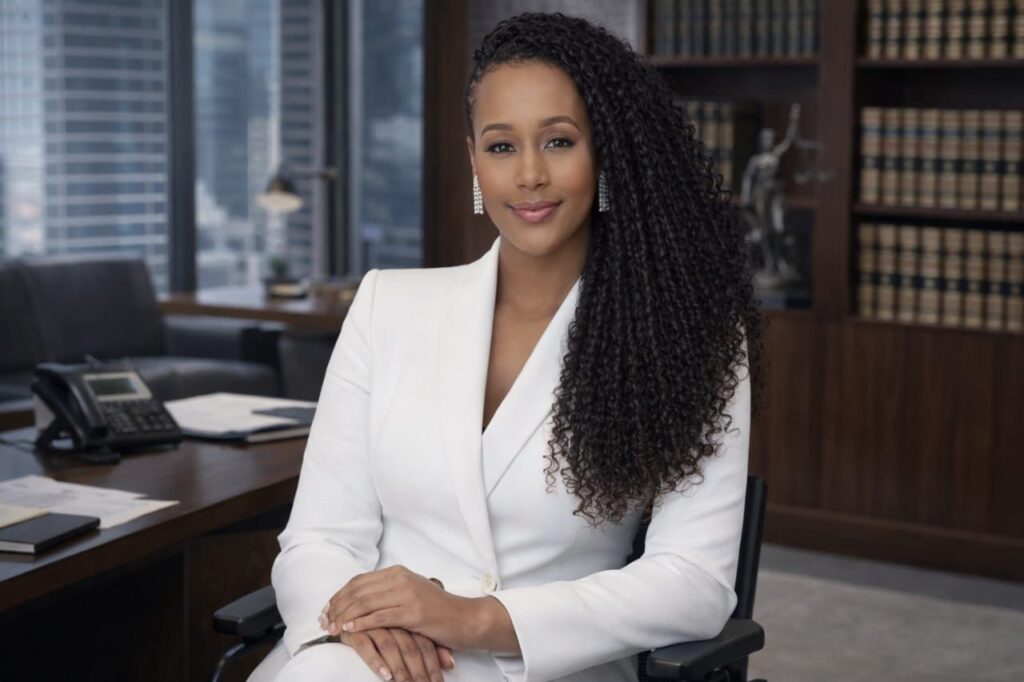
Clinton was called to the English Bar in 2006 and the Ghanaian Bar in 2009, and holds a master’s degree in African Politics from the University of London.
After qualifying in Ghana, she spent three and a half years as a state attorney at the Attorney General’s Department — an experience she credits with teaching her humility and how government actually works.
“I’m very grateful for my time at the Attorney General’s department,” she said.
“It allowed me to be very grounded in Ghana in terms of understanding how the government department works, how slow things can be, how networking is important, and above all, just to be humble and eat anywhere and move around.”
The Menzgold Case
Clinton shot to the public spotlight thanks to the alleged fraud of a popular gold trading company.
Menzgold Ghana Limited (which collapsed in 2018) was accused of defrauding thousands of investors. Clinton became the lead legal voice for victims after that initial call from a German-Ghanaian client.
In her legal pursuit, she made multiple attempts to involve the Ghana Criminal Investigations Department (CID). But Clinton says they were “unresponsive”.

She then made an unconventional decision: she leaked her formal complaint letter to GhanaWeb, a popular online news publication, with her client’s name redacted, to force a public reckoning.
“I leaked my letter to the CID regarding this very serious complaint. I mean, it was a lot of money. And so I leaked it and then took out their names. That’s the first time I redacted a client’s name to protect them.”
(At the time of this publication, the Menzgold case is still ongoing in the Accra High Court. Customers of the defunct company are still seeking to recover their funds)
Clinton went on to represent international corporate clients who had invested in Menzgold Ghana Limited, TCL Ghana Limited, and Gold Coast Securities Limited.
The case also taught her something she has carried into every major matter since: the Ghanaian media, when given well-structured information, is a powerful ally.
“I’ve never had to pay people. They are always so hungry for information, and once you do a good write-up for them, they will match your quotes and write very quickly.”
Running for the Ghana Football Association — Out of Spite
In 2019, Clinton, to the surprise of many, announced that she was running for the presidency of the Ghana Football Association (GFA).
The catalyst, she says, was not ambition — it was a debt.
A GFA committee member had engaged her firm for minor legal drafting work, agreed on a fee, then refused to pay. When her paralegal tracked him down, the message relayed back was dismissive: “Your boss can’t do anything about it.”
By coincidence, nomination forms for the GFA presidential race had just opened — and the same man was running.

“He lacked such integrity for the tiniest amount that wasn’t even worth taking him to court, that I thought I had more integrity than him,” she says. “And so I just decided to run.“
By running, Clinton became the first female in history to contest the GFA presidential elections after being cleared by the vetting committee.
The man who had refused to pay her — it later emerged — was disqualified on integrity grounds after the GFA’s own nomination committee received at least ten separate complaints and found he owed the association money from a player transfer. This matter was referred to arbitration in Switzerland.
When the ballots were eventually counted, Clinton hadn’t received a single vote. The presidency went to current GFA president Kurt Okraku.
But the media storm surrounding her campaign propelled Clinton into the national spotlight, giving her some new perspective.
“It really taught me about authenticity,” she said. “I don’t care if it’s football, but I could run an organization like that better based on commercial [know-how]… because football is big business.”
According to her, she spent almost nothing on her campaign and still received considerable media attention.
“I lost absolutely nothing,” she says. “And that’s when the media really knew who I was.”
Getting The Right Women in Public Office
Clinton’s foray into the GFA presidency as a woman is understated. In Ghana, female representation in public office is at a low point.
In 2024, Ghana’s parliament passed the Affirmative Action bill to address the issue.
The law mandates progressive female representation targets in governance, aiming for at least 30% by 2026, 35% by 2028, and 50% by 2030.
When asked about women in public office, Clinton was more critical on getting the right type of representation.
“It’s not just about getting more women into politics, but getting different type of women,” she says.
She points to a viral video she saw of a female MP who, seeking to have a road in her constituency repaired, dropped to her knees in front of a camera to beg a road minister — despite having better access to him as a parliamentarian.
“As soon as I saw that video, I said, maybe that’s how she got to where she is,” Clinton said, referring to the practice of people asking for favors to get to higher office.
Clinton supports the Affirmative Action Act in principle, drawing a comparison with legislation in the United States designed to integrate Black Americans into institutions that historically excluded them.
“Once people get used to more and more women, even through the affirmative action route, then maybe it can become more organic,” she says.
But she is firm that filling seats is not the same as producing impact.
Building A Legal Consultancy Across The Continent
Today, Clinton’s Law Consultancy operates as an African-wide boutique firm, specialising in corporate law, market entry, crisis management, and litigation.
She’s also handling major cases in Ghana.
A notable case in her docket is at the Supreme Court. Clinton is representing on behalf of a cannabis farmers’ association, which is challenging Ghana’s recent legislation for the licensing of cannabis.
The fees are described as prohibitively expensive for local growers — a fee structure, Clinton argues, that legalises cannabis in name while making it inaccessible in practice.
Her firm currently has offices in Accra, Sierra Leone, and Egypt. Long-term, Clinton envisions a scalable pan-African model — standardised, flexible, and built for the continent’s pace of growth.
She runs the firm with her twin sister Bianca, who is also a qualified lawyer and co-founding partner.
“Long term, I can see us maybe going into more countries in Africa with a consultancy because we have an office, like a full-time office in Sierra Leone, and we have work there,” she said.
Aside from legal consulting, Clinton periodically appears on Ghanaian news programs, commenting on public cases and offering her legal opinion. She also publishes opinion pieces on various news outlets.
After running for the GFA presidency, we asked whether she would ever consider public office in Ghana.
“I would really think about it, but it would have to be genuine,” she said.
“With the practice, I could hand it over to my sister, and it would still work. But it would have to be a genuine sort of thing.”



Follow