


STORY HIGHLIGHTS
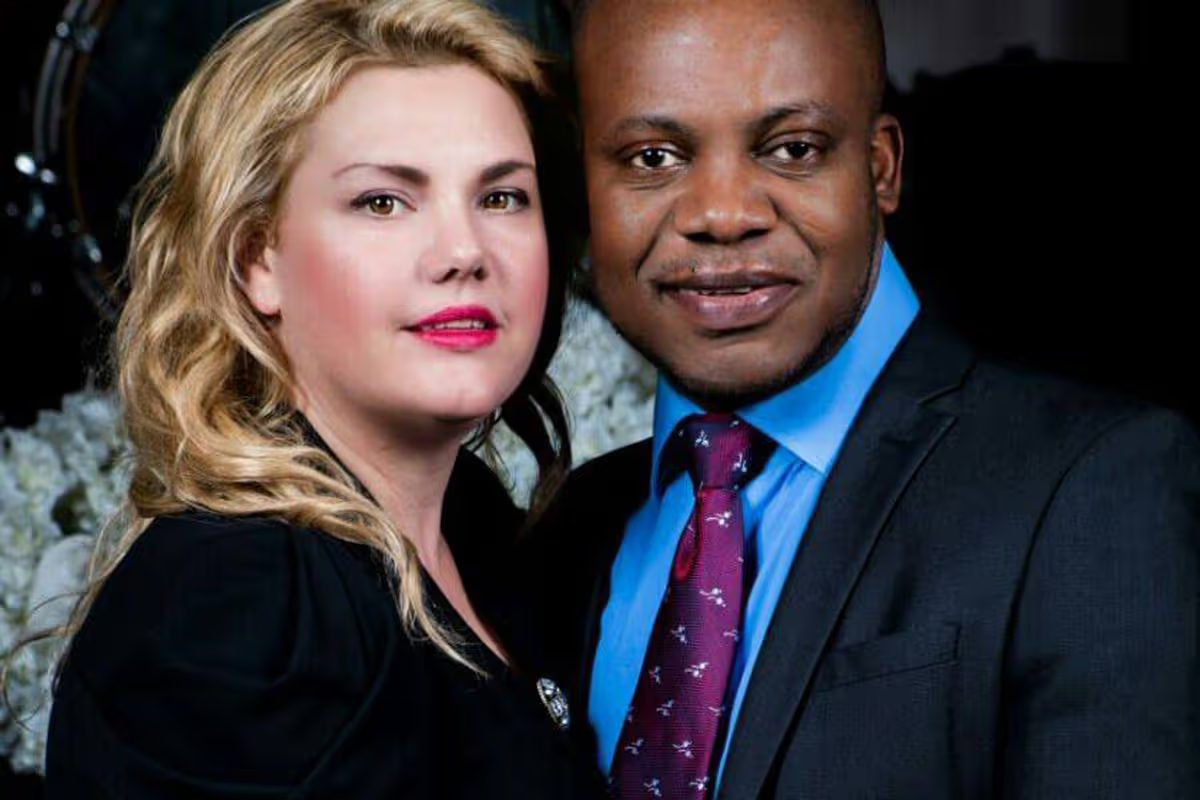
- Charmain Speirs, 40, died in a hotel bathtub in Ghana in March 2015, six months after marrying Pentecostal pastor Eric Adusah
- A BBC Disclosure investigation found Adusah omitted the presence of late-night visitors to her hotel room from his police statement
- The reverend Adusah claimed to have met at 6am — his alibi for leaving the hotel — did not corroborate his account
- Heroin was found in Charmain’s system; a subsequent UK hair analysis tested negative for opioids
- Former partners allege coercive control and emotional abuse; Charmain’s son says Adusah physically struck both him and his mother
- Adusah, who now lives in Maryland, USA, denies involvement in his wife’s death
ACCRA / LONDON — Charmain Speirs had survived a volatile personal history — an unstable string of relationships, a brother lost to addiction, years of single parenthood — before finding what seemed like a turning point.
At 40, she was a committed member of a Pentecostal church in Swansea, Wales, raising her son Isaac, and had found faith as an anchor. What she wanted next, friends said, was a man who matched that faith.
She found him online — or thought she did.
Prophet Eric Adusah, originally from Ghana and based in London, was the head pastor of the Global Light Revival Church. He appeared regularly on Christian television channels.
In Pentecostal circles, he carried significant stature: not merely a pastor, but a prophet, believed by his congregation to receive and communicate divine revelation.
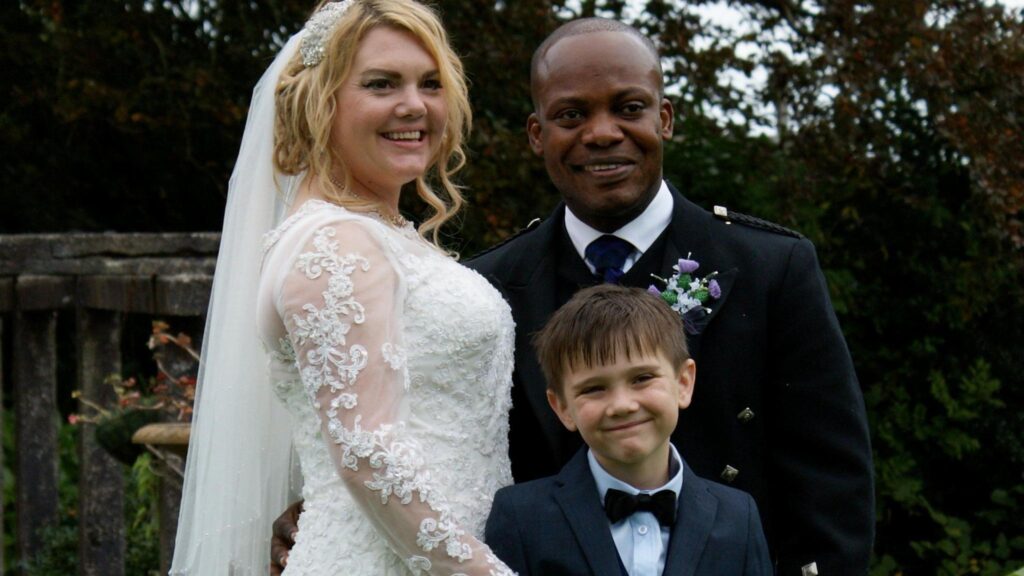
Charmain and Adusah met in spring 2014. Within weeks, an engagement was announced. By September, they were married.
By March 2015, Charmain was dead.
In a new BBC documentary, reporters investigated the story and found information which details the relationship of Charmain and Adusah, her reported death and the controversial history of the Ghanaian prophet.
A Body in Room 112
Charmain’s body was discovered in a bathtub at a hotel in Koforidua, a city in Ghana’s Eastern Region, where the couple had been staying. According to reports, she was pregnant at the time of her death.
Adusah was arrested on suspicion of murder but was subsequently released, with Ghana’s attorney general’s office citing insufficient evidence. He has consistently denied any involvement in her death.
Ghanaian police records establish that Adusah was the last known person to see Charmain alive.
In statements reviewed by the BBC, he said the couple had lunch together, visited the pool, returned to their room for the evening, and had what he described as “a nice time together.”
He told investigators he left the hotel after midnight to travel to Accra for a 6am meeting, ahead of a scheduled flight back to the United Kingdom. He claimed Charmain wished to remain in Ghana longer.
What he did not mention — in any of his statements to Ghanaian detectives — was that two tall men had accompanied him to room 112 late that night.
A hotel worker, identified by the BBC only as Edward, says he witnessed Adusah arrive with the two men, one of whom was carrying a briefcase. He says the men remained in the room for up to an hour, after which they helped Adusah load bags into his car.
Edward says the last time he saw Charmain alive was approximately five hours before Adusah and the men departed. Staff were instructed not to disturb her.
Police documents confirm that other witnesses also reported the presence of the additional men. Two were eventually traced and confirmed their presence, claiming they had been there to pray. A third individual was, according to the investigation documents, never located or interviewed.
A Flawed Investigation
Retired Scottish Detective Superintendent Allan Jones, commissioned by BBC Disclosure to review the Ghanaian police files, did not hesitate in his assessment.
“For him not to mention that once is very strange,” Jones said of Adusah’s omissions. “If you’ve got that many people coming to that room, potentially even as defence witnesses, you should be mentioning them.”
The alibi Adusah provided for his late-night departure presented further problems. The BBC tracked down the reverend he claimed to have been meeting in Accra. That person did not corroborate the account. There is no indication in the files that Ghanaian investigators ever verified the claim.
“The person that he says he’s going to meet at 6 am is an important person to see,” Jones said. “And if that’s not happened, that’s a poor reflection on the investigators of the time.”
The Ghana Police Service did not respond to the BBC’s request for comment.
Complicating the picture further was the post-mortem finding of a heroin metabolite in Charmain’s blood and liver samples. The probable cause of death was recorded as a heroin overdose.
Before the autopsy, Adusah had told police his wife was troubled, suicidal, and had a history of drug abuse — a narrative that featured in the decision to release him.
Pathologist Dr Afua Abrahams, who conducted the examination, noted that heroin is exceptionally rare in Ghana, particularly in smaller cities like Koforidua. No drug paraphernalia was found in room 112. No traces of heroin were found among Charmain’s belongings.
A subsequent UK post-mortem that analysed her hair tested negative for opioids, confirming she had not been a long-term drug user.
More than twenty people interviewed by the BBC — friends, family, and church members — uniformly rejected the suggestion that Charmain used drugs or was suicidal.
“She hated anybody on drugs,” said her mother, Linda Speirs. “She couldn’t stand it.”
Critically, a statement from a church member who spoke to Charmain on the night before she was last seen alive — and who told UK police she heard the couple arguing loudly, with Adusah striking a table, before the call cut off abruptly — was never passed to Ghanaian investigators.
A Pattern of Control
The BBC investigation also documented a broader portrait of Adusah’s conduct toward women.
He operates under multiple names: Eric Adusah in the UK, Eric Adu Brefo in Ghana, and Eric Isaiah Kusi Boateng in the United States, where he now lives in Maryland with a wife and children and continues to preach.

Several former partners described systematic coercive control. One woman, identifying him only as “Daniel,” said she had no idea he was a preacher.
Another, identified as Emily, described how Adusah gradually dictated her clothing, restricted her movements, confiscated her phone, and severed her contact with family. “I was afraid of going against God’s will,” she said.
Charmain’s son Isaac, now 19, told the BBC he personally witnessed Adusah strike his mother in the face and attempt to hit him.
“He called himself a prophet,” Isaac said. “What prophet would hit their wife? What prophet would lay a finger on a child?”
Linda Speirs says she discovered bald patches on her daughter’s scalp, which Charmain eventually attributed to her husband pulling her hair.
Before she died, Charmain had reportedly obtained a secret second phone after Adusah confiscated her primary one. She had discovered he had used a false name, misrepresented his age, and allegedly had another wife in Ghana.
According to a witness statement, she was planning to confront him and was considering divorce.
Justice Deferred
Adusah told the BBC that the investigation had caused him “severe emotional distress” and that he had “endured profound personal trauma” after losing his wife and child. He did not address questions about his treatment of former partners.
For Charmain’s family and son, the questions remain unanswered. The BBC Disclosure documentary series, Charmain and the Prophet, marks the first comprehensive public examination of her death — more than a decade after her body was found.
“I have to live the rest of my life knowing that my mum is never going to see what I do,” Isaac said. “It really gets to me.”
Reporting by Myles Bonnar, Ben Robinson and Kevin Anderson for BBC Disclosure. This article is based on their investigation.
This article was edited with AI and reviewed by human editors



Follow